
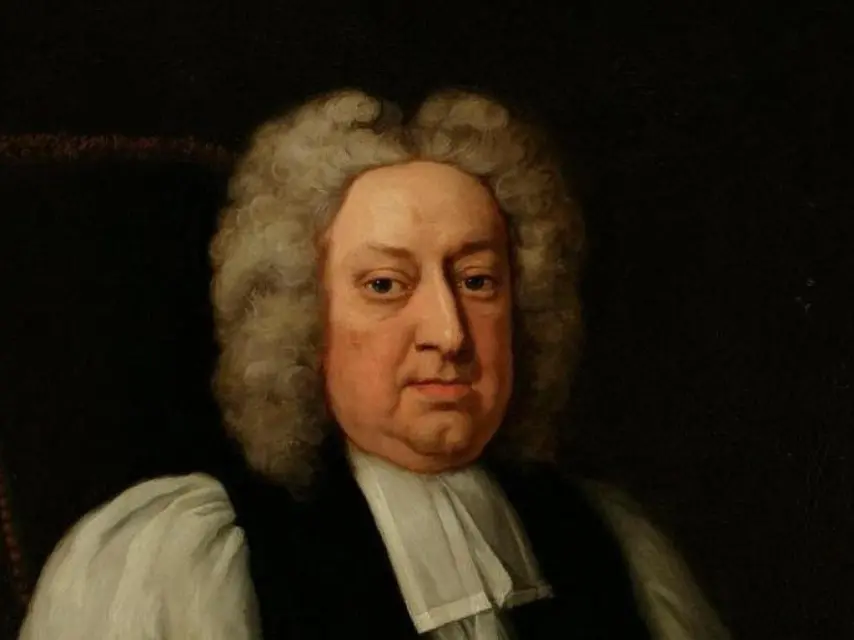
There is something dubious, as in the relentless good vibe or in the notorious magical realism, in that liberal tendency to refer to Jonathan Swift as a satirical writer more than as a misanthrope who loathed his fellow humans. Enough of hedging: the author of Travels into Several Remote Nations of the World, in Four Parts, by Lemuel Gulliver, First a Surgeon and Then Captain of Several Ships (1726), better known by his abbreviated motto, The Travels of Gulliver, was a covert hermit. As readers of those pages more attentive will rightly deduce, within them sarcasm is nothing more than a way to soften the deep contempt that Gulliver, and by extension Swift—their creator—feel toward human beings as a whole. Recall that episode in Lilliput of the absurd disputes between factions clashing over minuscule matters, such as which side of an egg should be broken. A whole satire of the greatest misery of humanity: politics, the origin to which, in turn, irrefutably and inexorably, emerge the worst rivalries and conflicts, a science that Swift himself knew well, since he dedicated his first pamphlet to the whigs A Discourse on the Contests and Dissentions in Athens and Rome (1701), and since he failed to rise among them, he navigated his loyalties, ending up in 1704 with the tories, his enemies.
Hijo de una familia inglesa, el futuro misántropo nació en el Dublín de 1667. Así las cosas, sus biógrafos más acertados defienden que, ya desde la cuna, creció en el odio a sus semejantes. Muy probablemente, como era frecuente entre los colonos ingleses nacidos en Eire, consideraba inferiores a sus vecinos. Fue criado en la iglesia anglicana de Irlanda, la fe de sus padres.
Regarding this, let us go to Brobdingnag, the land of giants, and remember Gulliver observed by them. For those beings, enormous in Lemuel’s eyes, our traveler among distant nations is nothing more than a curiosity, and except for the queen, with her compassion, everyone observes him with a mix of curiosity and a certain disdain. This allows Swift to invert the human perspective and show, with his irony, how the weaknesses of our species can appear even clearer under the gaze of beings outside our circus.
The scholarship that studies works without considering the personal problems of their authors, almost twenty years before The Travels of Gulliver, already detects a first hint of Swift’s misanthropy in his 1709 reworking (interpretation) of the Legend of Philemon and Baucis by Ovid. The Irish author’s disdain for his fellow beings, always according to the scholars, becomes evident in the prodigious transformation the tale recounts, a metamorphosis that does not necessarily improve people, but rather turns them into mechanical parodies of themselves. According to this analysis, it reflects a rather ambivalent view and a certain skepticism toward the nature of our species.
The hatred of the world of Swift also may have been due to a disease with a fabulous name—labyrinthitis—that had afflicted him for a long time, leading him to lose his mental faculties, diagnosed today as Ménière’s disease —an inner ear disorder that caused the writer severe vertigo, tinnitus, and deafness. Later, during his decline, he suffered a stroke, followed by senile dementia — today probably Alzheimer’s disease — which completely diminished his ability to speak and to remember. Even Esther Johnson (Stella) and Esther Vanhomrigh (Vanessa), the two women he loved, slipped into oblivion in his estimation. “Like that very tree, I too shall begin to die from the crown,” he wrote upon realizing that the end had begun.
By 1742, confined in the St. Patrick’s Hospital asylum—an institution he had helped to found, perhaps by virtue of that sympathy that all enemies of the world feel for lunatics—the situation was alarming. The pain in one eye, inflamed to unimaginable limits, required “physical restraint” to prevent injury to himself. He was probably put in a straight jacket. The months passed with the writer in the deepest silence; his gaze fixed on some distant point, like the countries Gulliver visited, but indeterminate.
Having lost his volition, the ownership of his acts, on May 12, 1742 Swift’s friends, if he had any, and his guardians in the asylum, requested that the appropriate procedure be opened. And one day like today, August 19, 1742, some two hundred eighty-four years ago, a jury appointed by the Chancery Court of Ireland formally established the Commission of Lunacy. That court officially determined that Swift, at 74, was “of unsound mind” and lacked the legal capacity to manage his person and his estates, appointing guardians to protect his patrimony from possible abuses.
Tres años después, cuando el diecinueve de octubre de 1745 fue a reunirse con Lemuel en Lilliput, Brobdingnag y otros países remotos, alguien escribió en algún lado sobre la última ironía de Swift: “Dio la poca riqueza que tenía para construir una casa para tontos y locos, y demostró con un toque satírico que ninguna nación lo necesitaba tanto”. Allí en Dublín, en el Patrick’s Hospital, una placa indeleble, como la ira de los frustrados, aún recuerda a Jonathan Swift: tránsfuga político, clérigo arribista, misántropo bajo cualquier circunstancia, escritor y alienado. Así se escribe la historia. Los filántropos a la violeta deberían sentirse interpelados.