
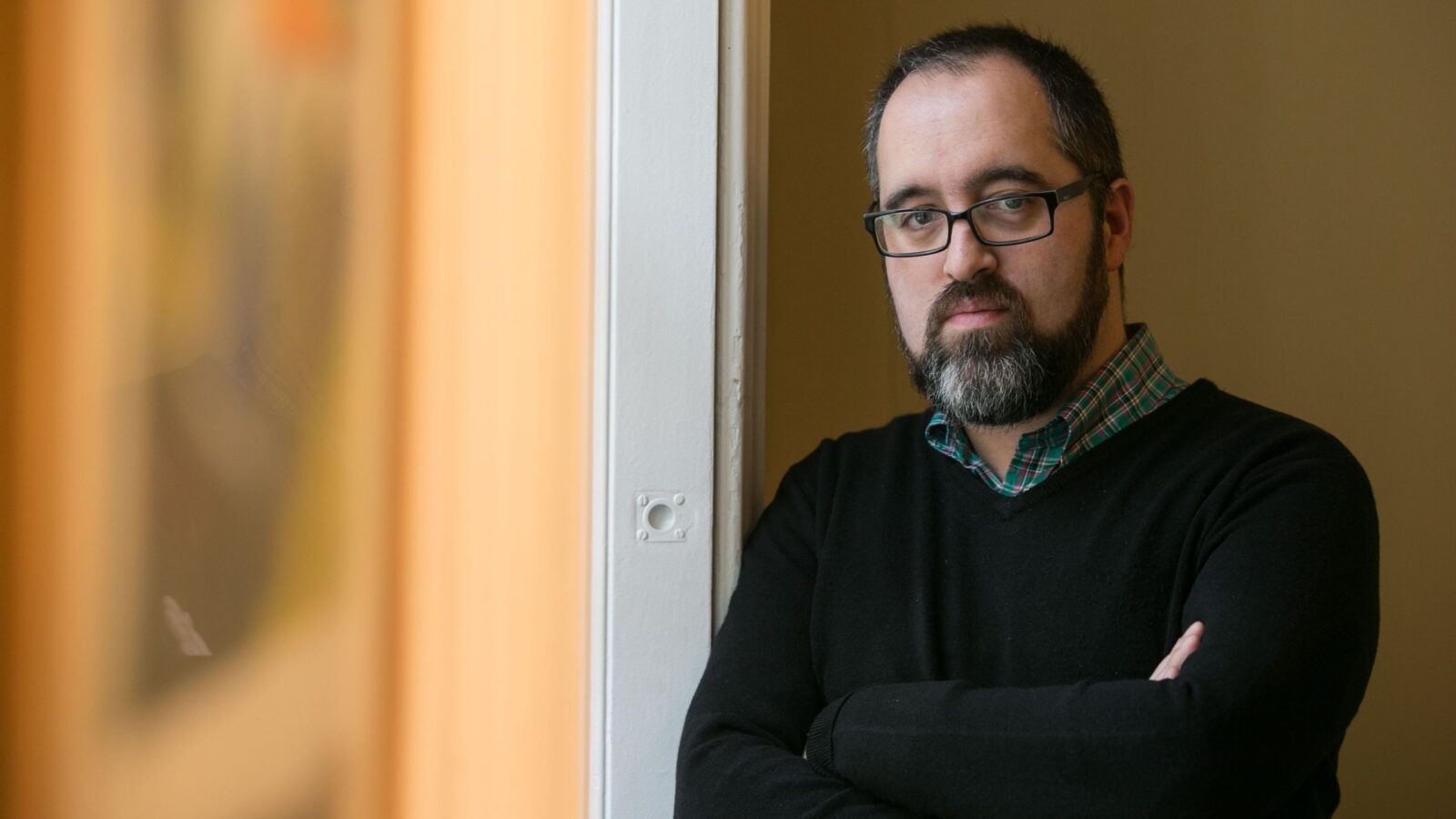
Cover photo: Miguel González
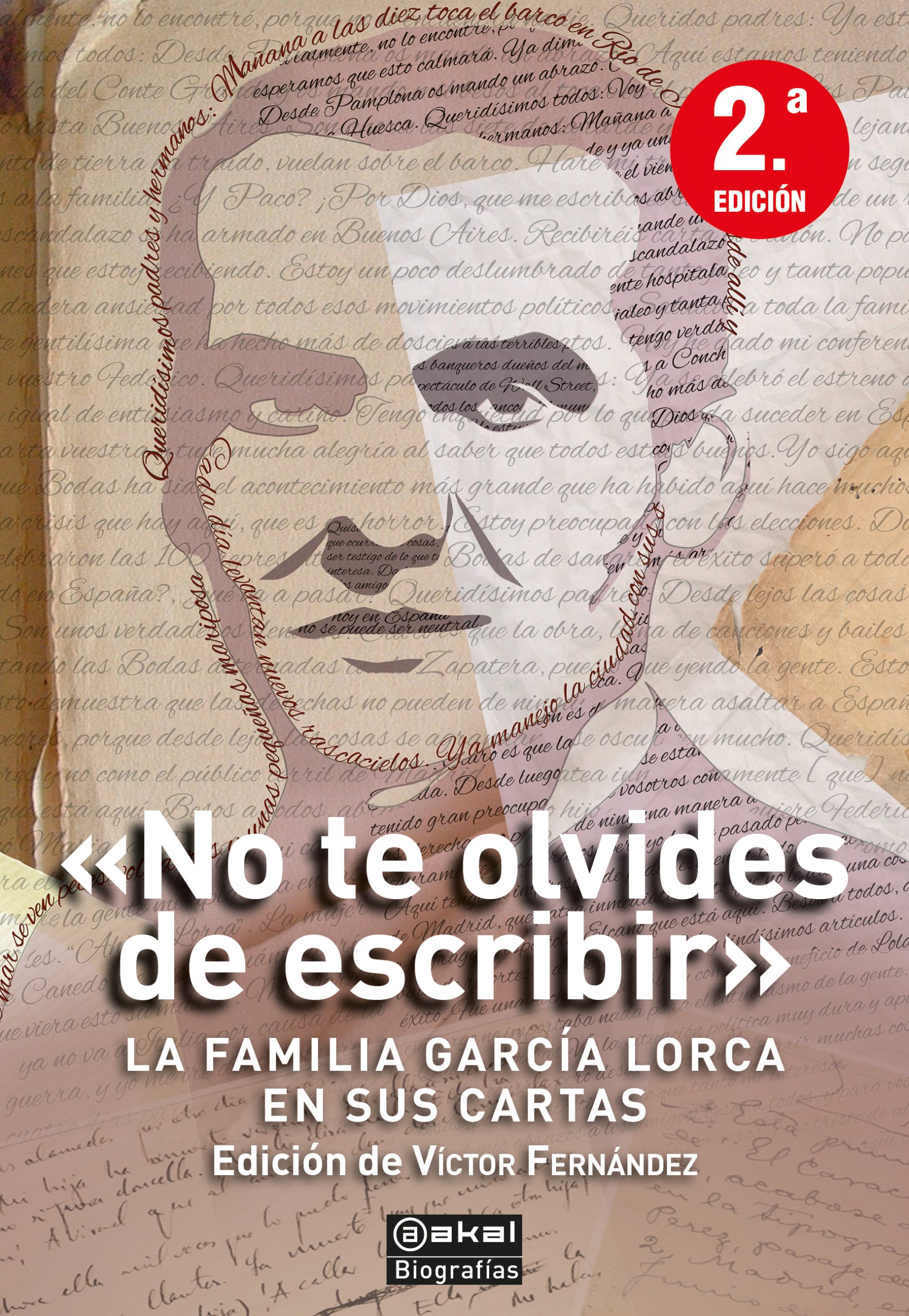
On August 18, 1936, at 04:45 in the morning, a group of cowards murdered Federico García Lorca. And yet, when ninety years have passed since the crime that eternally condemned the souls of the rebels, the poet’s figure remains among us. His plays are staged, his poetry collections are reprinted, new biographies are published… and all this activity around a man executed at the early age of thirty-eight confirms the old mantra that “the fascists won the war but lost culture.” Among the extensive bibliography arriving at bookstores these days, three titles stand out, edited by the same expert: Víctor Fernández. The first, Don’t Forget to Write (Akal), contains the correspondence the poet exchanged with his immediate family; the second, Complete Prose (Galaxia Gutenberg), gathers all of Lorca’s prose works; and the third, Memories: A Brief History of Love (Seix Barral, in autumn), reveals the relationship the author maintained with Juan Ramírez de Lucas.
*****
—This year marks the ninety-first anniversary of Lorca’s murder, but you also argue that we should celebrate the 110th birthday of the writer who was inside him all along.
—Yes, because, in a text dated October 15, 1917, Lorca wrote: «A year has passed since I set out toward the good of literature». That means this autumn will mark 110 years since the moment he himself places as the birth of his literary vocation. That decision coincides, moreover, with the death of his music teacher. We must remember that Lorca, in his early days, wanted to be a pianist and a composer. He even wrote some pieces and revived popular songs such as “Los cuatro muleros” or “El café de Chinitas.” However, when his teacher dies, he abandons the dream of training at the Paris Conservatory. It is then that the writer is born. And he does so through prose, not poetry. His first book, Impresiones y paisajes, is a volume of travel prose born from the excursions he undertook across much of Spain with professor Martín Domínguez Berrueta. During those journeys he wrote to his family long letters, full of descriptions, which are authentic travel chronicles and form the germ of that book.
—Many of those letters are gathered in Don’t Forget to Write, a book that, among other things, reveals the everyday life of the García Lorca family.
—Publishing this correspondence means delving into the intimacy of his family, that is true. But I think its extraordinary biographical and literary interest justifies it. There are letters, such as those written during those trips or during his stay in New York, that are true journalistic reports. The one devoted to the crash of 1929, for example, could be published as a chronicle, even though Lorca embellishes reality and claims to have witnessed suicides that in fact did not occur. But beyond its literary value, these letters depict an extraordinarily close family. The parents are attentive to their son: they want him to study, not to freeze at the Residencia de Estudiantes, not to feel alone. I like to say that this book lets us see Lorca in slippers. We have so idealized his figure, so transformed into a marble statue placed on a pedestal, that we sometimes forget he was a flesh-and-blood person. The letters recover precisely that human dimension and show us a Federico who is nearby, affectionate, and deeply attached to his kin. In them one can see the constant support of his mother, who pushes and protects his literary career, and also his brothers, who even reproach him for not informing them about the premiere of Mariana Pineda in Barcelona. Manuel Fernández Montesinos, husband of his sister Concha, appears less frequently in the correspondence, although we know Lorca kept a close eye on his wedding and the birth of his children. The story of this man is especially tragic: he was the last Republican mayor of Granada. He was detained at the outset of the military uprising and was shot alongside the cemetery wall in the early hours of August 16, 1936. That same afternoon Lorca was detained, and he learned of his brother-in-law’s death only a few hours before his own murder.
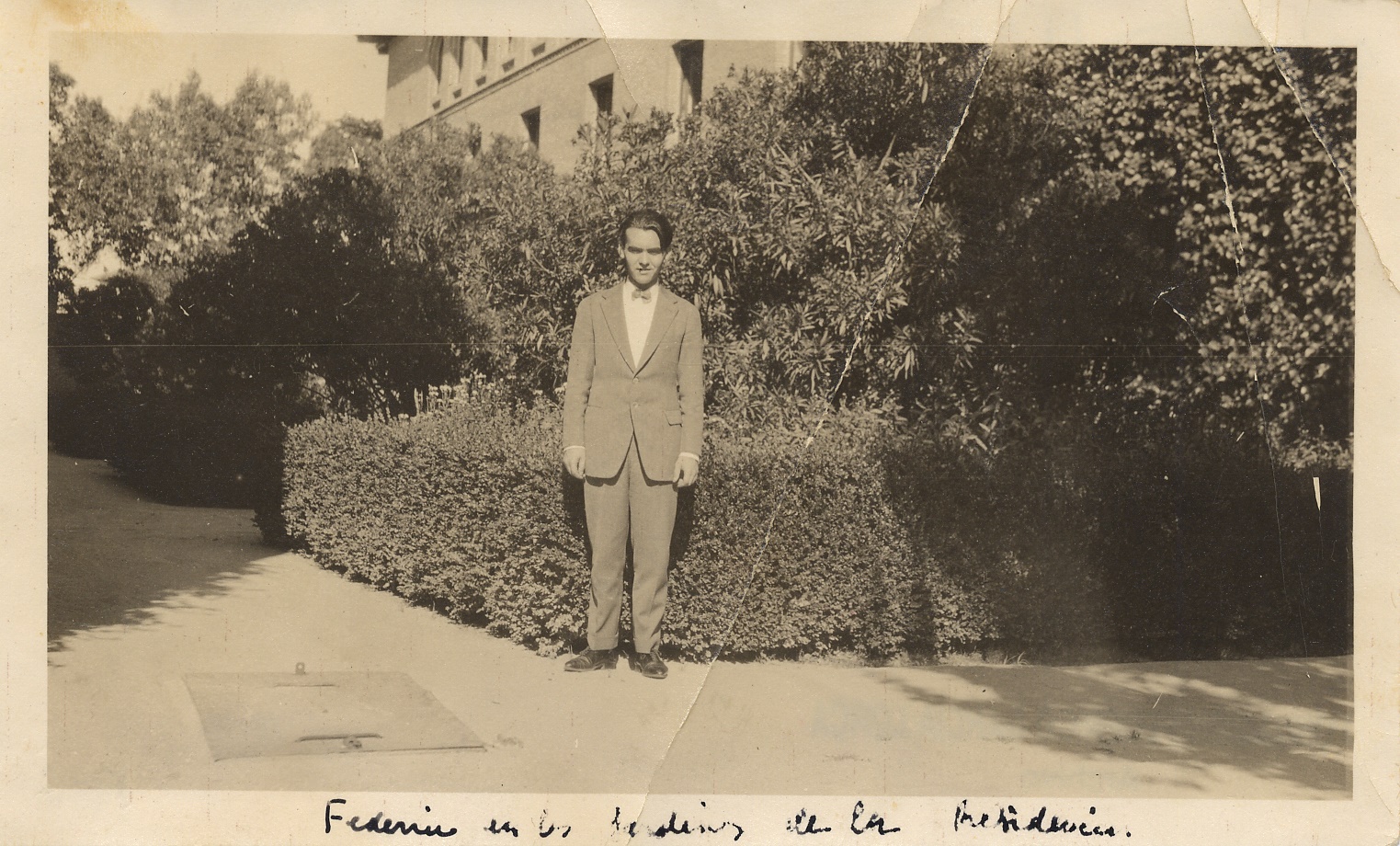
—The idea came from Joan Tarrida, editor of Galaxia Gutenberg. In 1998, this same publisher released the most complete edition of Lorca’s works, in four volumes. But today it is out of print. Later they published more affordable versions of poetry and theater and, one day, Tarrida asked me what more could be done with Lorca’s legacy. I told him that it was time to reclaim his prose. The juvenile prose, for instance, had barely been read as it deserves. I thought it important to bring together in a single volume Lorca’s juvenile prose and his mature prose, including conferences and addresses, making clear that we are dealing with literary prose, not letters or interviews.
—That book dismantles many interested readings of Lorca. In the texts there are reflections on patriotism, the flag, or politics that help us understand much better what he really thought.
—Complete Prose and Don’t Forget to Write engage in dialogue with each other because both allow us to debunk many falsehoods that still circulate about him. Today there are even those who try to present Lorca as a right-wing man or as someone close to Falange. These are manipulations. Lorca had political ideas; he identified with the persecuted, he did not believe in neutrality. He wrote this in one of his letters: “One cannot be neutral in Spain.”
—In Don’t Forget to Write you reconstruct one of the most shocking episodes of Lorca’s final days: the note he sent to his father asking for money to save himself.
—After his arrest, Lorca was held at the Civil Government of Granada, and one of his executioners attempted to extort him by making him believe he could save his life if he made a monetary donation to the armed forces. Under that promise, he wrote a note addressed to his father: “Dad, I beg you to hand over to this gentleman a thousand pesetas as a donation for the armed forces.” The next morning, several men went to the family home. The parents were with their daughter Concha, whose husband had just been killed, while they anxiously awaited news of Federico. According to the family chauffeur, when the father received the note he thought his son was still alive and immediately handed over the money. The man who collected the thousand pesetas realized the chauffeur had recognized him as one of the gunmen operating in Granada those days. He then pulled him aside, ordered him to keep quiet, and, to appear cordial, offered him a cigarette. Just as he was about to light it, he said: “We’ve taken him from your señorito’s corpse.” With that line, he let him know Lorca had already been killed and that they had just swindled the family. It is a scene that brutally sums up the violence and cruelty that characterized Spain in those days.
—It seems that Lorca’s archive never runs dry and that the bibliography about the poet keeps growing. Are there still many documents to discover, or are we witnessing the latest findings?
—Miguel Poveda recently found a manuscript…
—The case of Miguel Poveda is very interesting. On one occasion I told him that a German antiquarian bookstore was selling several Lorca manuscripts and, among them, one from the Diván del Tamarit. Finds of that level are still possible. Another matter is if a completely unknown work appears. In fact, we know there are very important manuscripts that have been lost, such as those of Bodas de sangre or Yerma. They are huge losses because they prevent us from comparing the originals with the versions that were finally published. And not only manuscripts are missing: we have also lost Lorca’s voice. We do not preserve any recording of him, although I still think that sooner or later, some will turn up.
—And then there are the archives that continue to be barred to researchers. I’m thinking, for example, of Rafael Martín Nadal’s collection. What do we really know about that fund and why does it remain inaccessible?
—The Rafael Martín Nadal archive is the Holy Grail of Lorca studies, precisely because we know nothing about its contents. Martín Nadal was a great friend of Lorca, a man of his absolute trust. According to Isabel García Lorca’s memoirs, at the end of the Civil War he could come and go from the family house in Madrid. We do not know if he took documents, but we do know that, at the end of the nineties, he sold to the National Library the manuscript of El público and several originals of Romancero Gitano, Poema del cante jondo and Poeta en Nueva York. All of that allows us to imagine the importance of the material still kept in his archive. Unfortunately, no one knows exactly what it contains. His heirs have decided—and that is a decision that must be respected—not to allow access to any researcher. The archive remains in London and, as far as I know, no institution has attempted to acquire it.
—And what about the Martínez Nadal family? Do they hold important documents?
—Yes. We know, for example, that they hold the original manuscript of Así que pasen cinco años. One can imagine what such a piece could fetch at auction. Last year I tried, once again, to open a path of dialogue with the heirs through a person very close to them, but the response was clear: they do not want to talk about the matter.
—You have coedited, together with Christopher Maurer, the memories of Juan Ramírez de Lucas, which will reach bookstores on October 21 under the title Recuerdos: Breve historia de un amor (Seix Barral). What is the significance of this book?
—Ramírez de Lucas was a known art critic who, in February or early March 1936, played a small role in Así que pasen cinco años. Lorca attended the rehearsals and took notice of him. At first, Juan did not pay him much heed, but later they met again and a relationship began. Today we can say, almost with near certainty, that that was Lorca’s last great love. Ramírez de Lucas left that story in notebooks that have remained unpublished for decades and that now, respecting the wishes of his circle, are finally coming to light.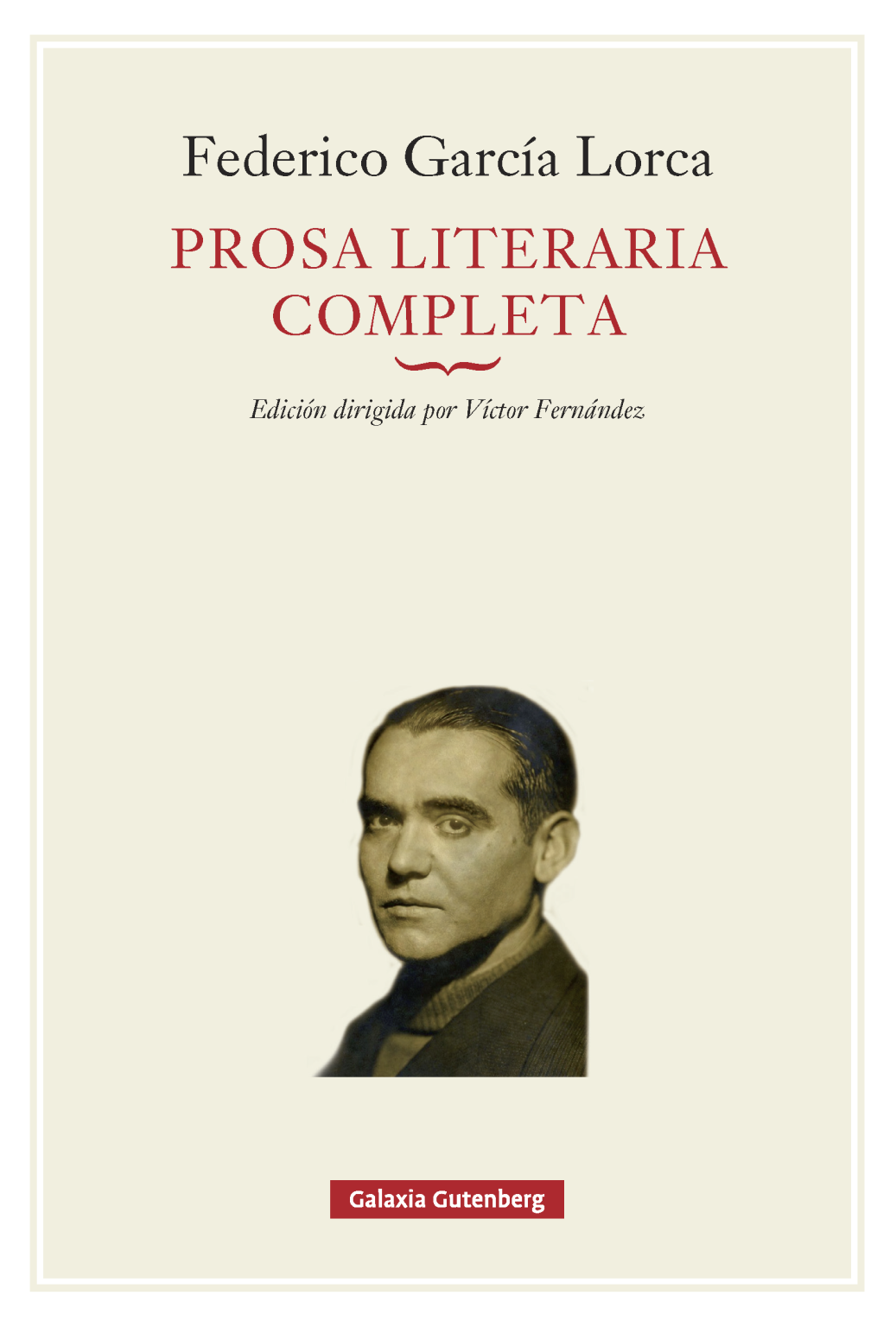
—Besides investigating his archives, you have also searched for Lorca’s own remains. I know it’s a topic you’re tired of, but it’s natural to ask. Do you think we will ever be able to bury Lorca with dignity?
—Right now, we are not making progress in that direction. There are things we know with considerable certainty: where he was killed and where he was buried. That is beyond dispute. In fact, in 1980 the Granada Provincial Council conducted a research project whose results should have been published. They created a commission with experts such as Ian Gibson or José Luis Vila-San Juan, in addition to direct witnesses of the crime. Thanks to that work, the exact place where the events occurred was delimited. The Provincial Council bought the land to protect it, since the area was being urbanized. In fact, that space became in 1986 a park dedicated to the memory of Lorca and all the victims of the Civil War. During the works, the ground was disturbed and, as was logical, human remains appeared. But, according to three different sources, along with several workers on the site, those responsible decided not to inform the authorities. They collected the remains, put them in a sack, and buried them in another part of the park. But I want to make clear that I am not asserting that those remains belong to Lorca; I only maintain that there are human remains there and that no intervention has ever been carried out at that site. The story has an even more revealing epilogue: in January 2014, heavy rains caused a landslide in a nearby development and a gardener found human remains. On that occasion the Civil Guard, a court, and a team of archaeologists intervened. But since then we have heard nothing: we do not know what the forensic report said, we have not been shown the conclusions of the investigation, we do not know if any expert tests were carried out… I know what happened to those remains, but I prefer not to tell in order to avoid being insulted again. Because, every time you touch the topic of Lorca’s grave, you receive an astonishing amount of attacks. Personally, I am fed up.
—It’s striking that there are still documents about Lorca’s murder that remain classified.
—You don’t have to go to Granada to find dark corners; you only have to look at Madrid. The State still keeps as secrets the official documents that the Franco regime produced about Lorca’s murder. And when some of that material has been declassified, it has been made public with censored parts. But I don’t see this as an ideological matter, but as pure incompetence. There is something Berlanguian about all this. I have lived it firsthand. When César Antonio Molina was Minister of Culture, I spoke with the then Secretary of State and proposed the possibility of declassifying that documentation. His reaction was one of genuine surprise: “How is it possible that this remains secret?”. He assured me they would study the matter, but nothing happened. Years later, I repeated the conversation with Jordi Martí, the current Secretary of State for Culture, and I obtained practically the same response: disbelief, polite words, and, afterwards, silence. That is why I find it hard to talk about conspiracies. I lean more toward the idea of incompetence joined to laziness.