
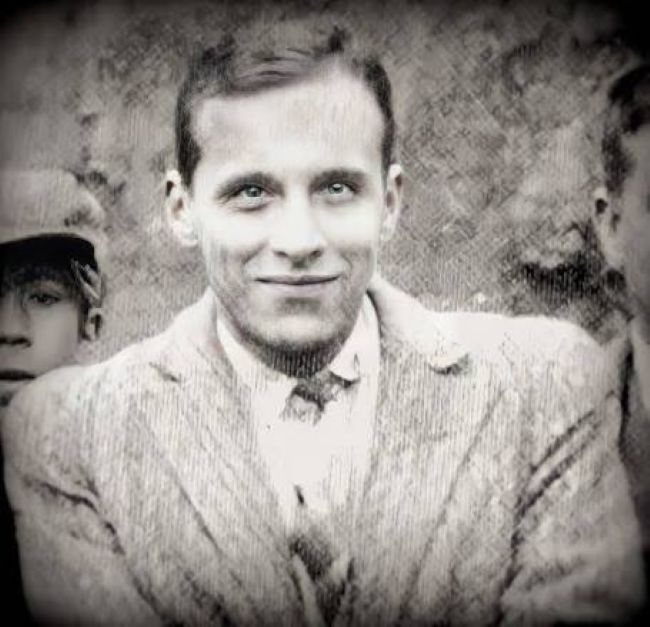
Milla published twenty years ago the first volume of a 700-page biographical essay, which was followed in 2024 by a second volume of 828 pages about the life of the poet. Now, he told Efe that he wanted to fill the void implied by Oquendo being “one of the most important writers in the country, if not the only one, who did not have a biography in a popular edition, for a non-specialist reader“. In that sense, his new work offers, among other data and documents, the discovery of a baptismal record inscribed in La Paz, Bolivia, on April 10, 1768, in the name of Antonio Oquendo, a 16-year-old slave born in Guinea, who belonged to the hacendado Francisco Oquendo, who recognized him as his adoptive son. “This discovery reconfigures (rectifies) the Basque origins of the Puno-born poet that until now appeared in his biographies, with the paternal surname Oquendo only as an adoptive affiliation from the date indicated”.
Milla also asserted that while the avant-garde poets of the time “were parricidal — literally “one had to kill the father” —, Oquendo, on the contrary, is an atypical avant-garde” and highlighted the friendship he had with the famous Peruvian journalist and Marxist ideologue José Carlos Mariátegui. This closeness allowed Mariátegui’s brother, Julio César, who was the manager of the Minerva printing house, “to edit his book 5 meters of poems after he paid only a small part of the total printing cost”.
Milla revealed that Oquendo “did not fulfill the cancellation” and added to this “the difficulty that workers faced in reconciling the poem collection due to the complexity of the format,” so apparently he only gathered “about ten or twelve copies. This is evidenced by the absence of reviews of the book in newspapers and magazines of the time and by the knowledge of his work for nearly 40 years“, he noted before indicating that the poet was only rescued from oblivion starting from the mention that Vargas Llosa made of him when he received, in 1967, the Premio Romulo Gallegos. In his speech La literatura es fuego, Vargas Llosa recalled a “young man who had read the early writings of Breton” and “died in the hills of Castile, in a charity hospital, mad with fury.” This was followed by the second edition, published in 1969, of 5 meters of poems and the biography Tránsito de Oquendo de Amat, by Carlos Meneses, in 1973.
In the book the account also appears of the escape that the poet staged from the Panama Canal, where he had been detained for his communist militancy, and which led him to cross into Costa Rica, then head to Spain, where he died at the age of 30 in a hospital in Navacerrada, afflicted with tuberculosis, on March 6, 1936.