
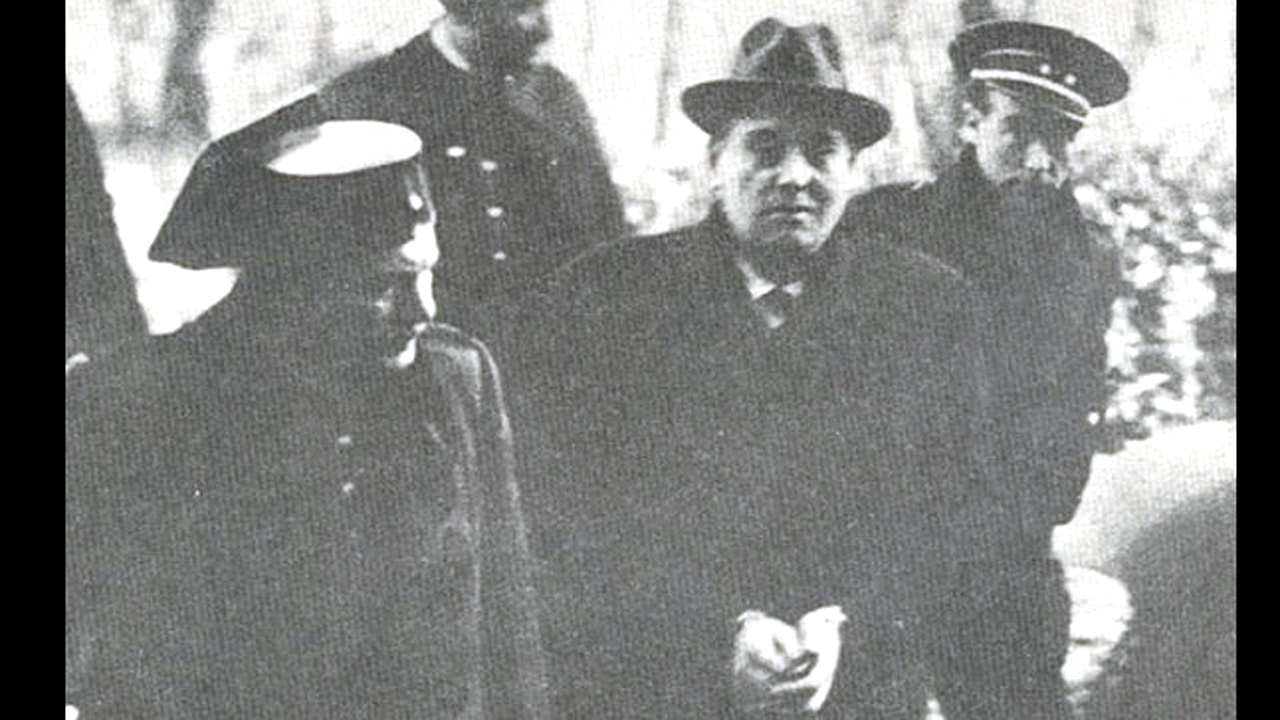
To commemorate the 90th anniversary of the Civil War, José Ángel Mañas recreates in Zenda, day by day in this section, what happened in 1936, perhaps the most pivotal year in modern Spanish history.
Wednesday, August 26, 1936: González Peña and the letter from my Asturian great-grandfather
In Sama, there was always talk about the money that Ramón González Peña took from Oviedo. The Generalissimo of 1934 and Asturias’s hero, the deputy of the PSOE, was charged with directing the sovietization of the province and the military operations. For this task, he remained in contact with the leaders of the various columns that occupied Oviedo in the days following October 5, 1934.
On October ninth, knowing that the Carabineros defending the Bank of Spain had exhausted their ammunition, González Peña appeared with an escort of dynamiters. He gave the order to blow open the doors of the armored chambers. Amidst rubble and twisted rods, there were fifteen million pesetas packed into bundles of one hundred thousand and five hundred thousand.
By then, the revolution had failed in Madrid, in Andalusia, and in Catalonia, but not in Asturias. In the sky, airplanes appeared dropping leaflets. They explained that the Government controlled the entire country, that the Army would soon enter Asturias, and that the leaders of the revolution would be hunted down and brought before a war council.
González Peña, after declaring that as long as a miner fought there would be someone at his side, met with the Provincial Revolutionary Committee and proposed retreat. Some Socialist leaders opposed it, but Peña’s supporters prevailed. The Committee was dissolved and ordered withdrawal, although the fighting continued in Oviedo. It later emerged that on that day the money from the Bank of Spain was distributed among the Sama, Mieres, Sotrondio and Valdano committees.
After the fall of Oviedo, a new Revolutionary Committee was formed in Sama, presiding over by Belarmino Tomás, who negotiated the surrender with López de Ochoa (whom, two years later, he would be lynched). Meanwhile, González Peña’s whereabouts were unknown, as he remained hidden and only surrendered to the Guardia de Asalto a couple of months later.
From the fifteen and a half million in the bank, four were recovered. Another one and a half million was stolen by some member of the mining committees. The fate of the rest never became known, though around five million were deposited in a Brussels account managed by Belarmino.
In Oviedo, convents, factories, the Campoamor Theatre, the Jovellanos cinema, hotels, banks, the Simeón warehouses, and most public buildings were left in ruins. Josep Pla, invited by the government to visit the city, was impressed and offered an apocalyptic description of a landscape he had, until then, only seen in photographs after the bombardments of the First World War. Practically not a stone remained standing.
That is why I have never been surprised that in the summer of 1936, when the miners again surrounded the Pelayo barracks for Aranda, my great-grandfather fled from Sama and sheltered in Oviedo, with the city under crossfire from militiamen and the rebel garrison. The fear he felt of Belarmino was terrible.
In the end, on the twenty-sixth of August, a postman arrived in Sama with a new letter from him, this time penned in his own hand. In it he wrote to his deaf wife and to his two daughters that he trusted the war would end soon and that he would be able to return home.
But the war dragged on far longer than anyone had expected, and no further news arrived.
All the entries of 1936 day by day
Interview with José Ángel Mañas about 1936 day by day