
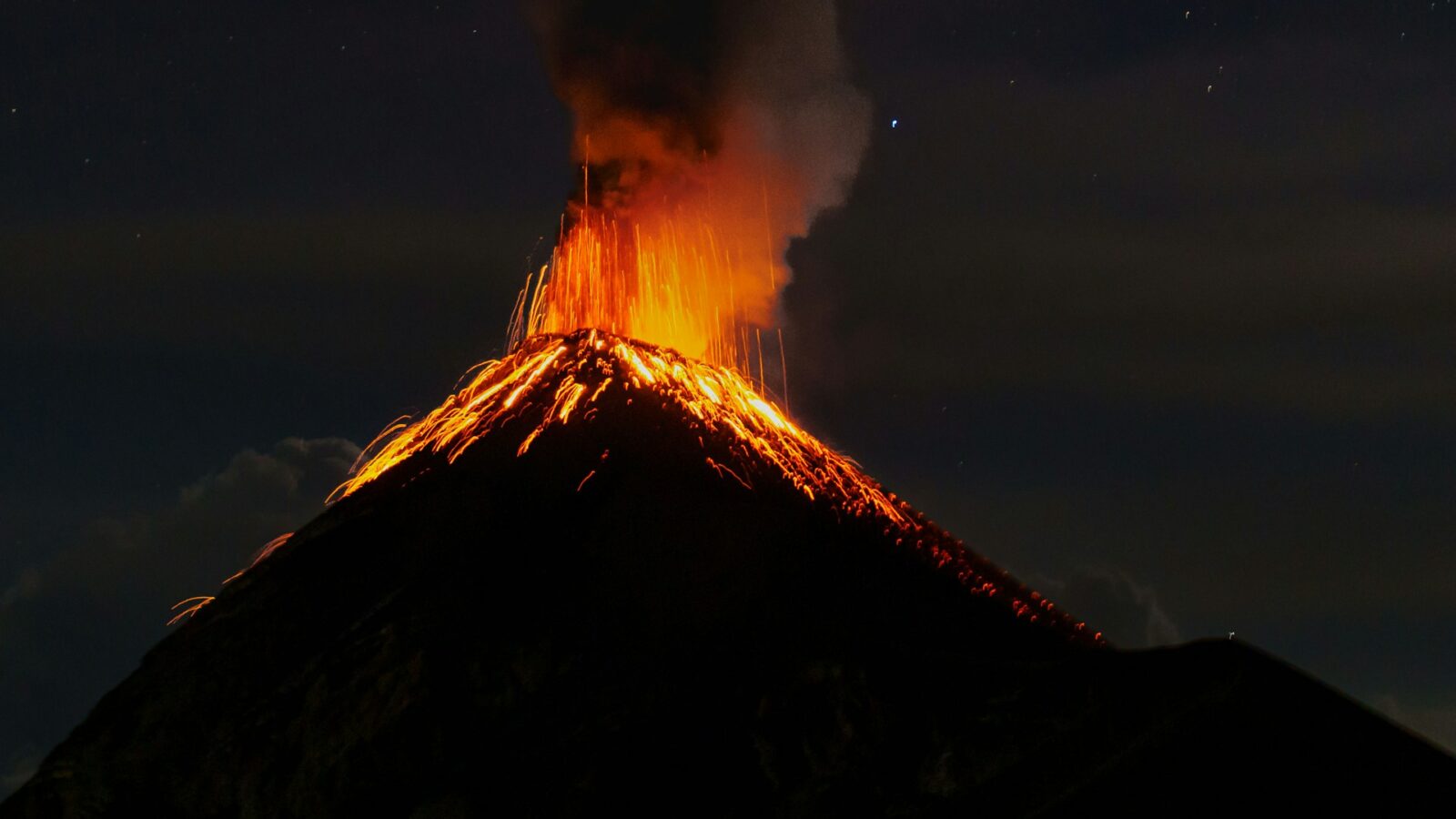
Lana Corujo, a girl from Lanzarote, grew up fascinated by and terrified of volcanoes. On full moon nights, dark, beautiful, and threatening silhouettes would take shape, and she felt a desire to approach them to stroke them and a desire to step back so they would not devour her. Her parents, who worked at the airport, had to invent a lie to calm her cravings: if a volcano erupted, they would have priority to flee by plane. Her father told another story: as a child he witnessed an eruption and it was not dangerous at all; he even jumped and danced on the lava. When her grandmother told stories of fairies, Lana’s shoes woke up full of flowers and candies. “I wanted to be an adult to tell lies,” she says, “because as a child they don’t let you.”
Corujo wrote a magnificent novel, Han cantado bingo, in which the young protagonist and her younger sister invent a dizzying game with a volcano. The tension with the adults builds up in a chamber of magma, silent, unbearable, until horror erupts (and a wounded survival endures). At the Letras Verdes Festival of Tenerife, Corujo spoke with Elena Correa and Juli Mesa, other Canary Island writers who speak softly and unleash dynamite. They write about the weight of insularity, bitter childhoods, the voices and landscapes buried by mass tourism, servitude, a wrinkled future, rebellion, joy, and rage. They seize lies and use them to peel back the truth.