
Have you managed to read all those books you packed in your suitcase for the holidays? Surely some remained unread. To that list of unfinished readings you must add the autumn arrivals and the books from this selection that we’ve prepared for you.
The books of the month at Zenda
Over the last thirty days, we have gathered the dialogue among books from all origins. One more month, at Zenda we choose twelve titles to summarize what has happened in bookstores in recent weeks.
******
Mecanópolis, la ciudad de las máquinas, by Miguel de Unamuno
—————————————
Author: Miguel de Unamuno. Title: Mecanópolis, the City of Machines. Publisher: USAL. Availability: Todostuslibros.
***
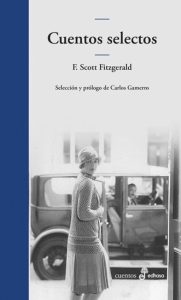
Cuentos selectos, by Francis Scott Fitzgerald
 People from all walks of life used to come into the weekly’s newsroom, and Orrison Brown maintained a wide range of connections with them. When office hours ended, he was “one of the editors”; but during working hours he was simply a curly-haired fellow who had once been the director of the Jack-O-Lantern at Dartmouth and who now took on the unwanted tasks of the newsroom: from deciphering illegible manuscripts to acting as a running boy for assignments not asked for.
He had already seen that man enter the editor’s office: a pale, tall man in his forties, with perfectly combed blonde hair and mannerisms that were neither reclusive nor shy, nor supernatural as those of a monk, but possessing elements of all three. The name on his badge, Louis Trimble, brought a few hazy memories, but with no reference point to anchor them, Orrison forgot the matter… until a bell rang on his desk and experience told him that Trimble would be the first course of his luncheon.
–Louis Trimble… Orrison Brown – said the source of all luncheon money –. Orrison, Trimble has been away for a long time. Or it feels that way: nearly twelve years. Many people would consider themselves lucky if they had missed the last decade.
–That’s right – replied Orrison.
–Today I can’t have lunch with you all – continued his boss – Take him to Voisin, or the 21, or wherever you like.
Trimble thinks he has missed a lot. Trimble courteously objected:
–Ah, I can manage it.
–I know, old friend. No one knew this city as you do. And if Brown insists on explaining to you what a horse-drawn carriage is, you should send it back to me immediately. And you all must be back at four, all right? [READ THE FULL STORY]
—————
Author: F. Scott Fitzgerald. Title: Selected Stories. Translation: Carlos Gamero. Publisher: Edhasa. Sales: Todostuslibros.
***
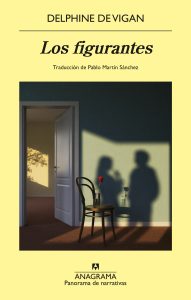
Los figurantes, by Delphine de Vigan
 Delphine de Vigan (Boulogne-Billancourt, 1966) had already demonstrated in works such as The Loyalties, Gratitudes, and Nothing Resists the Night her exceptional ability to trace the depths of the human condition in search of revelatory details and to map an emotional landscape that is as enlightening as it is precise. She wields language with impeccable control and commands the narrative mechanics to modulate entrancing rhythms, to raise solid scaffolding, and to build convincing characters. In The Extras she shifts register to infiltrate the theatrical world, drawing on a cinematic stage. It’s a curious route that links two domains that could be considered close kin in their craftsmanship and that serve the author to focus her creative gaze on dialogue: it is the characters who take the floor to advance a sparing plot and to expose themselves from their invisible way of being inside a system that needs them, offering nothing more than a nearly anonymous presence to fill scenes. It isn’t hard to extract from the idea its metaphorical element in a vast casting of extras.
Cfive of them star in De Vigan’s text. And, for once, the “camera” steps away from the faces that endure to frame anonymous beings who, like Beckett’s creatures, wait, and wait, and wait. They await someone to change their clothes, they wait to take part in scenes where they can be replaced without notice, they wait a few minutes of work fated to oblivion. Beckett, yes, but Chekhov too, with his mastery of revealing information contained in gestures that appear banal, in phrases that harbor clues about frustrations, agonizing desires, irreparable losses. They do not know it, but every word of theirs is being scrutinized by De Vigan so that we come to know much more about their weaknesses. And, at times, one must read between the lines to uncover their less apparent strengths. The author, ever attentive and understanding, uses any seemingly simple conversation to approach in a calm, circular traveling shot beings condemned to live out of focus but with a story to tell. [READ THE FULL REVIEW]
____________________
Author: Delphine de Vigan. Title: The Extras. Translation: Pablo Martín Sánchez. Publisher: Anagrama. Sales: All Your Books.
***
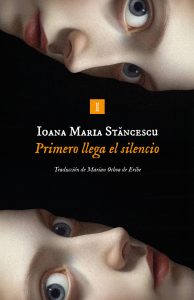
First Comes the Silence, by Ioana Stancescu
 Born in 1975, in the middle of Nicolae Ceaușescu’s communist dictatorship, Ioana Maria Stăncescu grew up immersed in a fascinating dissonance. While her country faced shortages, fear, and paranoia under a secret police that punished every improper word, her family environment provided an oasis of liberty. Daughter of the theater actress Dorina Lazăr and of a broadcasting professional, her childhood unfolded behind the scenes at the Odeon Theatre, surrounded by actors, intellectuals, and writers. Yet she did not pursue the stage, instead building her career as a journalist and radio announcer in the Romanian French-language service for nearly three decades.
Her literary vocation awakened late, like a lifebuoy in the face of a depressive episode. She poured her anguish into writing a personal diary that later blossomed into her debut work, All I Promised My Father, awarded in 2021 at the Chambéry First Novel Festival. True to a keen self-imposed standard and a confessed fear of ridicule, for her second work Stăncescu attended creative-writing workshops, where she learned to refine her narrative style, rewriting her manuscript up to three times. The result of this learning is a literary voice carved by radio’s oral tradition, where sentences flow with the exact, clipped rhythm of human breath.
If, as linguistic theorists and thinkers like David Le Breton claim, silence should never be understood as a lack but as a “non-fulfillment” that reveals the word’s inability to grasp the world’s complexity, Stăncescu has built a novel in which muteness acquires a terrifying physicality. In the family ecosystem she depicts, words are scarce, but when they appear they do so with their sharpest, most ruthless edge. Silence then does not act as a haven of peace or a reflective refuge; it becomes a violent hereditary condemnation, like the symptom of a chronic pathology transmitted from generation to generation. [READ THE FULL REVIEW]
——————
Author: Ioana Maria Stăncescu. Title: First Comes the Silence. Translation: Marian Ochoa de Eribe. Publisher: Impedimenta.
***
La hija del joyero, by Inma Aguilera
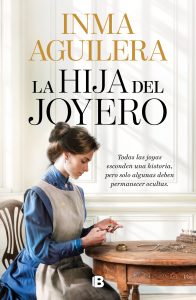 Following the success of the series The Charterhouse, Inma Aguilera returns with The Jeweler’s Daughter (Ediciones B), a tale that drags us into the world of jewelry, with the legend of Alfonso XII’s “cursed ring” as its backdrop. In this novel, jewelry is not merely adornment. It is memory, desire, power, promise, and threat. Each ring, brooch, pendant, or tiara bears the trace of the creator, the possessor, and the one who loses it. A jewel can seal a love, reveal a lie, purchase a silence, or condemn a family.
Malaga, 1867. Ágata grows among stones and precious metals in her father Aurelio Guirado’s workshop, one of Andalusia’s most admired jewelers. From childhood she displays an extraordinary talent for distinguishing gems, imagining impossible designs, and transforming matter into beauty. Yet her spirited nature and vocation clash with a society unwilling to recognize a woman as the heir to a craft traditionally reserved for men.
In the Guirado workshop, Ágata learns that a jewel is not merely an ornament: it can be a promise, a wound, a test of love, or the silent testimony of a betrayal. She also discovers that people, like precious stones, have facets, sparkles, impurities, and secrets. While her father tries to protect her from the world and her own dreams, the young woman grows convinced that someday she will become Spain’s best jeweler.
The arrival of Velasco Espíndola, a young apprentice marked by his family’s disrepute and by a dangerous, formidable ambition, will forever alter the workshop’s life. Amid rivalries, admiration, jealousy, and a stubborn kind of complicity, Ágata and Velasco will share the apprenticeship of an art as delicate as it is ruthless. But the discovery of a hidden ring in Aurelio’s secret drawer will open a crack in the Guirado workshop and unleash a series of tragic events that will change their destinies.
Madrid, 1878. Marked by the misfortune that struck the workshop and the mysterious theft of the ring, Ágata leaves Málaga and travels to the capital, determined to recover the jewel and uncover who stands behind its disappearance. In the workshop of the Mellerio brothers, former jewelers to the Royal Household, she enters a Madrid full of contrasts: aristocratic salons, bustling streets, jewelry ateliers, appraisers, forgers, court intrigues, and secrets that reach the highest echelons of the country.
—————————————
Author: Inma Aguilera. Title: The Jeweler’s Daughter. Publisher: Ediciones B. Sales: Todostuslibros.
***
Primer amor y otros pesares, by Harold Brodkey
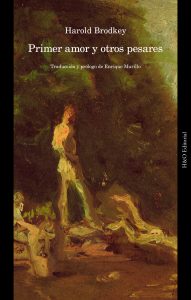 There exists a group of American authors who could well be labeled as a Mid-Century Generation—analogous to the one we have in Spain—and among them would be John Cheever, J. D. Salinger, Thomas Pynchon, Grace Paley, John Updike, and Shirley Jackson. No academic or literary critic has yet proposed such a label, but one can infer that a hallmark of this cohort is a shared sense of disillusionment with postwar America, the era of the baby boom, suburban expansion, and McCarthyism, oscillating between weariness and irony. Many of them also preferred the short story as a vehicle of expression. There you have Cheever’s alienation in stories like “The Swimmer” or “The Rural Husband,” Paley’s humor as a vehicle for critique, and the almost unbearable nihilism of Pynchon’s early work.
Thus it is gratifying to discover, among that multitude of great voices, a counterpoint offering a tender, jaunty, and even hopeful look at that era. This is what Harold Brodkey’s debut, First Love and Other Pains, offers: a book by the Illinois-born writer who enjoyed great popularity in the United States but remains little read in the Spanish-speaking world. This first work appeared in 1957; afterward, Brodkey did not publish again until 1985, a body of work not sufficient to place him in the hypothetical American Mid-Century Generation, but enough to include these nine stories in the literary harvest of those tumultuous years.
Over the following decades, Brodkey moved away from this vitalist gaze and forged a more introspective, meticulous, and refined style, which reached its zenith in the monumental The Soul Is a Fugitive, a nearly thousand-page novel published in 1991 that prompted critic Harold Bloom to call him “the American Proust.”
———————
Author: Harold Brodkey. Title: First Love and Other Pains.Translation: Enrique Murillo. Publisher: H&O. Sales: Todostuslibros.
***
Lo nunca visto, by Pablo Caldera
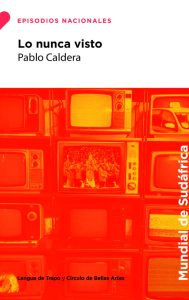 Not long ago, the Lengua de Trapo publishing house began an appealing project that has continued in collaboration with the Madrid-based Circle of Fine Arts. The generic title of the collection, “Episodios Nacionales” (National Episodes), hints at the declared aim: to carry on today the Galdosian saga with the intention of presenting a “choral and plural portrait of what has happened over the last forty years.” They take up this task, already about thirty titles deep, with authors of diverse styles and varying prior tracks, and in the case I’m addressing today, it marks the narrative debut of Pablo Caldera (1997) with Lo nunca visto.
Within the collection’s spirit, the young Madrid-based essayist Pablo Caldera applies himself to observing the country’s situation after the traumatising 2008 financial crisis in two sport-related moments when the Spanish national team triumphed: the 2010 World Cup and the 2012 European Championship. These popular resonant events act as pivots for the narrative structure. The first offers an anecdotal thread. Two young brothers, Adrián and Beto, exploit the football-induced disorientation of the nation to rob a villa and flee with the loot before the match ends. To do this they steal their mother Julia’s taxi, the vehicle by which she makes a living. The plan goes awry for the somewhat scatterbrained pair, and following their failure, they vanish.
The other event, the Euro Championship, provides the link for the second novelistic axis, a series of episodic, seemingly independent scenes that follow the previous motive. We watch Julia mentally scrutinizing her usual passengers, with a diagnostic sense of social class and a close observation of behaviors of certain groups of people. We see her in curious situations: in one she surveys the Retiro Park with a gaze that is both sentimental and sociological; in another she indulges in the secret pleasure of being the taxi passenger herself, striking up a refined dialogue with the driver that, among other effects, alleviates her great suffering—the solitude that has afflicted her since her children disappeared, and from whom she seems to have completely removed herself.
These episodes respond to a realist code, but another moment shatters those quaint notes. A mysterious gentleman named Brando contacts Julia and tells her he can inform her about how to locate her children. Brando earns his living in a peculiar way: he performs videoperitajes, meaning he describes the content of images and “translates them into text.” In one of his tapes he keeps the bungled robbery of the children and wants to show it to the mother. Thus begins a friendly arrangement between Julia and Brando, free of erotic enticements, which leads to unusual situations: for instance, a visit to Brando’s friend’s palatial home where they celebrate an extraordinary rite, celebrating a second New Year’s Eve in late July. The festive atmosphere becomes a mosaic of visionary types and gestures, and later Brando immerses Julia in a cybernetic experience in which she loses control of her rational faculties, falls into a hallucinatory time-travel journey, and in that trance she is finally reunited with her children. [READ THE FULL REVIEW]
———————
Author: Pablo Caldera. Title: Lo nunca visto.Publisher: Lengua de Trapo and Círculo de Bellas Artes. Sales: Todostuslibros.
***
Blitz, by Vic Echegoyen
 Historian novelist Vic Echegoyen returns with Blitz (M.A.R editors), an ambitious literary reconstruction of one of World War II’s most devastating nights: the Allied bombing of Dresden in February 1945. But this is not merely a war novel. Echegoyen uses that catastrophe to pose questions that are far more uncomfortable and relevant today: how does a society rebuild itself after hatred? What remains of humanity when everything falls apart? And to what extent is forgiveness possible between irreconcilable enemies?
From Hungary, where she lives and works, the author explains how a story she had carried for decades finally became a novel that speaks directly to today’s Europe and to wars as close as Ukraine’s.
—We all know what the Blitz was, the bombings of cities during World War II. But what exactly is Blitz? What will readers find in this novel?
—You will find a war story, of destruction, death, and horror, but also one of hope. I wanted to tell a terrible episode in European history that nonetheless ends in something luminous. It may seem a paradox, but it isn’t. The extraordinary thing is that this happy ending really did exist. When we think of Dresden, we think of fire, ruins, thousands of dead, and a city erased from the map. All of that is in the novel. But so is what came after—the people who had been mortal enemies shaking hands and building something new. For me, that is the true story.
—When did the novel start taking shape?
—Long before I wrote the first line. I carried it inside me for decades. One of the real protagonists survived the Dresden bombardment and eventually became my mother’s nanny. I grew up listening to her memories. That woman didn’t talk about history. She spoke of what she saw, smelled, and suffered. She spoke of people. For years I wanted to write that story, but I knew I wasn’t ready yet. We needed the right distance and, above all, the right focus. I didn’t want to write just a novel about a bombardment. That already existed. [READ INTERVIEW]
—————————————
Author: Vic Echegoyen. Title: Blitz. Publisher: M.A.R editors. Sales: Todostuslibros.
***
A la sombra de un árbol muerto, by Mónica Rojas
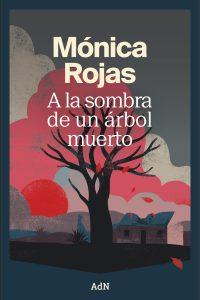 The dilemma doesn’t always revolve around those who came before us in time, but rather around places that, by building the future, anticipated that cathedral-like pain that cuts through the joints of life. Places walled in by roots of abysmal thickness; spaces carved with a skin that does not choose its burns, but does know how to burn and with what resolve to bury the land where everything repeats itself violently.
Facing the image of a city in flames, the child who stars Friedrich Hölderlin’s tale asks his father: “Where was I when the catastrophe happened?” The father responds that the fire took place over three hundred years earlier and that, at that moment, the child did not exist. The child, who has stopped playing, studies the details of a painting that were previously unknown. Those details imprint on him an unreadable wound: unimaginable, given the equally inconceivable premonition of time; deep, in view of the rigor with which the child repeats the question at his father’s side, oblivious to the emptiness with which the father, newspaper in hand, urges him to keep playing. The game becomes trivial in the face of the fire’s scaffolding, even more so when the child suggests that he was there, that we have always been in earlier places, that we are the product of an uninterrupted historical continuum in which a mirror not made of crystal may pierce the future’s flesh.
Time, as we have alluded to and as human trauma operates within, is not a straight line to be flown over, but a being whose spherical and spiral structure makes forgetting impossible. Thus, just as the child can read the smoke—or believes he can read in the smoke the fire—the characters in A la sombra de un árbol muerto smell the genital smoke with which Magdalena, a Santander-born woman who, at the end of the nineteenth century, devotes herself to motherhood, unwittingly corrupts the barely warm veils that separate her from death. This perception, felt by the reader with gravity from the story’s outset, shows that its author, Mexican novelist Mónica Rojas, has built a narrative superior to the muralized family dramas that for decades have collectivized adjacent pains in any country. [READ THE FULL REVIEW]
——————
Author: Mónica Rojas. Title: A la sombra de un árbol muerto.Publishers: AdN. Sales: Todostuslibros.
***
Cello Song. The Nick Drake Story, by Jason
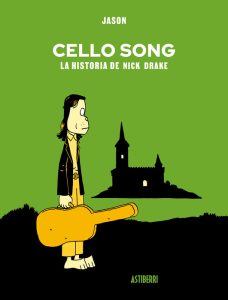 Nick Drake recorded three albums between 1969 and 1972, records filled with an unusually delicate folk lyric and melody, both in composition and performance. These three works, now cult classics, did not have much impact at the time they were released, and that remained so until the 1980s when Drake was rediscovered and cited as a key influence by artists such as REM and The Cure.
He is the emblem of the artist misunderstood in life, and today he is praised, even revered, by critics and peers alike. Nick Drake’s career and life burned like a meteor—brilliant but far too brief. Undermined by failure, the singer died at 26 from an overdose of antidepressants, in a climate of near-complete indifference.
That is what Jason recounts here, including both unfulfilled dreams and bitter failures, in his distinctive style—full of unspoken words, nuance, and leaving ample room for suggestion. With a captivating and piercing melancholy, Jason transforms this biography into a touching narrative for Nick Drake fans and newcomers alike.”
—————————————
Author: Jason. Translation: Óscar Palmer. Title: Cello Song. The Nick Drake Story. Publisher: Astiberri. Sales: Todostuslibros.
***
Reinas infieles, by Carmen Gallardo
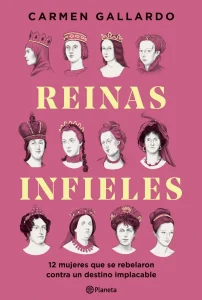 For years women have joined in a powerful and visible way to the study and dissemination of history, both in historical fiction and in essays or biographies. The roster of writers who cultivate brilliance in historical literature is now vast and has enriched the publishing landscape with rigorous works that offer fresh perspectives on the past and a new, vibrant take on other eras.
In Infidel Queens, journalist, reporter, and writer Carmen Gallardo (Madrid) rescues the trajectories of twelve sovereigns whose private lives too often eclipsed, rather than illuminated, the significance of their political actions. The essay begins with the extramarital relationships that they lived—or that tradition attributed to them—though each story responds to very different circumstances. Some sought affection that never came in arranged marriages; others reacted to indifferent, cruel spouses who could not offer a truly married life. Most were betrothed at a young age to alliances dictated by statecraft, used as instruments of exchange to seal alliances and ensure the realms’ dynastic continuity.
In a world where kings enjoyed extramarital freedom, the queens were subjected to a far stricter code of morality. The author analyzes that evident imbalance and shows how any female transgression was used to discredit the sovereign, while identical behavior in monarchs scarcely affected their prestige. One of the author’s accomplishments is presenting this dozen of queens in all their complexity, determined to claim their right to govern their lives and their realms. Few managed to emerge victorious from that struggle.
The tour spans from the twelfth century to our present day and gathers figures as diverse as Urraca of León, Margarita of Valois, Isabel of France, Joana of Avis, Catalina de Médicis, Catherine II the Great, Isabel II of Spain, Maria of Saxe-Coburg and Gotha, or Paola of Belgium. All appear free of the stereotypes and prejudices that long conditioned their memory. [READ THE FULL REVIEW]
——————
Author: Carmen Gallardo. Title: Infidel Queens. Publisher: Planeta. Sales: Todostuslibros.
***
Desde una celda de Zenda, by Bernardo Munuera
 Some books are written in the quiet of a room and others from a cell. Not a prison cell, but that other one—more generous and more demanding—that the reader builds for themselves when they decide to pause before a volume, underline it, discuss it, love it, or reject it with the same intensity with which one would debate a friend. Bernardo Munuera Montero has written this book from that cell. A Zenda cell, yes, but also a reading cell: the intimate space where other people’s pages become living matter and where a review ceases to be a courtesy of publishing houses to become a form of thought.
From a Zenda Cell: Glosas on Books is not a collection of standard reviews. Anyone seeking here a plot summary, a numeric note, or the consumer-critique verdict will be at the wrong door. What one will find, instead, is a florilegium of marginalia: marginal notes, digressions, free associations, quotes crossing other quotes, personal memories interwoven with a novel’s plot or an essay’s thesis. Munuera Montero does not simply say whether a book is good or bad. He prefers to ask what that book does to the reader who holds it, what echoes it awakens, what wounds it reopens, what endless conversations it provokes. And he does so with prose that does not fear excess, irony, digression, or the risk of sounding overly personal.
There is in these pages a declared taste for literature as a way of life. Not as escapism, but as a means of inhabiting the world. That is why the glosses slide naturally from Ottessa Moshfegh to Herbert Clyde Lewis, from Natalia Ginzburg to Jon Fosse, from Pedro Mairal to Flannery O’Connor, from Manuel Chaves Nogales to Evelio Rosero. There is no fashion criterion or forced topicality. There is, rather, fidelity to a ravenous curiosity and an ethical demand: not to let a book pass without trying, at least, to understand what truth—or what fertile falsehood—it concealed.
—————————————
Author: Bernardo Munuera. Title: From a Zenda Cell. Sales: Amazon.