
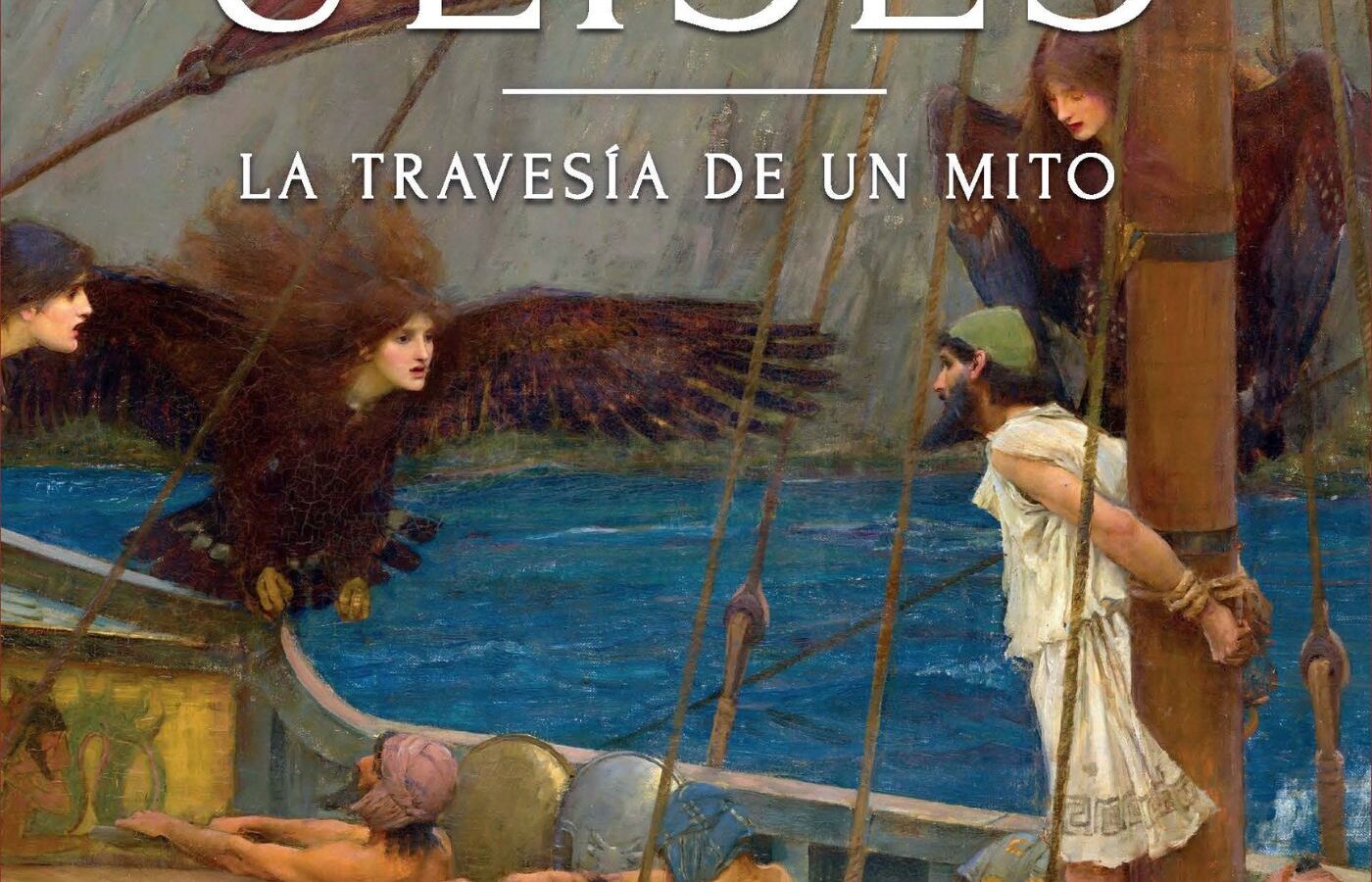
From Dante to Nolan, this book traces the various interpretations and versions that have been made of the myth sparked by Homer, a myth that each generation has felt compelled to reinvent in order to remember how familiar yet distant the poet’s creation is.
In this Making Of, Mirella Romero Recio explains how she wrote The Return of Odysseus. The Voyage of a Myth (La Esfera).
***
I don’t know when the Odyssey arrived in my life because it seems to have always been there. Its main characters slipped into my childhood through books and cinema, although the memory of a fully conscious reading of the work sits in my university years. The world of antiquity, which had always drawn my attention, fascinated me with its complexities and contradictions. The history of Greece seemed thrilling, and reading Moses Finley’s The World of Odysseus made me view the Homeric poem with different eyes. Upon finishing my degree I wrote a dissertation on navigation in the Homeric era, and a few years later I earned a PhD with a thesis on maritime cults in the ancient Greek world. It goes without saying that during those years I read and reread the Odyssey countless times.
Life in academia took me along other paths, sometimes parallel, but often convergent, so my interest in the Homeric text expanded beyond the study of antiquity to its reception throughout history. For years I visited exhibitions and museums, read and studied the Odyssey in art, literature, cinema and many other spheres, so that when La Esfera de los libros—with whom I had already published Pompeii. Life, Death and Resurrection of the City Buried by Vesuvius—proposed that I write a new book, I decided to address the study of this epic from when it was being created—while the oral narration of the homecoming of a Trojan War hero was being told—up to the present day. The result of that project is The Return of Odysseus. The Voyage of a Myth.
I decided to present the history as a maritime metaphor, as winding and non-linear as Odysseus’s journey, who spends ten years moving forward and backward for many reasons. I did not aim to be exhaustive, for it is absolutely impossible to capture the infinite interpretations and cultural manifestations that this work has generated, but rather rigorous and engaging. I worried that readers unfamiliar with the topic might feel overwhelmed with endless data, while specialists could miss works they deem fundamental, but when you begin to write a book you must take risks and make decisions, as our hero did on his voyage. From those choices and renunciations emerges the journey I propose.
Dividí la obra en dos partes. En la primera, quería hablar de la creación de la Odisea, de las distintas versiones del regreso de Ulises y de los restantes personajes del poema (tenía mucho interés en tratar la importancia, no siempre suficientemente reconocida, de las mujeres), además de la figura de Homero y de su enorme transcendencia en el mundo griego. También quería abordar cómo Roma heredó e integró ese legado que quiso ser recuperado por viajeros y arqueólogos siglos después, por ello también incluí un capítulo que se aproximase a esas investigaciones y otro que aludiese a los períodos históricos que podían vislumbrarse en la epopeya.
The second part, therefore, had to be centered on the influence of the Odyssey and its reception, framing it within the process of the continued existence of the Greek world throughout history, so that readers would understand that we cannot isolate this text and its influence from a broader framework in which the history of Greece had gradually increased its prestige. Although I knew perfectly well what I was facing, I don’t think I realized to what extent the Odyssey inundates everything from the 19th century onward and, above all, in the 20th and 21st centuries, where possibilities multiply exponentially with television, video games, social media or theme parks, among many other things. Sticking to the agreed number of pages and giving up certain references was the hardest part of a writing process as exhausting as it was exciting. Choosing images that illustrate some of the issues discussed was, in turn, a genuine delight, and I trust they will enrich the reading experience.
I hope that readers enjoy reading The Return of Odysseus as much as I have enjoyed writing it.
—————————————
Author: Mirella Romero Recio. Title: The Return of Odysseus. The Voyage of a Myth.Publisher: La Esfera. For sale: Todos tus libros.