
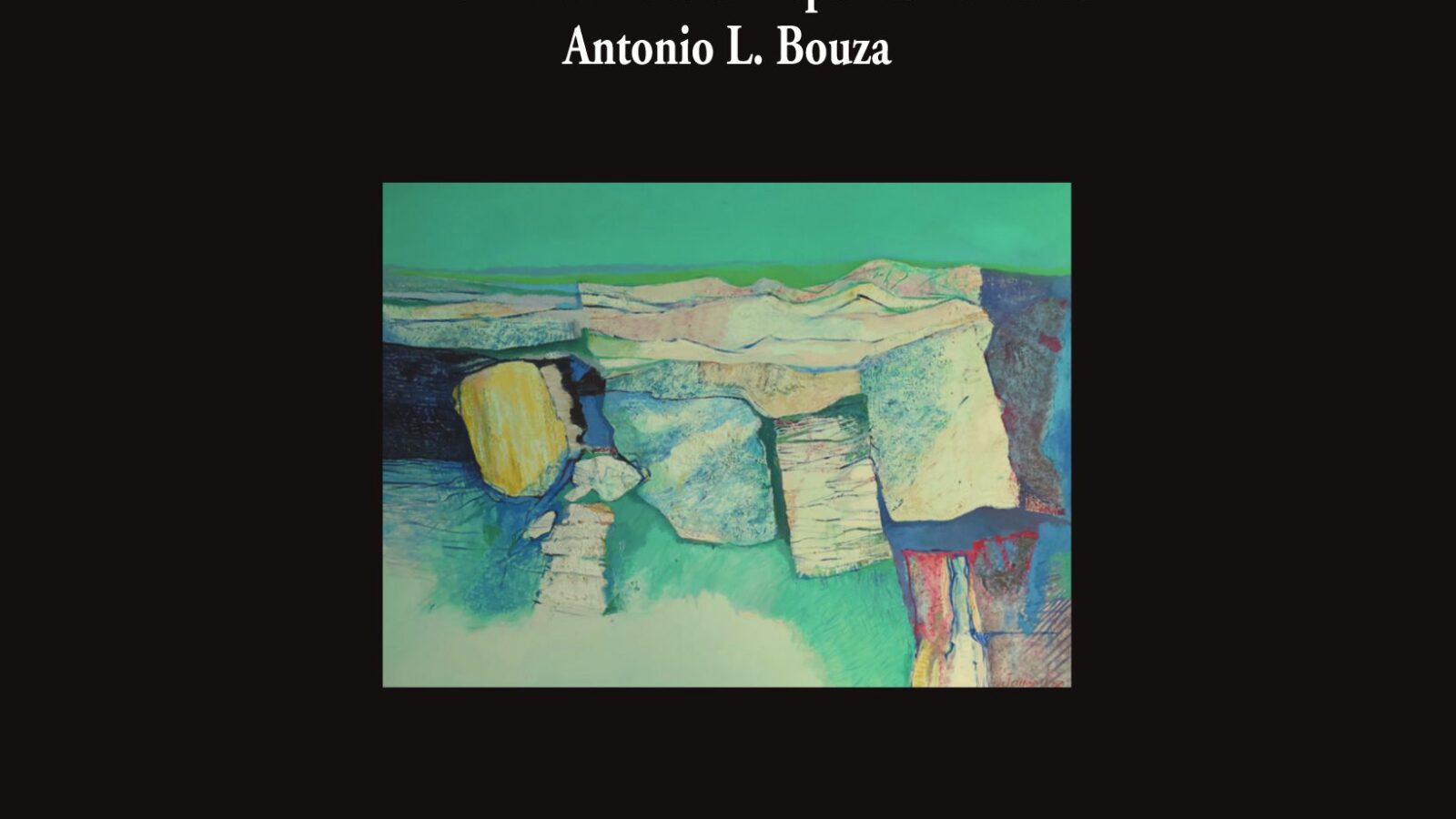
The poetry of Carmen Verde Arocha continually explores the connection between sensorial experience and symbolic construction, as if her voice were tracing the bridge that reveals what these two realms show.
***
Since Canción gótica, she has tested, in a measured and cautious manner, the device of variation: by introducing light movements in the poems (altering titles, the arrangement of the lines), images are resized and directed toward evocations of love and desire, memories of nature and the animal soul, very ancient presences and familiar atmospheres, resonances of scents and fruits; like the contemplation of the river and the events it lets pass, the inner rhythm of the verses forges new possibilities: calm and fierce, they flow toward the sea and even in their depths sustain the strength of their course, to the point of achieving fusion: “Breath of a leopard facing the sea.”
***
On the foaming shores Venus is often born, and as the riverine oscillations are its expressions: mobile, they resonate like bowed string instruments played with that pulse that well knows how to sustain the art of variation when it displays its expressive gifts.
***
Ultimately a work of poetic art, the knack for variation here corresponds to a Venusian temperament, and under this sign one can discern the basso continuo that runs from her poetry collection Cuira (1997) to Mares y halagos (Visor, 2026).
***
In a work with a mobile sensitivity, it is natural that the river—and the sea—be recurring motifs: the appearance of the undulations, far from distracting, cast precise and poignant invitations: “Let us erase the past if we want to be alive.”
***
The poetic variations recall the practices of painting and musical composition, both ancient and contemporary, but the technical skill truly corresponds to the embodiment of a temperament capable of expressing its multiple variants, simultaneities, and proliferations:
Precarious
(variation i)
We begin in love
on the left-hand side of the sea.
We open the fire
drank palm wine
and a pelican fish
was our only witness.
It did not rain.
The sea had swallowed the clouds.
You and I set our seal on things.
Do you understand me?
*
PRECARIOUS
(variation ii)
Will you help me seal the appetite
hidden in these adobe walls?
We drank the fire from the water
and a jellyfish was our only witness.
Thus we began in love
on the left-hand side of life.
Do you understand me?
***
Poetry presents itself as the space where deep and archaic waters, riverine and marine, converge and flow to the poem’s shore: “Poetry without devices or childhood, surrounded by clouds, drowned in a drunken ship — without Rimbaud —.”
***
If verse maintains the cadence of verse enjambment, by altering and transposing words, one can produce sequences, internal shifts; singing them requires sustaining the pulse to mark the passage between language and delicate inner experiences (“the murmurs and the breezes already announce it”).
***
Mares y halagos shows the voice’s wink at certain mysteries, but safeguarded in its sail, glimpsed through poetic grace and its events; it is like a corridor of sliding doors and fans that entice the foreigner who could pass only if he finds the thread; within these interstices Mares y halagos suggests the dynamic between Odysseus and Penelope, while assuming that Dido and Medea might intervene in the game.
***
Mares y halagos conveys the experience of perceiving the craft of composing verses as notes pressed on the infinite keyboard of language; it evokes images of love in its various tonalities, to culminate in a prayer and the whisper of vision, silence and the desire of the voice tempering its key, becoming tuned…
***
“There is a river that stirs your secrets,” the author recalls.
—————————————
Author: Carmen Verde Arocha. Title: Mares y halagos. Variaciones poéticas. Publisher: Visor. Sales: All her books.
BIO
Carmen Verde Arocha (Caracas, 1967)