
It concerns a machine that, by tattooing the sentence onto the body of the condemned, must inflict a pain nearly epiphanic. A monumental and perfect machine, destined to redeem the condemned before surrendering him into the arms of amnesia and of the lifeless life — life without breath — that the State imposes on its culprits. Housed on a remote overseas island, the machine remains in the custody of an officer who orders and administers executions while publicly displaying his absolute faith in the system. The criticisms and skepticism of an accidental traveler, horrified by the machine’s anatomy and the atrocity of its ends, push the officer, in defense of his creed, to release one of the condemned and take his place. Convinced that the machine, in addition to being just, is a tool of moral liberation, and willing to feel it on his own skin, he discovers that it is fallible and that its misalignments twist the execution into a gratuitously bloody act. His death, far from epiphanic, becomes slow and crude, repugnant for the earthly quality of the pain. A death in which the officer’s faith in authority and in the tradition that sustains it also dies. This is the great revelation of Franz Kafka’s tale titled In the Penal Colony: the structures we employ to impose order end up becoming what dominates us. Order, in Kafka’s case; fear, in Dagerman’s: when the human being ceases to contemplate it from the outside, he discovers that he himself is one of his prisoners.
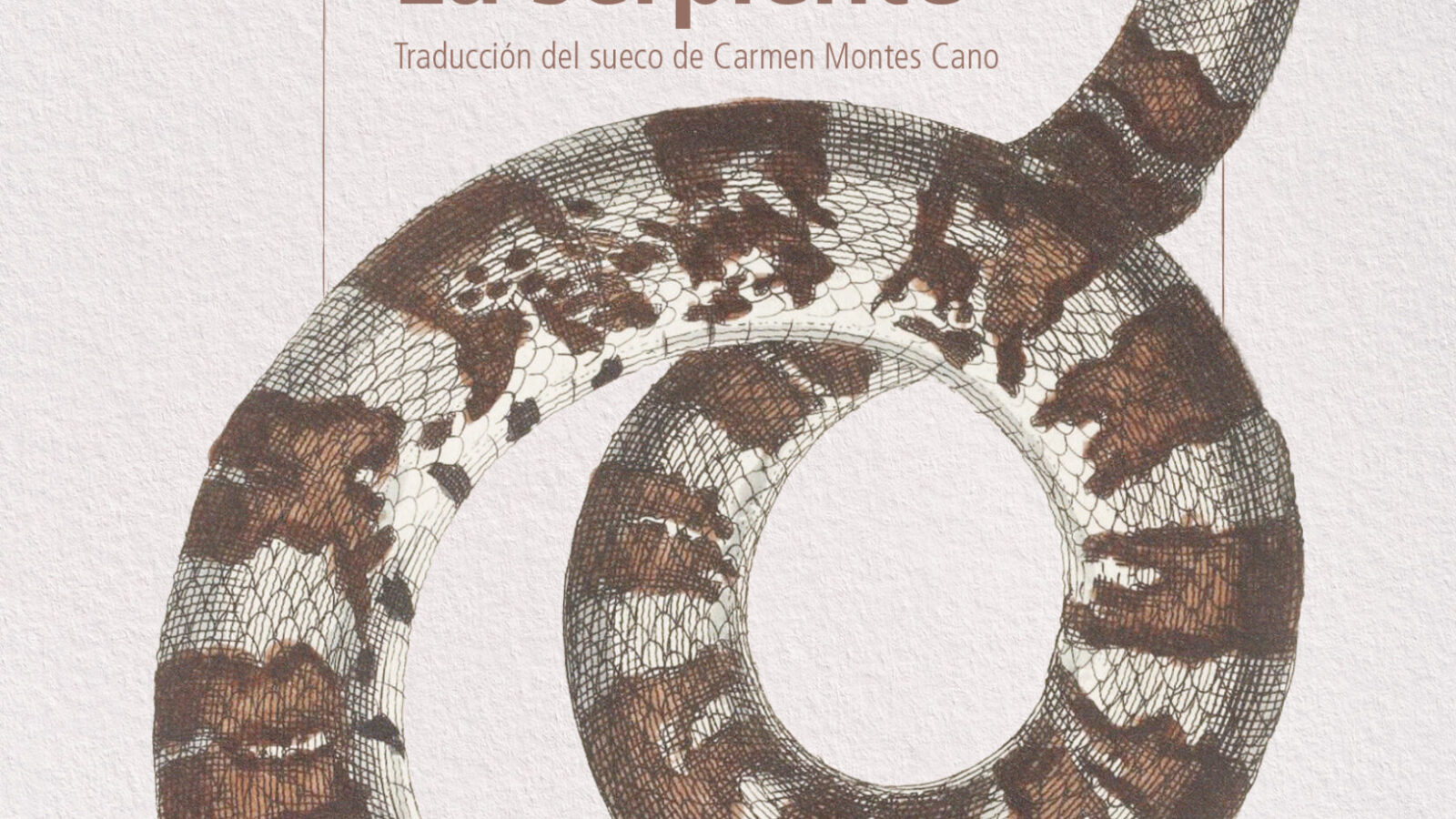
It is the great labyrinthine perversion that discredits the State. Its mechanisms, its cosmetic decalogues, its flow of desires toward brutality and reduction end up being nothing. Nothing in a blank space where sacrificing oneself also has no meaning. The Snake, a novel published in 1945 and which Nordica reissues in a beautiful edition, is more than an antiwar manifesto, more than a war novel translated into the plane of consciousness to corporealize suggestion and its semantic surrounds: The Snake is an immersion — sometimes asymmetric, but always masterful — into fear. And when fear becomes digression and simulacrum, in a time of uniform waiting and pregnant with expectation; when it sharpens along the margins of terror and regulates not only the relationship between equals, but also their deepest reactions, every confrontation with it proves regressive. The great question Dagerman posed is, in itself, an answer: to overcome fear without using it as an excuse nor turning oneself into its physical and conceptual nourishment — whether in the most benign scenarios or in the midst of the Holocaust — is impossible. There remains only one exit: as the Swedish author himself acknowledges in the final stretch of the novel, to decide to live with it and, to a certain extent, to know its most intimate details and to respect it. This is how Scriver, Dagerman’s alter ego, formulates it:
«For me, as a writer, it is entirely evident that my fear must be larger than that of everyone else. It is evident because, in my view, the writer must be a symbol of all the human beings of the world who do not allow themselves to be dragged by the ambition to drown their fear. And just as, for example, workers are always symbolized by the one who works the hardest — the miner or the dynamiter, not the farmer — and reactionaries by the armament capitalist, not by the substitute accountant, the distressed man must symbolize himself with the one who has reached the bottom of his fear, the one who knows it the most and fears it the least, because he is used to coexisting with it. That man is the writer. Shouldn’t being a writer be equivalent to possessing a greater anguish than everyone else in the world?»
The fear can be synonymous with ambition — Dagerman shows that heroism is also regressive — or with rupture. And rupture, always psychological, exemplifies the unequal and, at the same time, systematic structure of The Snake. The novel, formally divided into two parts, unfolds three movements that operate with a kind of argumentative autonomy and are interwoven by a core, sometimes symbolic and almost always explicit, in which fear takes a discursive form that penetrates the characters and gnaws at their movements. In the first, an almost lyrical analysis of intimate terror and psychosexual fear, Irène is a young woman who works on the outskirts of a military camp. Trapped in a toxic dependent relationship with Bill, a charismatic and unpredictable soldier, she is consumed by the conviction that she pushed her own mother from a moving train. Both embark on a feverish and dissociated pursuit of the corpse along the embankment of the railway tracks, erasing any empirical boundary between wakefulness and nightmare. In the second movement, Dagerman addresses collective terror and institutional collapse and sets the action in the blocks and barracks of a military installation. A snake that Bill had captured in the first part has escaped into the dormitories and no one knows its whereabouts. The soldiers fall prey to chronic insomnia and lie on their bunks, subjected to unbearable anxiety that they desperately try to obscure before their superiors and peers. It is then that military order and hierarchy crumble and warrior masculinity, built on obedience and the concealment of emotions, reveals its fragility. In the third and final movement, Scriver, a soldier with intellectual leanings who analyses from within the institution the tragedy of the human condition, presents through a vivid monologue his ontological view of fear and its nature.
The figure of Stig Dagerman cannot be understood without the disruptive power of a novel like The Snake, just as this one cannot be understood without the almost hagiographic halo that surrounds its author and without the war context in which it was written. Dagerman’s thought, marked by abandonment and by a feverish ideological awakening, takes root in a class-consciousness that began at eleven years old when he moved to Stockholm to live with his father. He, a casual laborer and stonecutter, introduced him to libertarian ideas. His beginnings as cultural editor of the newspaper Arbetaren, his marriage to Annemarie Götze — a German refugee barely eighteen years old — and his relationship with a broad circle of militants and European exiles allowed him to transcend the geographic isolation of his homeland. While Sweden adopted a pragmatically neutral stance during World War II, Dagerman internalized and expressed in his prolific work the continental trauma. He is the author of four novels of deep existential significance — The Snake, The Island of the Condemned, Burned Child and Wretched Weddings —, of a highly commendable collection of short stories titled Night Games, of several plays and of a chronicle book about Germany’s devastation after the war, German Autumn. All these works were written between 1945 and 1949. The Snake was, therefore, an eruption that propelled him to the epicenter of fyrtiotalismo, the current of the “writers of the forties”. The main characteristics of the movement — decisive formal experimentation, fragmented syntax and an obsessive approach to universal questions such as imminent fear, alienation of the modern subject, or the survivor’s guilt — are present in this novel, written during Dagerman’s compulsory military service and born as a visceral impulse, which dialogues in intertextual terms with European avant-gardes and the American Lost Generation. Related to both Camus and Franco-Algerian existentialism and to William Faulkner’s gothic determinism, Dagerman nonetheless finds his greatest affinity in Franz Kafka’s labyrinthine absurd and in a use of symbolism that confuses physical reality with psychological nightmare.
In The Snake, far from being merely a character — in this case, adrift in a military barracks — the animal represents the center of gravity of the novel’s multiple metaphorical layers. The snake is primitive instinct, barbarity and terror, suspicion and catalyst of moral truth. The snake: word and motion, hiss and dampness, pain announced between the dormitory boards or the greenery of grass. The snake as language employed by Dagerman: a physical discomfort, an accumulating, undulating expansion of settings filled with sweat, aversions and fragility. Symbol and metaphor; the animal that shines under fear’s tyrannical cord; a victorious impulse in which the defeat that is most ridiculous, most passive and most belligerent, the snake is a mirror of that Sweden faced with imminence and fear, heroism and flight, and a contemporary example of how the denial of fear is — or will be — the preface to extinction.
—————————————
Author: Stig Dagerman. Title: The Snake. Translator: Carmen Montes Cano. Publisher: Nordica. Available at: Todos tus libros.