
To commemorate the 90th anniversary of the Civil War, José Ángel Mañas recreates in Zenda, day by day in this section, what happened in 1936, perhaps the most momentous year in all recent Spanish history.
Monday, September 7, 1936: More Stories from Sama
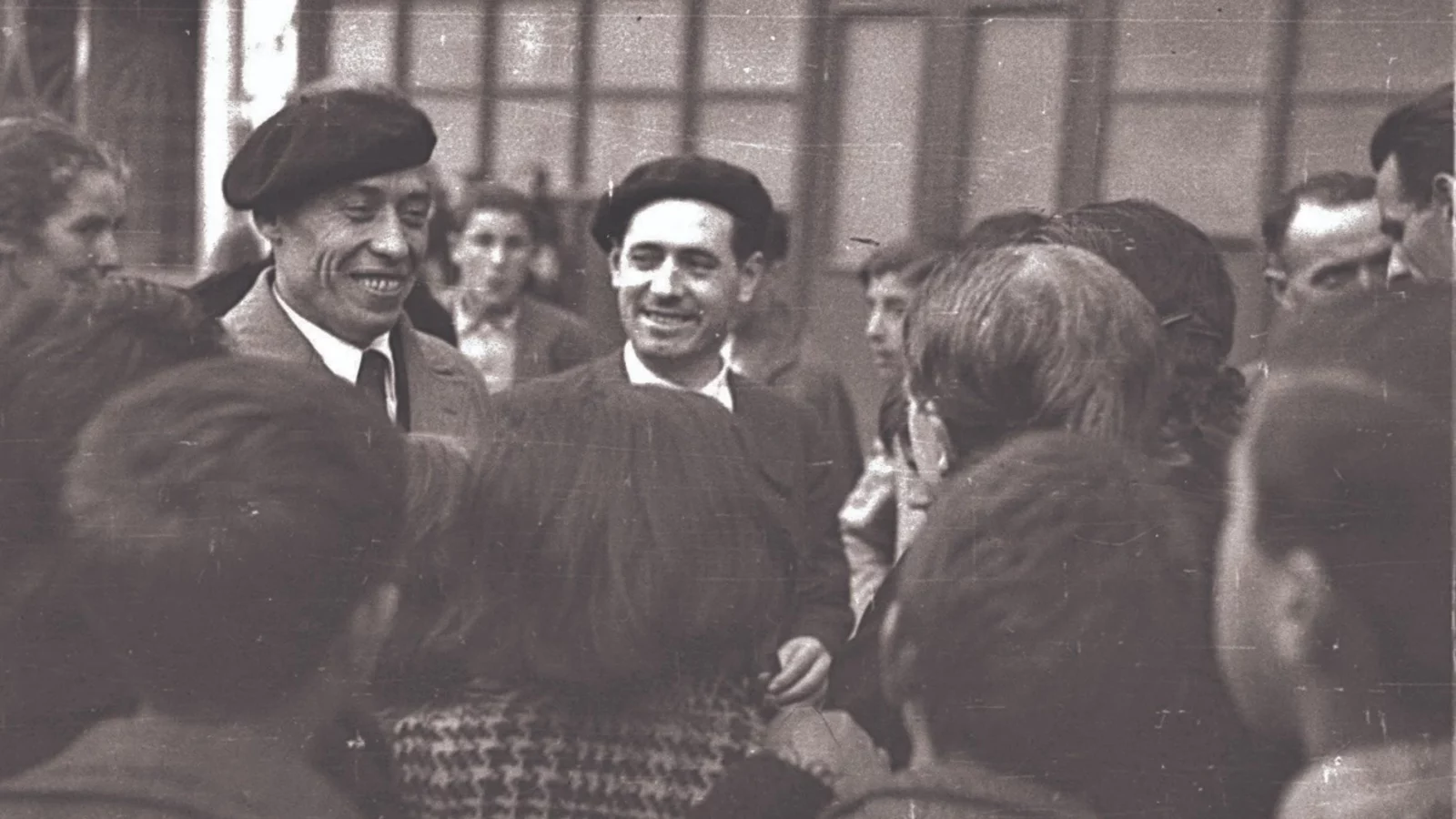
On September 7, the Popular Front appointed Belarmino as head of the Provincial Committee of the Popular Front of Asturias, and in Sama the name was being spoken of everywhere again.
In the casino it was whispered that during the 34 Revolution the General López de Ochoa had shown unnecessary generosity. It was suggested that, being a mason, he enjoyed sympathy. Everyone criticized the actions of that Republican military figure who in 1934 flew to León, and from there traveled by car to Lugo to take command of a battalion of one hundred eighty men with which he marched toward Oviedo.
The road had been hard. With gas stations emptied by the miners, supplying trucks was a primary problem. Added to this were fallen trees that blocked the way.
The first night, López de Ochoa approached the casino to have a drink and boasted that he would take Trubia the next day. He knew perfectly well that the information would reach the rebels. By morning he reached Avilés, where no one expected to greet him. Thus he managed to surprise the miners besieging the garrison. There, Civil Guard and Carabineros held out. The besiegers, about six hundred strong, fled.
To take Avilés cost fifteen casualties. As the expected reinforcements did not arrive, López de Ochoa decided to march on Oviedo with his contingent. In the city he was fortunate to rescue the nine hundred men from the Pelayo Barracks. He urged them all to recover the lost honor.
With them began the Battle of Oviedo, soon to be joined by the men of Juan Yagüe. Despite the antipathy Yagüe felt toward the mason general and the strains between the two commands, they managed to coordinate to subdue, after hours of fighting, some inexperienced but well-armed miners. As we already stated: Oviedo became a field of ruins.
Meanwhile, in Sama, Belarmino Tomás, secretary-general of the Mining Union and newly appointed chief general of the Red Army, convened local committees to explain that one could keep fighting to the death, or negotiate an honorable surrender. Afterward he sent to see López de Ochoa the Civil Guard lieutenant Gabriel Torrens, with a white flag.
This Torrens was a Civil Guard and former Legionnaire who had managed the surrender of several garrisons. He laid out Belarmino’s terms for capitulation; the main one being that the regulars and the legionnaires would not enter at the vanguard of the occupying troops.
López de Ochoa replied that if they surrendered the arms, he would accept, but he needed guarantees. And he wrote by hand a page demanding the submission of the armed groups, the release of prisoners, and the delivery as hostages of a quarter of the members of the regional committee.
As Torrens took time to return, Belarmino believed he had been betrayed. He saw it as so ominous that when Torrens appeared he was overjoyed and accepted everything except the handing over of hostages.
Back in Oviedo, Torrens told López de Ochoa that hostages could not be delivered because most had fled. But Belarmino was taking responsibility as the leader and would sign the pact from general to general. Meanwhile, the miners were already hiding their weapons.
Not long after, when Belarmino faced López de Ochoa, the latter, smiling, said:
—You will surely know that in defending liberal and republican principles I was exiled during the Dictatorship. You can be sure that not a drop of blood will be shed because of me. The Tercio and the Regulares will go as you request, in the rear, and the troops will enter the mining basin tomorrow between eleven and twelve. Now, if they take even a single shot, I will place the colonial forces at the head. As for you, what do you plan to do?
—I will leave Spain.
—No, my friend. You wait for me in Sama, for I am a close friend of the war auditor and of the President of the Republic. I promise I will use my influence on your behalf.
Thus López de Ochoa saved Belarmino Tomás’s skin, who a couple of years later, on that seventh of September, could be named head of the Provincial Committee of the Popular Front. Meanwhile, López de Ochoa had been, quite literally, decapitated.
All the daily entries of 1936 day by day
Interview with José Ángel Mañas about 1936 Day by Day