
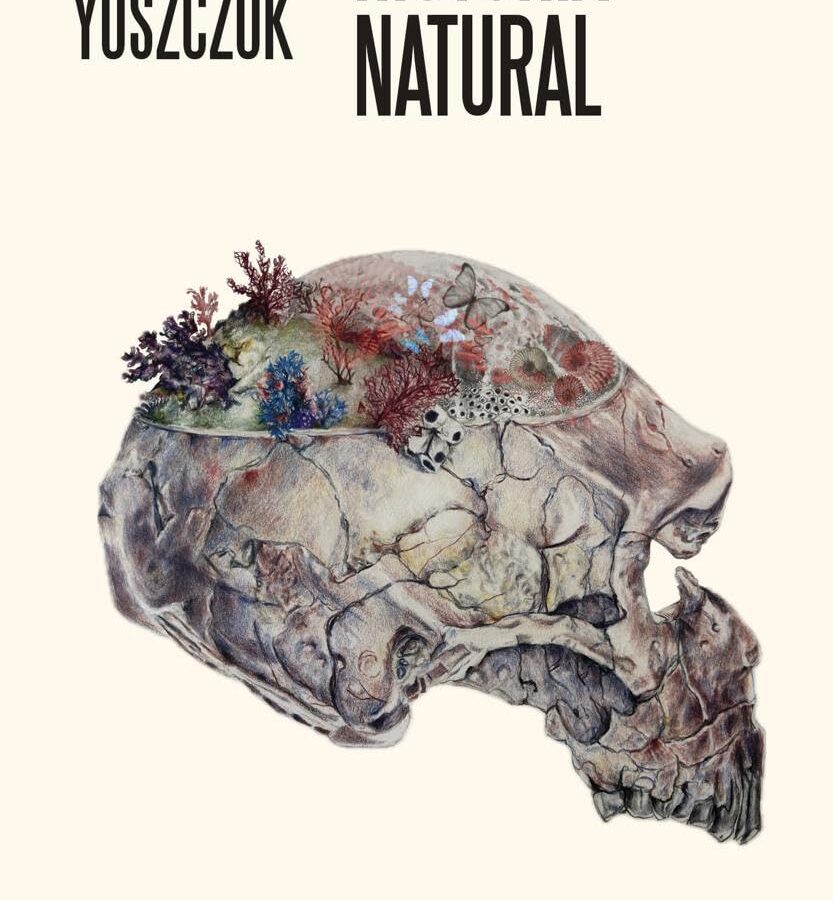
There are books you reach by intuition. In my case, Historia natural, by Marina Yuszczuk, was one of them. It was enough to know that part of the story unfolds in a natural history museum to awaken in me that almost childish curiosity those places evoke, where time seems to linger behind the glass cases: skeletons of impossible animals, insects pinned with pins, minerals, skulls, maps, extinct species… I suppose a lot of it has to do with the fascination I have always felt for old cabinets of curiosities, those spaces that still combined science and wonder.
No había leído a Yuszczuk pero intuía que en sus obras
La sed
y
La inocencia
ya jugaba en ese territorio inquietante donde lo extraño nunca termina de convertirse en fantástico, pero tampoco permanece del todo anclado en la realidad.
I was curious to discover how that sensibility could develop inside a natural history museum. And the answer is a novel far more difficult to classify than it seems.
Porque Historia natural podría presentarse, en apariencia, como una novela histórica. Estamos en la Argentina de finales del siglo XIX, en un país que intenta construirse a sí mismo como una nación moderna y civilizada. Existe el Museo de Ciencias Naturales de La Plata. Existe Francisco Pascasio Moreno. Existen muchos de los acontecimientos históricos que aparecen de fondo. Sin embargo, Yuszczuk hace algo mucho más interesante que reconstruir fielmente un periodo: reinventa la historia desde la ficción. Y ella misma lo advierte desde el principio. La protagonista de la novela, Virginia Venecia Moreno, es una hija inventada del propio Moreno, una chica que nunca existió y cuya voz abre la novela con una presentación imposible de olvidar: «Virginia, por lo que soy. Venecia porque es la ciudad a la que mis padres viajaron en su luna de miel, la cuna acuática que meció el primer sueño de nuestra familia antes de los niños muertos, uno detrás del otro, y el veneno y la locura. Moreno porque es el apellido de mi padre».
Ya desde esas primeras líneas tuve la sensación de encontrarme ante una de mis novelas favoritas, también inclasificable: Siempre hemos vivido en el castillo, de Shirley Jackson. Not because both novels share plot, but because Virginia possesses that same strange gaze Merricat Blackwood once had. Both contemplate the world from a slightly displaced vantage point, where childish logic coexists with an imagination capable of justifying any decision. They are not unreliable narrators in the classical sense; they are girls who still believe that wishes can alter reality and that, precisely for that reason, they are far more unsettling. Like Merricat, Virginia also tries to preserve a small universe that feels threatened. Only here that universe is not a secluded house but a museum. At heart, if there is one trait that defines Gothic literature, it is the importance of space. Castles, mansions, decaying houses… places that stop being mere settings and become living organisms that shape those who inhabit them. In Historia natural that place is the museum. Virginia has grown up, as she herself recalls, “among skeletons, stuffed animals, arrowheads and fragments of vessels.” That mere list is enough to understand that the museum functions as a true character. A building filled with shadows where mounted animals, human remains, bones, and objects ripped from other places and other cultures coexist. There is something deeply unsettling about spaces dedicated to preserving what no longer lives. As if the entire building were a kind of permanent ars moriendi reminding us, at every step, of the fragility of any existence. In that sense, the museum ends up becoming a perfect metaphor for the civilizing project that runs through the novel: to preserve, classify, order… even if to achieve it one has to wrench people and objects from their contexts. Natural history museums were created to classify the world. Marina Yuszczuk’s novel shows, instead, that there are things impossible to catalogue: grief, obsession, desire, guilt or filial love when it becomes a form of madness. And there are also ghosts who do not need to appear, ghosts that stand for silences, betrayals, lies within an entire family.
Virginia’s childhood unfolds surrounded by losses and sickly relationships. After her birth, all her siblings are stillborn. Her father remains forever absent, absorbed by his expeditions and by the museum. Her mother is ill. The governess seems to wait only for the possibility of marrying to leave that house. The older siblings barely manage to fill the enormous emotional void that runs through the family. Yuszczuk understands very well one of the great transformations of contemporary Gothic: monsters no longer need to inhabit haunted castles; many times they live inside the very families. It is also admirable, the economy with which she builds the members of this family. A few gestures are enough to define them. The father, for example, is continually seen stroking his mustache. Virginia watches that movement with genuine fascination because it seems to her “a way of putting things in their place with a single quick motion from the roots to the tips.” In barely one image we understand both the almost absolute authority that man wields over his daughter and the desperate need she feels to be seen. Virginia lives obsessed with pleasing her father. She constantly seeks his approval. She tries to become the perfect daughter for a man who is unable to truly look at those near him. That almost religious devotion ends up isolating her from the rest of the world and feeding a logic of her own where any act can be justified if it serves to obtain the slightest sign of affection.
La llegada de sus primas introduce otro de los grandes temas de la novela: el despertar del deseo. La prima mayor, hermosa y mucho más adulta, despierta inevitablemente un nuevo equilibrio dentro de la casa. De nuevo resulta difícil no pensar en las relaciones entre Merricat y Constance. Y es entonces cuando aparece otro de los personajes fundamentales del libro: un joven indígena llevado al museo, convertido casi en un objeto de estudio más dentro de esa inmensa colección científica. Con su llegada, la novela termina de mostrar su verdadero rostro. Porque aquello que parecía una historia íntima empieza a dialogar directamente con la violencia histórica que sostiene el propio museo. Los indígenas que llegan confiando en Francisco Moreno descubrirán muy pronto que la ciencia puede convertirse también en una forma de posesión. Que detrás del prestigio, del progreso y del conocimiento pueden esconderse la ambición personal, el deseo de reconocimiento y una profunda deshumanización. Mientras Virginia es capaz de cualquier barbaridad por conquistar el amor de su padre, Moreno demuestra estar dispuesto a sacrificar casi cualquier cosa por alcanzar la gloria científica. Las dos obsesiones terminan reflejándose mutuamente. Y el museo deja entonces de ser únicamente un lugar dedicado a conservar la memoria para convertirse en una inmensa galería de vergüenzas.
Quizá esa sea la mayor virtud de Marina Yuszczuk: conseguir que una novela que parecía hablar de la construcción de un museo termine hablando de la construcción de los monstruos. No los monstruos fantásticos, sino los que nacen del deseo de ser amado, de la ambición, del poder y de esa capacidad tan humana para convencernos de que cualquier acto puede justificarse si creemos perseguir un bien superior. Al terminar Historia natural comprendí que lo perturbador había sido descubrir que los mayores monstruos nunca estuvieron expuestos detrás del cristal, sino caminando por los pasillos, ocupando los despachos, sentándose a la mesa familiar o buscando desesperadamente el amor de un padre. Y quizá esa sea la gran virtud de Marina Yuszczuk: recordarnos que la historia natural siempre termina convirtiéndose, inevitablemente, en historia humana.
—————————————
Autora: Marina Yuszczuk. Título: Historia natural. Editorial: Almadía. Venta: Todos tus libros.