
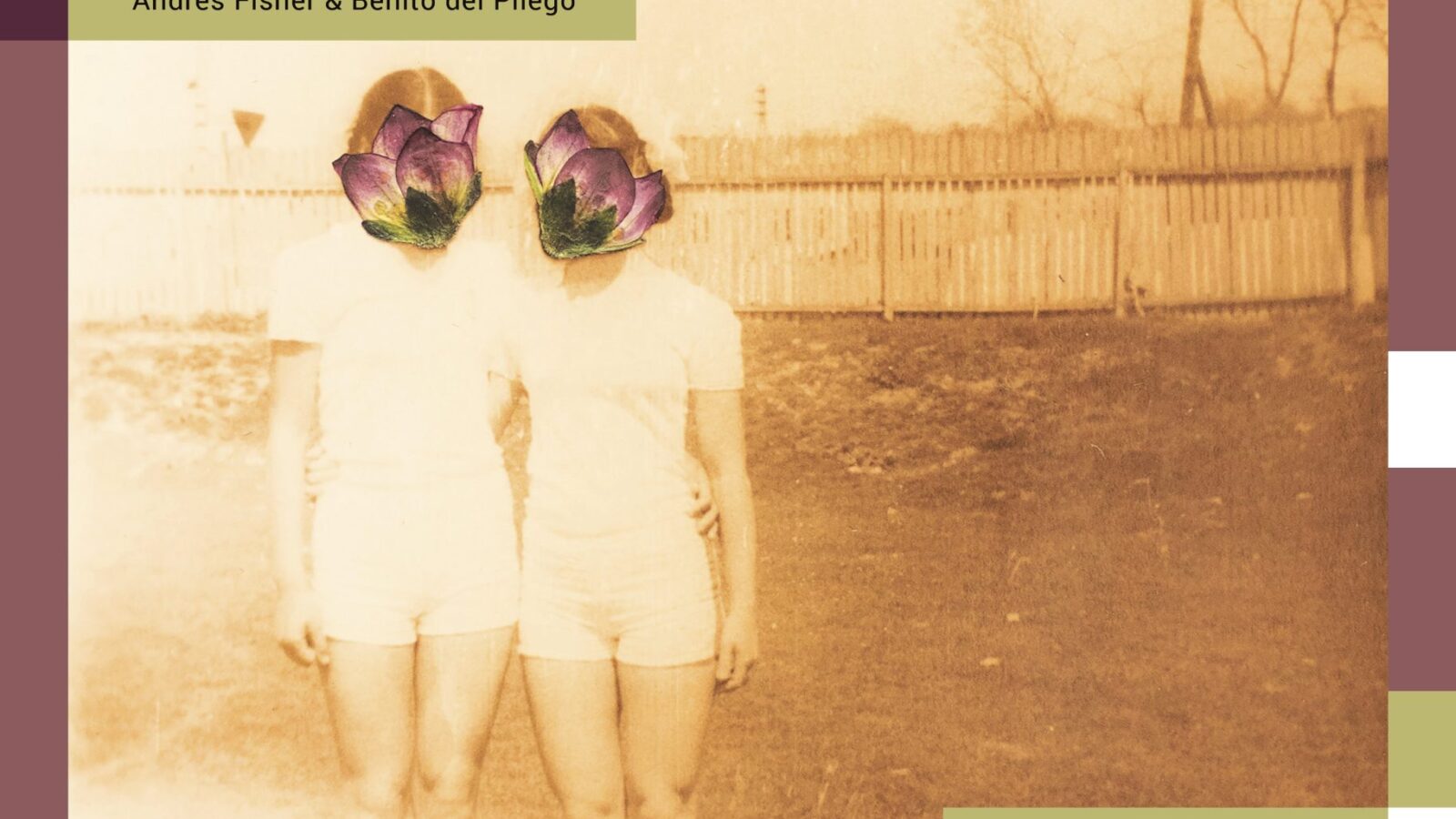
Chronicles of resilience listen to their forms and their deformities: “Order is that a white form of being round” (A Box). For the American writer, the blank page represents a space of lived experiences and survival: “[Habit] is widespread; it closes and rises and rarely—if ever—within there is the center standing” (A Piano).
Eight decades after her death, the writer
Gertrude Stein
(Allegheny, United States, 1874 – Neuilly-sur-Seine, France, 1946) continues to pose linguistic challenges. Confronted by collapse, her carefree artifices emerge: “All this in one gesture. While examples of the same lily” (Ídem lo mismo. Valentine’s postcard to Sherwood Anderson).
In the collection of poems, brief pieces and theoretical writings Ídem lo mismo (Kriller71 Ediciones; edition, translation and forewords by Andrés Fisher and Benito del Pliego), documents of sincere honesty articulate the spiritual peregrination of a poet choked by the lifebuoy of writing: “A commentary binds many, many games of lead” (Book).
Both the structures and the iconographies of the author of Three Lives (1905-06), The Making of Americans (1902-1911) or Tender Buttons (1914) reside in the suffering experienced by the novelist and American art collector herself, arranged carefully in rows: “He was a great man, they weren’t listening very often to him, saying again and again about being one while alive” (Matisse).
A tribute to the liberties of restraint is what shapes this Selection of Short Pieces: Theory, as the subtitle states. Yet the memoirist of The Autobiography of Alice B. Toklas (1933) yields to the languid pleasure of describing her own ego without countering the ardors of grafomania: “Exact likeness to exact likeness the exact likeness” (If I told you. Complete Portrait of Picasso).
Pictorially verbal are her imaginative faculties; hypnotically exuberant is the brazen celebration of identity that makes up this collection, eager to sing to itself (“Plenitude of plans. Geographically of nothing,” we read in “Geography”), in which verbal loops revolve around a strange communion of creativities.
A structure as intricate as it is liberating has no end, merely turning around its own axis: “In the first book there was an attempt at the continuous present and the use of everything, starting again and again,” the author confesses in the talk “Poetry as Explanation.”
Interweave extremes the printed text. A lyric unfolds as memory and memorial intertwine, while experimenting with irresolutions, senselessness, egocentrism, and counter-current impulses: “Poetry has to do with using with abusing, with losing with wanting, with denying with avoiding, with adoring with replacing the noun,” the poet concludes in the essay “Poetry and Grammar.”
Arguments lose their thread when they meet it; the meaning of the composition eludes us unfailingly in these “texts that constitute a radical exercise as they explore, extend and push the possibilities of language”, suggest the editors and translators in the volume’s preface.
Ultimately, the literary experiment crosses the boundaries of what we call literature. Eight decades have passed since the death of a writer whose poems continue to test the essence of poetry with her delightful verbiage. Biografía del otro, autoficción del alter ego? Regardless of its definition, the endeavor is profoundly serious and winningly playful, rewarding our amused, attentive reading handsomely.
—————————————
Author: Gertrude Stein. Title: Ídem lo mismo (selection of brief pieces: theory). Translation: Benito del Pliego and Andrés Fisher. Publisher: Kriller71. Availability: Todos tus libros.