
To commemorate the 90th anniversary of the Civil War, José Ángel Mañas recreates in Zenda, day by day in this section, what happened in 1936, perhaps the most pivotal year in the entire recent history of Spain.
Monday, September 14, 1936: The Moscow Gold
Tráeme otro vodka, camarada.
As the waiter attended to him, Koltsov turned to look around. Fed up with his hotel, he had walked out onto the Gran Vía and stepped into the first café he found: jam-packed with militiamen, sweaty men and women, and also — he realized — a few French aviators from the Malraux squadron. Everyone swayed and jostled. They tried to keep up with the music of a jazz band, with drums and a saxophone, enveloped in cigarette smoke. The Spaniards wore navy-blue overalls with an Astra at the belt. The anarchists could be identified by the red kerchiefs at their necks; the aviators by their leather jackets, though some were in rolled-up sleeves. The band played in their honor the Marseillaise and then the Internationale, which the whole bar chanted with shouts of “U.H.P.”
Now he began to perform a foxtrot that sparked a wild swirl of movement when, suddenly, from among the dancers, a sweaty man appeared.
—Salut —he said in French.
It was André Malraux. No sooner had the conflict broken out, the novelist had convinced President Blum to organize an air squadron — four bombers, fourteen fighters — which the French Government placed at the disposal of the Spanish Republicans. It had been two months since the squadron, whose pilots were mercenaries, had been at the service of the Ministry of War and carried out missions in Extremadura and on the Central Front.
Malraux, with his sleeves rolled up, sweaty, eyes bright, bore little resemblance to the conscientious and well-dressed intellectual who had given his lecture at the Athenaeum months earlier. The thrill of war was contagious. At first some of his pilots had asked to bring their wives and that had been refused. Today nearly everyone danced with Spanish women.
Malraux, among his compatriots, maintained a certain composure, though not as much as Koltsov had hoped. The Russian, for some reason, looked down on him: that neck tic, the lack of control over his body, irritated him. But above all he relished the prestige of having Stalin’s trust. For his part, Malraux tried to charm him and did not miss an opportunity to coax out what was being thought in Moscow. Today, moreover, Koltsov was alone (his inseparable Vladimir Gorev was not with him) and he had one or two drinks too many.
—Why are you toasting?
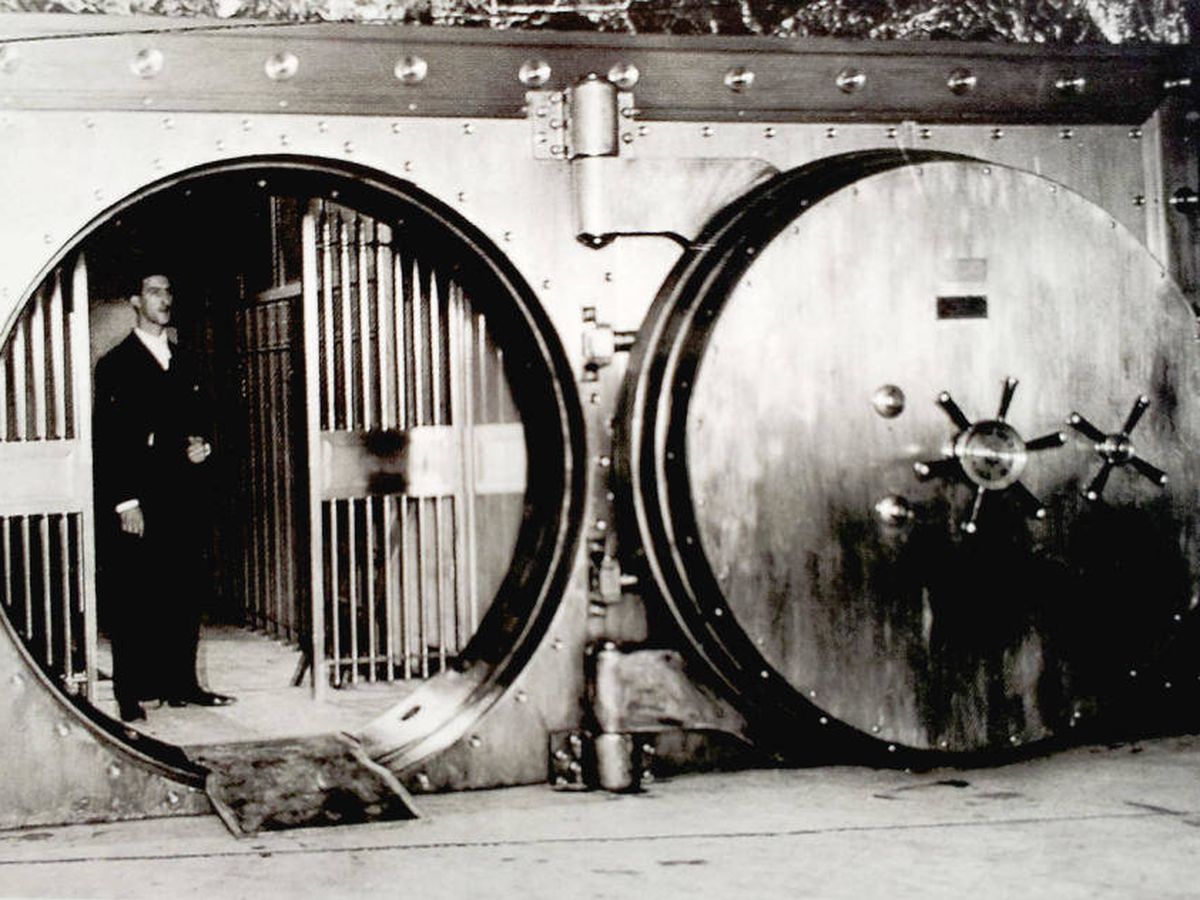
—I toast to the Moscow gold —Koltsov said. And he smiled, enjoying the attention he provoked—. I mean the five hundred and sixty tons I saw loaded today onto a train that departed from the Atocha station.
—Nobody has told me anything about it.
—I have seen it with my own eyes, comrade. Today a detachment of carabineers arrived at the Bank of Spain. The first ten thousand boxes have already left the Atocha station bound for Cartagena.
That convoy was heavily guarded, because anarchists from Barcelona had arrived requesting its transfer to Catalonia. As the Government refused, there were whispers that García Oliver and Durruti planned to storm the Bank of Spain outright.
—And where are they taking it? I’ve heard Paris is claiming it as payment for its military aid. Stay still, can’t you see I’m talking? —Malraux said, turning toward the militiaman who asked him for another foxtrot.
—For the moment it stays in Alicante. Paris is claiming it, that’s true. But the ambassador of my country is also working to bring it to Moscow. I fear —Koltsov drained his glass in one gulp— that you’ve been outmaneuvered. Come on, dance with your girl, enjoy the night. Drink as much as you want, it’s on me. —And he turned back to the waiter. He left a handful of bills on the bar—. Whatever the French comrade drinks is on my account.
—Or on account of the Moscow gold —the Frenchman specified.
—Or on account of the Moscow gold, indeed.
Todas las entradas de 1936 día a día
Entrevista con José Ángel Mañas sobre 1936 día a día