
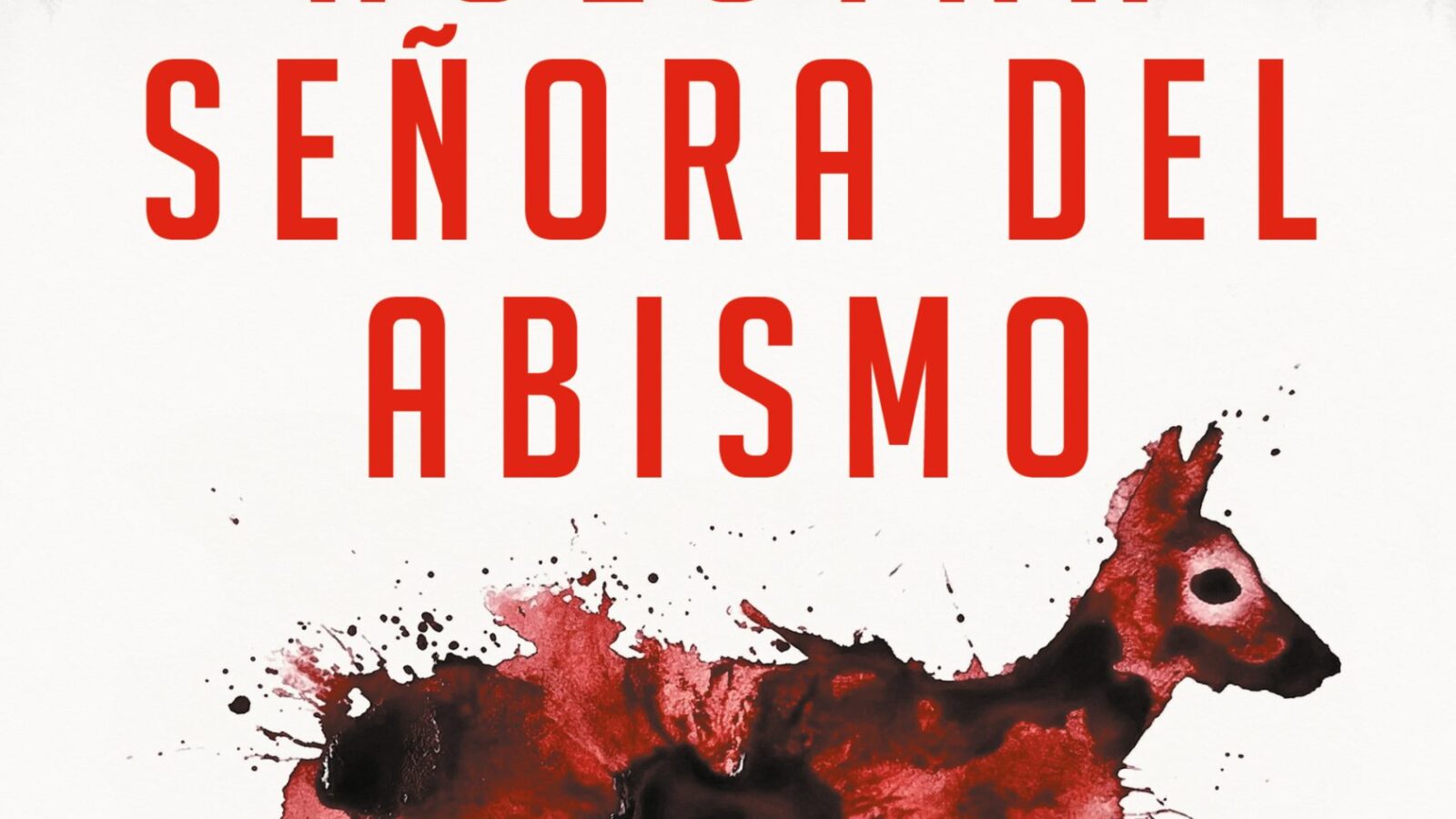
For the past three years, at the Miranda valley sanctuary in the Catalan Pyrenees, people have been vanishing. Fortunately, a man decides to investigate in secret what happened to the latest woman who faded into nothingness.
In this making-of, Xus González explains how he wrote Our Lady of the Abyss (Reservoir Books).
I must confess that after writing consecutively A Clean Job and The Corsair, I was in the mood for a change. Both books, as well as my debut novel, Leaving the Game, were set in the Barcelona Metropolitan Area, a hostile and bustling environment populated by a colorful urban fauna that never disappoints. Yet, as I contemplated the next story featuring that tireless police officer named Silvia Mercado, I felt the urge to play with a protagonist who wasn’t so constrained by the letter of the law. And in all my novels there are cops and criminals, and, as those who have already read them know, neither the good guys nor the bad ones are entirely virtuous. This time, however, I wanted to depict the movements of someone who did not feel obliged to abide by the law. That was the first starting point.
The second factor, of course, was the setting. For there is one thing that defines and characterizes Our Lady of the Abyss: the place where the story unfolds—the Miranda valley. You may not be familiar with that name, and that’s natural, because I invented it, but if I say that it’s a remote spot in the Catalan Pyrenees, home to a sanctuary with a virgin statue and accessible only on foot or by cog railway, surely many of you will picture a very real place: the Núria Valley. The reason I chose a setting with such striking similarities is that, twenty-five years ago, I worked there myself as a waiter for several consecutive summers. Things of life, even back then, led me to imagine crafting a story set in that secluded yet peculiar corner, where pilgrims and hikers stream in, forming a tiny, very special microcosm. Now, years later, I present to you my own valley, where a series of extremely mysterious disappearances are taking place, and where Víctor Trafalgar, our protagonist, arrives pretending to be just another waiter, but determined to uncover, in secret, the whereabouts of Noa, the last person whose trace has vanished.
“There’s a line that rings true for me: if the investigation does not progress and the victim is never found, the case can be considered an absolute triumph for the killer.”
The disappearances were exactly a topic I was eager to explore, specifically from a police perspective. Nobody doubts how to proceed when a corpse is found and death has occurred violently, but when the matter concerns the disappearance of an adult—without any initial signs that would lead, at least in the first days or weeks, to consider a dangerous or high-risk missing-person case—the moment a serious inquiry begins, the most valuable clues have often already evaporated.
The rate of resolution in homicide cases is certainly high (around 95%), meaning that nearly all perpetrators of violent deaths end up in custody. But what happens when no body is found? In those cases, you don’t speak of homicide; you speak of a disappearance, and the initial objective is to locate the person, not to identify the wrongdoer. If the investigation stalls and the victim remains unfound, the case can be considered an absolute victory for the perpetrator.
Speaking of killers and true crime, a device I had wanted to use for some time, and which I found very apt for this novel, was the use of true crime as a narrative method. This genre, more in vogue than ever, helped me spice up the central plot with supposed interviews, archival footage, and police documents. In this way I managed to weave in a wealth of information in a dynamic and engaging manner, simulating a documentary series created long after the dramatic events depicted in the novel. The name of the docuseries is Valle de sombras, nothing more and nothing less.
“When the investigation of the disappearances inevitably intersects with some members of that group, the tense calm will give way to an open confrontation.”
To conclude, I’d like to talk about Quintana de Ter, the town at the foot of the mountains where a large portion of the plot also takes place. There you will find the police station of the Mossos d’Esquadra and, more specifically, the Investigation Unit charged with the case. Yet nothing is straightforward, and things are especially difficult there. A young sergeant, newly arrived from the Metropolitan Area, lands with the mission of rejuvenating a unit decimated by vacancies and composed of veteran officers with little appetite for pressure. While convinced that his strict and decisive attitude is the right approach, he quickly discovers that the local reality operates differently and that perhaps his methods are not the most suitable.
On the other hand, Quintana de Ter’s population is on edge. The new mayor has risen to power with votes from a faction that turns its back on immigration, blaming it for all the ills, especially the Maghrebi community. When the disappearances investigation intersects inexorably with some members of that group, the tense calm will yield to an open confrontation.
What can go wrong? Well, everything, really. So read the novel and enjoy. I’m convinced you won’t disappoint.
—————————————
Author: Xus González. Title: Our Lady of the Abyss. Publisher: Reservoir Books. Availability: All Your Books.