
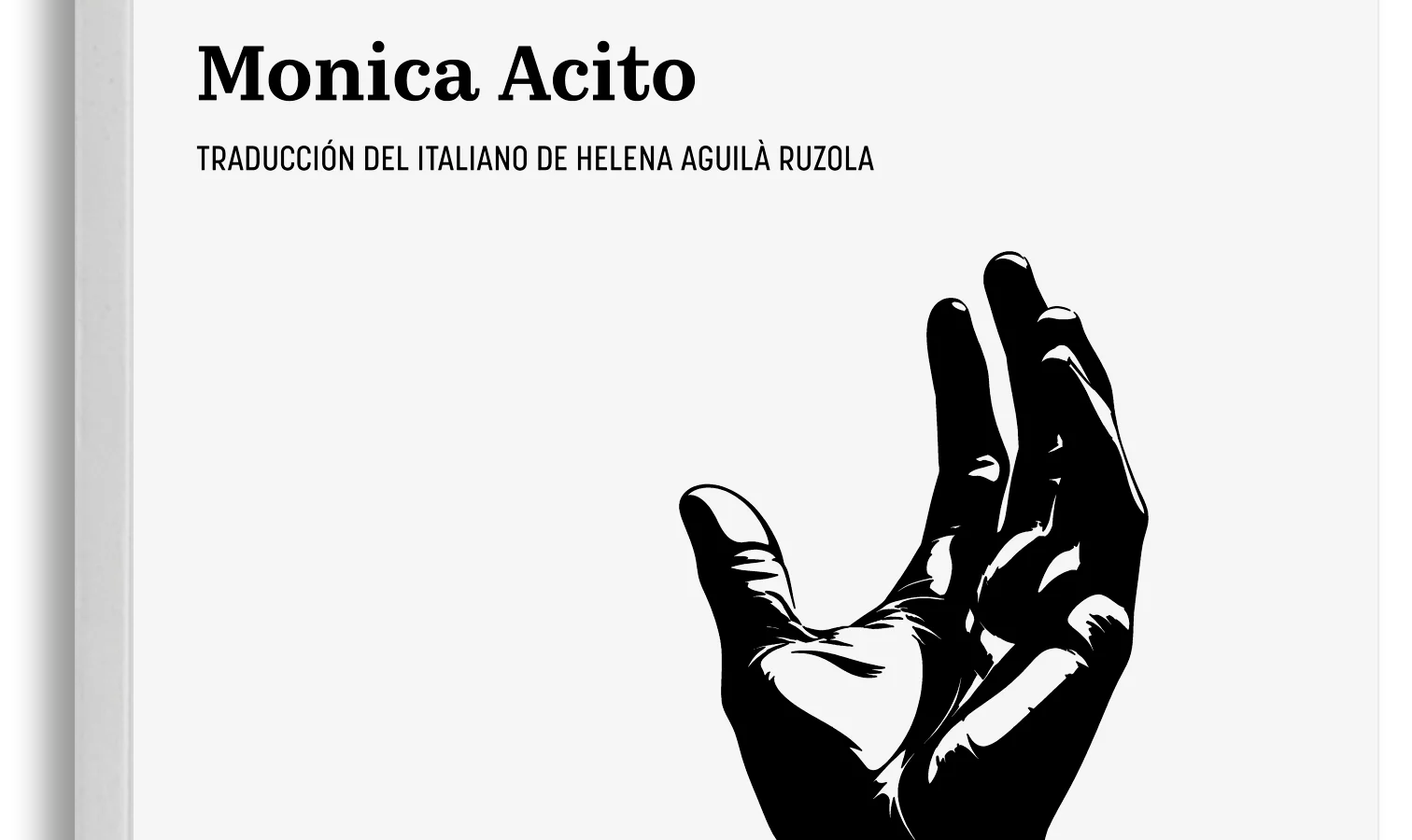
The debut novel by Italian Monica Acito is a wild, unflinching look at intimacy, family, friendships, and hypocrisy. A novel without concessions, overflowing with scents, colors, and bodies, that beating to the rhythm of an eternal Naples.
At Zenda we publish the opening pages of Uvaspina (Deleste), by Monica Acito.
***
1.
Every Wednesday night, Uvaspina and Minuccia waited for their mother to die. Whenever their mother felt unwell, the brother and sister would hold hands and tell each other:
—This time you’ll see how she dies.
Graziella the Desparejada lay on the brass bed, wheezing as if a huge skate had just washed up onshore. Her breathing was so faint that sometimes Uvaspina and Minuccia had to pass their fingers under her nose to see if she was still alive.
—If Mama dies, will you bring her a flower to the cemetery? —the Desparejada whispered to her children, panting again. She asked that question with the same terrible and pleased eyes she wore at Christmas, when she picked the fattest struffolo from the tray and ate it, licking the red-polished fingers.
—No, Mama, you’re not going to the cemetery, you have to stay with us —they sobbed as the Desparejada made the sign of the cross with her left hand and asked their children to call Father Domenico for the Last Rites.
Then again the faint breathing. Her coppery hair, the result of Barbara the hairdresser’s mistake, already looked like the hair of someone dead, and under the crystal tears lamp the root showed the same gray as the tombstones of the Cholera Cemetery. It ran a middle part, which split her skull in two with the same geometry with which Spaccanapoli, one of the city’s great arteries, divided the north and south of the old town. In the north of the Desparejada’s head were bad thoughts, contraband cigarettes, and episodes of Young and Restless; in the south, all the funerals of her life in which she had been paid to cry and fuck, and which had left her with a natural talent for theater and the art of pretending to be dead or alive depending on how the color of the tomato in the ragù changed.
When the Desparejada’s breathing grew weak,
Uvaspina and Minuccia squeezed hands again until Uvaspina, being a bit older, placed Minuccia’s head on her lap, cupping her ears and holding her, because she did not want her sister to see her mother’s eyes roll white and slimy, like the heads of squid at the Pignasecca market. Not that Minuccia would be frightened and then have to take care of her too. But Minuccia wouldn’t stay still; she freed herself from Uvaspina’s fingers to approach the Desparejada. She pressed the left ear to the heart and pressed it against the chest until it crumpled, as if she wanted to slip her mouth inside her mother’s open nightdress to drink all the milk that as a child she had spat into the toilet that faced the Marinella tailor’s shop.
—You’ll see, this time she dies. —Minuccia squeezed Uvaspina’s hand again.
<p—Minù, I think soon she’ll get up to pee.
<p—Her heart beat very faintly. It’s not like the other times; tonight she’s dying, for real —she insisted.
At that point, the Desparejada would usually look at the crystal teardrop lamp; she had always wanted one, since she was a kid eating hard bread and onions on the stairs of the Vico Limoncello passage; it seemed those tears fell onto her dark forehead. Those tears were the amount of spit on her face reminding her that she still belonged to the Vico Limoncello, no matter that now she lived in the Chiaia neighborhood and had a maid who kept her lace underwear in drawers and asked if Good Friday she wanted stuffed octopus or cod. The Desparejada could eat as many octopuses as she liked, but her breath would still stink of onions. And underneath, even with lace lingerie, she would always feel the sharp stones of the Via dei Tribunali stairs under her bottom.
The Desparejada looked at the lamp and asked her children to put Radio Maria on, so she would die in grace and at least hear someone praying the Our Father, but they mis-tuned the radio in the living room, and almost always a Napoli match summary or that Casolaro frying pan advertisement would come on, saying: “Casolaro, this is something else!”
Then she laid a hand on her forehead and looked at the painting of Saint Lucy, which seemed to smile at her, as the prostitutes on Corso Umberto did when old men approached with a cock as small as a thumb. She could not believe it: her children did not know how to tune Radio Maria! If only Nennè the Blind, the aunt from the apartment below who once had sewn buttons instead of peas, had known how to do it.
—Uvaspì! Minù! How is it that you don’t know how to set it? Radio Maria reaches even underground!
They tried turning the dial, changing stations non-stop, and in the end they’d return to the bedroom, because it was the moment when the Desparejada would start yelling in a voice almost masculine:
—Look! I’m dying! Look!
Uvaspina and Minuccia stood at the foot of the bed and began stroking the Desparejada’s belly to see if it rose and fell.
Graziella had everything misaligned: the color of her hair; the two front teeth—one protruding outward and the other tucked inward; the red lipstick that clashed with her Morrocan-toned skin from the Vico Limoncello; and the rhythm of her breathing which her children measured with their hands. Under the lamp of tears, the double chin she had let grow during those years full of struffoli and days spent in bed held something maternal and terrifying.
—Let us look at you, little ones, for soon you won’t see Mama anymore.
And then she drove her elbows into the sheets, pursed her red lips, and looked at her children with a face that seemed to say something very important. Meanwhile, they kept stroking her belly as if she were a stray cat: bare and against the grain, up and down. Nothing, the Desparejada wouldn’t die.
The drama usually lasted another quarter of an hour: the Desparejada would faint and come to, die and resurrect, like Jesus Christ on the third day according to the Sacred Scriptures. Finally, she would rise from the bed, tired of waiting for the moment of death, and go out to smoke a cigarette on the balcony, from where Mergellina and the red moon could be seen, because contraband cigarettes always helped her endure the wait.
—————————————
Author: Monica Acito. Title: Uvaspina. Translation: Helena Aguilà Ruzola. Publisher: Deleste. Sales: Todos tus libros.