
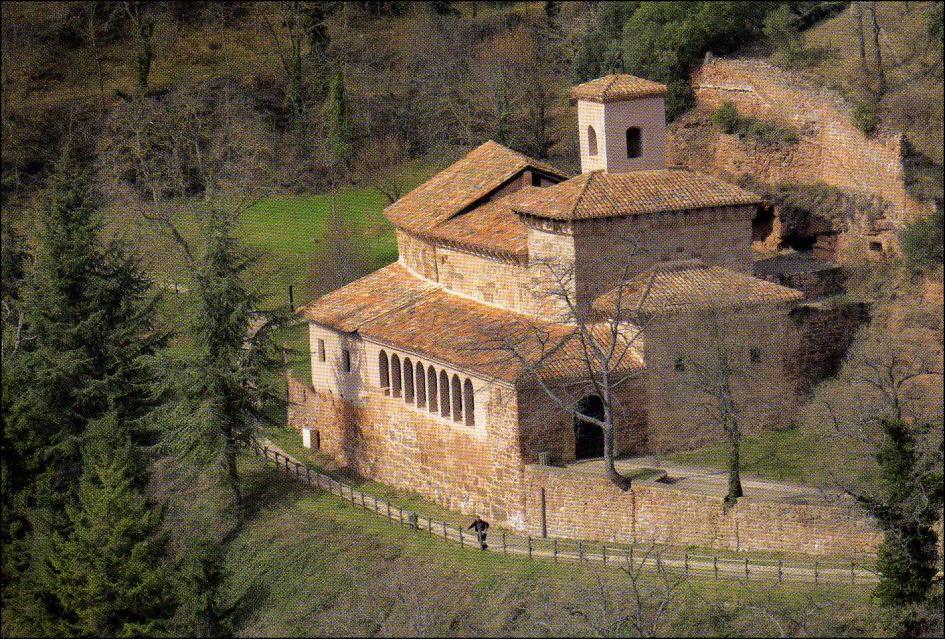
There are writers we know too much about. Even before opening their latest book, we know the house where they write, the café where they have breakfast, their opinions on artificial intelligence, and, if one dares to follow them on Instagram, even the look of the spaghetti dish they are about to eat. Of Lorenzo G. Acebedo, however, we know almost nothing. We can’t even be sure that Lorenzo G. Acebedo exists, which already counts as a considerable advantage in these times of overexposure. The official version says he abandoned theological studies to enter a monastery, that later he left the monastery to run off with a woman, and that he currently lives in some town in La Rioja. We also know that his name is an anagram of Gonzalo de Berceo, which doesn’t invite us to take his biography at face value. The only indisputable fact is that under that name three novels have appeared, all of them in Tusquets: The Tavern of Silos, The Santa Compaña and, now, A Grave in Al-Andalus. I must confess that I have belonged since the first to the small band of his devotees.
The thing has its merit because the starting point could easily have ended in disaster. Acebedo decided to turn Gonzalo de Berceo into a detective of medieval crimes, which, at first glance, seems the consequence of an editorial deliberation held after too long a meal. Yet it works. Berceo is familiar to almost all of us from school, where he appeared embalmed under the label of the first known Castilian poet. He was the man of the mester de clerecía, of the cuaderna vía, of the Milagros de Nuestra Señora, and of those verses that spoke of a cup of “good wine” and that our teachers used to prove that the classics could also be entertaining. Then the exams came, the alexandrines and the cesura, and Berceo quickly returned to the mausoleum. Now Acebedo has exhumed him. His Berceo drinks, eats, desires, fears, doubts, gets irritated, makes mistakes. He is a believer, but he knows the Church too well to confuse faith with the preoccupations of those who run it. He belongs to his time and at the same time he seems to observe it from a distance that allows us to recognise ourselves in him. He is full of contradictions, as anyone who has had the misfortune of being human, and perhaps that is where the main discovery of these novels lies: giving flesh back to someone whom centuries of doctoral theses, academic conferences, and textbooks had reduced to a bust.
Because humanizing a historical character does not consist in making him contemporary. There is a recurring temptation in historical fiction that consists in taking a lord from the 13th century and making him think like a 21st-century European, but Acebedo does something more complex and, unquestionably, much more interesting. He lets Berceo be a character integrated in his space and his time, with his beliefs, his superstitions, his prejudices and his certainties, but he introduces within that world the cracks through which the human condition enters. And then Berceo remains a monk of the Middle Ages, but also a guy with whom we could have a quiet drink at the neighborhood bar. It also helps that an atmosphere that smells unfolds around him. In these novels there is a lot of eating and drinking, sweating and fornication, praying and conspiring, and killing. Monasteries stop being those quiet Romanesque architectures that we visit on weekends after paying the entrance fee, and they regain something of what they were: human communities where, in addition to codices and prayers, there were envies, ambitions, desire, fear, money, and power struggles. Acebedo’s Middle Ages, like our own era, have dirt on their shoes.
Now Berceo travels to the Andalusi Córdoba. In A Grave in Al-Andalus, the murder of a member of the Moorish quarter of San Millán drives him south while he still bears the grief for the death of his friend Lope. I won’t say much more. I hate being told about novels before reading them, and I suspect Berceo would defend himself less well against a disclosure than against a killer. What matters is that the formula keeps working because it has never truly depended on the crimes. The dead set the machinery in motion, but what matters happens around it: the reconstruction of an era, the play with medieval literary tradition, humor, religion, power, and, above all, that improbable character who strides through the thirteenth century discovering that men are far less pious than they claim to be. It does not seem like a particularly archaic conclusion.
I don’t know who hides behind the pseudonym Lorenzo G. Acebedo, though I have my suspicions. I hope no one finds out. We have more than enough overexposed writers, and yet we are short of mysteries that delight us. I like to imagine that somewhere in La Rioja there is an old monk writing novels about Gonzalo de Berceo while making sure no photographer ever finds him. But I wouldn’t mind if the story of the monastery, the woman, and the Rioja town was, simply, a lie. After all, for centuries we have been reading Gonzalo de Berceo without knowing almost anything about Gonzalo de Berceo. Perhaps it was inevitable that whoever best managed to bring him back to life would be someone about whom we also know nothing.