
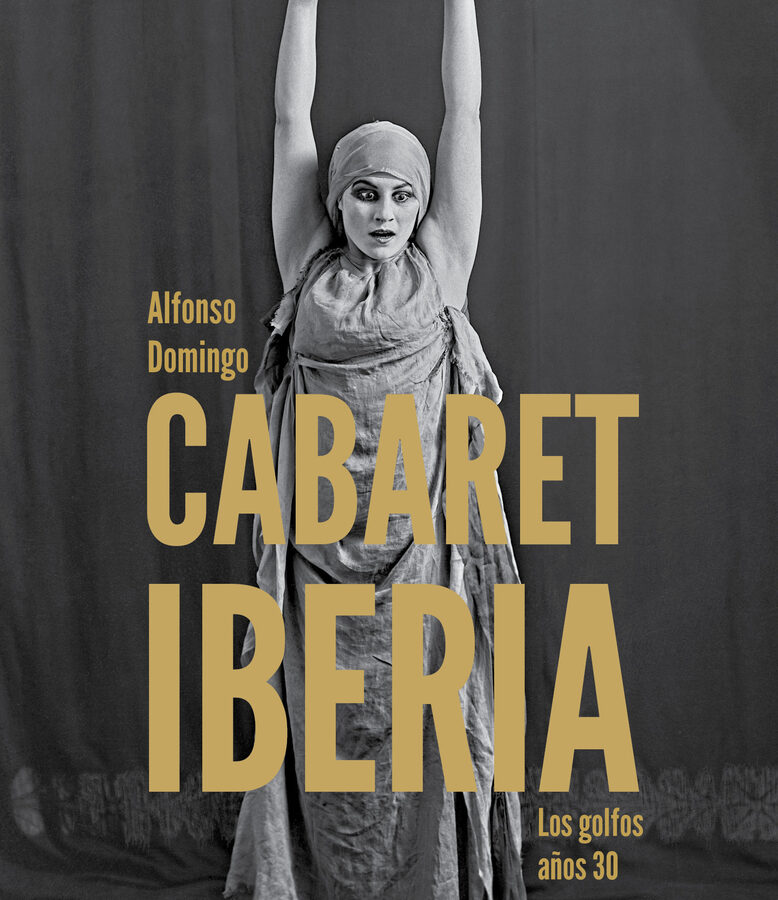
In the review of Cómicos en guerra, by Pedro Corral, published a few days ago, reference was made to this other book. It is now time to pause on it, though doing so requires beginning by putting things in their proper order.
The Restoration (1876-1923) continues to have, in general, bad press. And that, to begin with, the “98” (no need to say which century), “the disaster”, as if perhaps it had been the first, represents a true stain. Not to mention the political crises of 1909 and 1917 (when it happens that the problems of Morocco and those of Catalonia come together, best not to bother trying to fix them) and, to cap it all, Annual 1921, to which the same label disaster is applied, though in this case the details are usually specified. And all of this alongside two assassinations of presidents (Canalejas and Dato), as if there were not enough, within a bipartite, alternating-power political system, the best breeding ground for diatribe and even scorn. Let us recall the words of Galdós in Cánovas, the last of his Episodios Nacionales, written in 1912: “The two parties that have agreed to rotate in power are two herds of men who aspire to nothing more than grazing on the budget.”
But if the Restoration deserves those condemnations, it is not only for the institutional design and the parliamentary class, but also for the underlying social reality: a society that was mainly agrarian and illiterate, the one that Galdós described in Doña Perfecta (1876) and Emilia Pardo Bazán in Los Pazos de Ulloa (1886). A society with premodern mentalities, where, politically, even with a theoretical universal suffrage (male), what actually governed was something else—oligarchy and caciquism (Joaquín Costa, 1902)—and where, with regard to women, freedom was null, in sexuality and in any other aspect, even in cities, as proven by the fact that both Ana Ozores in Clarín’s Vetusta (La Regenta, 1884-1885) and “the one from Rubín” in Madrid itself (Fortunata y Jacinta, 1887) had to hide to avoid social opprobrium. And it was not only the Catholic condemnation of hell for the sixth commandment, but a punishment to endure in this world. Education was not that of the French Third Republic, and that was very noticeable.
T nor does the Primo de Rivera Dictatorship (1923-1930) enjoy a good reputation: its own self-styling does not help it in the slightest. The “iron surgeon,” who was welcomed in the streets with applause, or at least without opposition, sought in the intellectual world some truly powerful enemies — Unamuno being the most well known — and, a hundred years later, one can proclaim that this was a major error.
Of course the negative portrait just presented for that long arc of sixty years needs to be nuanced, because we have analyses from revisionist scholars — yes, a very apt word — who have explained that, compared with other European countries — those of the industrial revolution with railways and later the automobile as their flagship, urbanization and modernization, which in turn affected the dominant mental frameworks and, particularly, the perception of women, starting with the ones they impose upon themselves — what we had was only a delay of a few decades. And always bearing in mind that modernization, obviously accompanied by technological advances — cinema, above all — gave rise to new forms of spectacle — ultimately culture — and to new ways of enjoying leisure. It wasn’t only bullfights, though during that period the struggles between the leading matadors were felt with great intensity: first between the Cordoban Lagartijo (1841-1900) and the great Frascuelo (1842-1898), architects of the “first revolution of bullfighting,” and later between Joselito, José Gómez Ortega, until his death in Talavera de la Reina in 1920, and Belmonte, the Pasmo de Triana, who, with back-and-forth movements, remained active until 1936. Regarding the relations between the bullfight masters and the Civil Governors, recall the anecdote about Joaquín Miranda, who held the post in the province of Huelva between 1938 and 1943, only to become a Prosecutor in the Cortes for another fifteen years and then his fatal degeneration.
In short, modernization, yes, albeit with a lag. With the consequences of proletarianization and unionism, and in turn the tensions that stem from them. With intensity and rhythms that varied by region, of course.
Alfonso Domingo has written the book that gives rise to these lines. It is titled, indeed, Cabaret Iberia, with a subtitle — The Gay Thirties — which, on the back cover, is corrected, for everything had begun earlier, in the twenties, and then, in the text, it goes even further back, to the very first chords of the century. And it is that, especially in Madrid and also in Barcelona, there occurred “an eruption of magazines, music-halls, cabarets: the new rhythms coming from America — the foxtrot, the Charleston, the swing, the blues, the claqué and the jazz — mix with the milonga, the copla, the flamenco and the risqué songs. Nudity and transformism rise on stage amid moral reproaches from the right and accusations of superficiality from the left. It is also a time of masks and simulations. And of feminist and workers’ social earthquakes (…)”. In short, people were already having fun a hundred years ago.
Of course the book, which saw the light in 2025, cannot be understood without its predecessors, such as those that appear in the bibliography and sources on pages 327 and following. There stands out, among the most immediate, Gloria G. Durán’s excellent 2021 work, Sicalípticas: El gran libro del cuplé y la sicalipsis. But the reader has at his disposal others — almost contemporaries and therefore Alfonso Domingo could not have considered them — such as the following three:
- Lidia García García. ¡Ay, campaneras!: Canciones para seguir adelante. 2022. The back cover defines it as “a stroll through the histories behind those songs speckled with women’s transgressions, speaking of class differences and a longing for freedom that seeped through every crack it found.” The lyrics of those songs, a manifestation of popular culture rebelling against the official discourse, answered to “a world of cupletistas and bandits, of seamstresses and moleras.”
- Mari Pau Dominguez. La magia de la libélula: La increíble historia de La Fornarina. 2024. A historical novel indeed about the Madrid cupletist Consuelo Vello Cano (1884-1915), a top cupletist (among her admirers were Rafael Cansinos Assens, Jacinto Benavente and the Machado brothers, and indeed, even without having studied much, she became a passionate and deep reader), who as early as 1907 had already earned a great reputation in Paris, London, Monte Carlo and even St. Petersburg. The back cover includes precious words from the obituary awarded by ABC on the day of her death at thirty-one: “From the first day, from the first note of her first song, La Fornarina stood apart among cupletistas; she was gold among base metals, the aristocratic over the plebeian. Her voice caressed; her voice always velvet and sweet.” She had, of course, her Pygmalion, the multi-tasking Juan José Cadenas, who survived her until 1947 as a journalist, librettist, poet and theater entrepreneur: there was, incidentally, no shortage of compatibility. Short before her death, Consuelo confided to Carmen de Burgos, Colombine, that although they had separated romantically, she still loved him.
- Juan Francisco Fuentes. Bienvenido, Mister Chaplin: La americanización del ocio y la cultura en la España de entreguerras. Also from 2024. The prologue explains the philosophy and meaning of the book, starting by highlighting “the importance that the United States had for many Spaniards born at the beginning of the twentieth century, and not precisely because of the consequences of the disaster of 1898, which affected their parents and grandparents so much. American culture decisively shaped their view of the world. It was both a source of entertainment and a school of modernity, with its films, its skyscrapers, its dionysian sense of life and its real and fictitious characters. This is attested by the writers and artists of the 27 Movement, avant-garde of a generation that sought its identity in cinema, sport, machinery and jazz.” The epilogue bears the title — rarely will the language be used with more accuracy — “an 1898 in reverse.”
But let us return to Alfonso Domingo’s book, with a prologue and 21 chapters, which can be read as a gallery of venues — especially in Madrid, though with some references to Barcelona and El Paralelo (as in pages 201 and 221) — but even more so as portraits, many of them of figures that, at this point, strike us as almost novelistic, if not openly legendary, such as Perico Chicote, the central figure of Chapter XII, about what the American bars were like, a chapter that even bears its title: Agitated, like Chicote’s cocktails. There, a survey is made of those that opened in the capital: the Ritz Hotel (1922), the Zahara and the American Bar Miami (1930) with a façade on Gran Vía, the Aquarium, inaugurated in 1932 on Calle Alcalá, though with access also from Caballero de Gracia, the Capitol Hotel bar on Callao square, or the Lyceum, obviously feminist.
Chicote was born in 1899 and, after working at the Mostenses market, near Plaza de España, he joined the Ritz Hotel in 1916, in the midst of World War I, as a barback, although he stayed only five years, because later he spent time in Morocco and in San Sebastián, at La Perla’s bar, on La Concha beach. He opened his Madrid Gran Vía venue on September 18, 1931, in the early days of the Republic, where he built up a collection of bottles that eventually surpassed twenty thousand. He had time to theorize about all this and wrote no fewer than three books: Cocktail, The American Bar in Madrid and The Wet Law. He died on Christmas Day, 1977. Alfonso Domingo sums up his personality on page 160 with the following words: “In reality, Pedro Chicote may have been less of a master mixologist and more a specialist in endurance, adaptability, listening, and public relations, without judging others’ weaknesses. Cocktails were, for him, the excuse life gave him to move forward and succeed in an art in which he faced little competition and boasted about to everyone.”
Or, focusing on women, a Blanca Negri, whose name appears in Chapter XV, which adds two foremost male references: Carlos Gardel and Buenaventura Durruti, figures whom she knew in one way or another over the years. Her real name was María de la Paz Barrial Díaz de Liaño, and she seems to have been born in 1909 in the Philippines. Her mother was a Tagalog of Japanese descent and her father of Leónese stock settled in the Basque country in France. As the author states on page 193, “a curious mix of East and West, a cocktail of civilizations and peoples.” She found success in Barcelona — at the Cabaret Pompeya — and in Paris performing tango and jazz, though she achieved greater fame in cinema, as in the film La hija del penal, with a script by Miguel Mihura, shot in January 1936. The author describes her in page 192 as “a small, well-proportioned woman, with a perfect body and a beautiful face.”
As for Buenaventura Durruti, it should be noted that he died in Madrid on November 20, 1936 (the same day as the execution of José Antonio Primo de Rivera in Alicante; some dates are especially meaningful) and was buried on the 23rd. The author explains on page 203 that “one of the people in that enormous crowd that fills the streets as the long cortege passes is Blanca Negri. Although the artist would continue her artistic life after the Civil War, more in South America than in Spain, her name would eventually be forgotten, like those two loves that marked her, perhaps lyrics for a superb tango about the passions and the oblivions that follow in our existence.”
The nineteenth chapter also bears a name of its own: The Copla that Is Born: Estrellita’s Stardom. La Castro, who had become an icon with the little snail on her forehead, was born in Seville in 1908, the daughter of a Galician father — a fisherman — and a Malaga mother. On July 18, 1936 she was in Madrid, where she was already widely known and celebrated as an artist. The cuplé had gone into decline in 1925, and its place had been mainly taken by the copla, a genre derived from the tonadilla and the Andalusian rhythms — flamenco or not — and which, as the author notes on page 255, has the advantage of “embracing everything, reflecting every kind of taste and sensibility.” Estrellita, along with Concha Piquer, was the queen there.
At the outset of the conflict, she was unlucky enough that her agent and representative, Jaime Cubedo, who was the head editor of the newspaper El Sindicalista, died in combat on the Buitrago front; a friend of the soul of Ángel Pestaña. Estrellita wisely decided to put the Atlantic between them and settled in Havana, where she sang with great success in La morena de la copla, the well-known pasodoble by Castellanos and Villegas that honors the models of Juan Manuel de la Torre (Castellanos y Villegas). She returned to Spain shortly after, preferring to focus on flamenco. One could call her a hard worker, a fact that was recognized in 1962 with the Medal of Merit in Labor.
The list of names could go on endlessly. For now, staying with the female sphere, we can add what is generally captured on pages 216 and 227, in Chapter XVII, The Women Who Had A White Soul, devoted to jazz, which is said to be not only a musical genre, but one that “contains transgressive and modern connotations that fit perfectly with the spirit of the era and plays an important role in the female figure. In praising their physical and sexual qualities, it creates a greater inclusion of women and support for their emancipation and modernization.” And in that context of shows arises “a new female model that reaches the United States: the flappers, here called toeblers (…). A type of young woman, free from old heritages and clichés, dressed boldly, with short hair, who wears makeup, drinks and smokes, and even drives (in 1925 the film “Fumando espero” premieres), and of course participates in sports: gymnastics, athletics, swimming, tennis. She is also more sexually open, attends the dancings, dances and listens to jazz.” Many analogous references appear in Chapters III, Magicians and Magicians of the Review and V, Dreams of Feathers and Sequins, dedicated precisely to that musical and theatrical genre. Or in Chapter VIII, once again with a heading that says it all: Myth and Reality of the Cabaret.
With an even more explicitly sexual aim is Chapter XIII, Visit Our Ambigu, where Álvaro Retana stands as a major presence. The word ambiguity was frequently used in that context, where the voice of trans did not yet exist, nor did the LGBTI acronym. And, of course, Chapter IX is worth noting, Bordellos and Unleashed Passions: the Red Chronicle of vice and fornication, where the author, anticipating Javier Rioyo, surveys the regulation of the matter (always outpaced by reality and all the more so when prohibition was attempted) with particular emphasis on the Republican 1935 law that indeed abolished prostitution.
These lines of the book’s review should not continue if its author does not wish to be accused of spoilers. What the reader should do is go to the source, and thus confirm what one may have already intuited: that in Spain during the first third of the twentieth century, and regardless of political conjunctures, sexual freedom — especially for women — advanced a great deal. Perhaps not as much as in Paris — where Josephine Baker came to visit us, but that is another very interesting story in its own right — or in Weimar Berlin, but nearly so.
———————
Alfonso Domingo, Cabaret Iberia: Los golfos años 30. Libros del KO, 2025.