
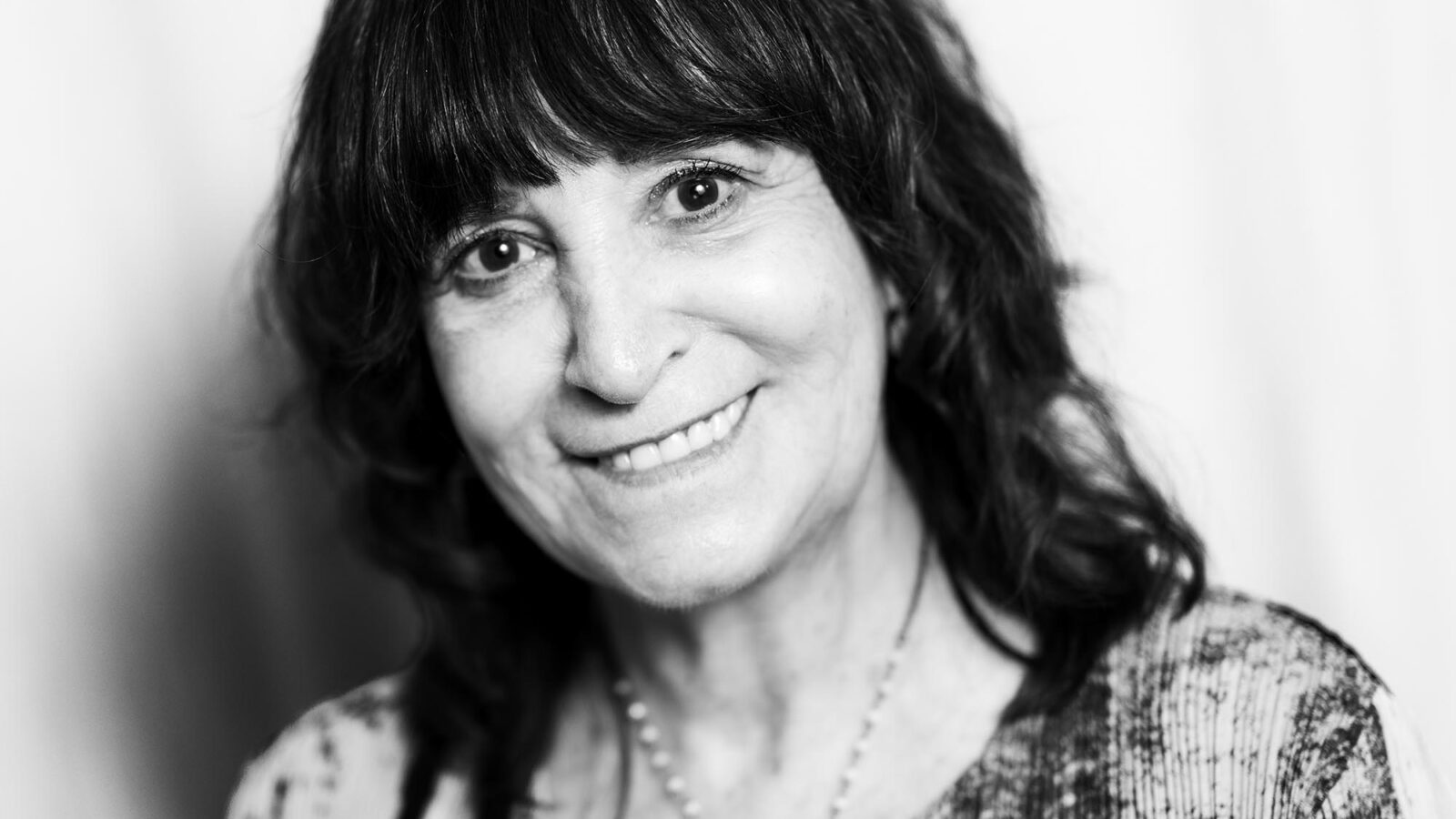
Even the ugliest duckling can turn into a swan, even if it is a very punk one. Clarita, the heroine of Rosa Montero’s new novel, is a person who one day decides to act after a lifetime spent being shoved around, tolerating belittlement, and bowing her head before bullies. Clarita is all of us who have been marked for wearing glasses, for being fat, for having ears that stick out, or simply for not wanting to be like everyone else. Blessed be the divergents, may the normals rot. A Day in Clarita’s Life (Alfaguara) is not merely a book. Rosa Montero has fashioned a literary device that you can read in one sitting, with genuine laughter, and with the emotion we felt when reading the adventures of the “Joyas literarias juveniles” collection, digging our nails into our thighs, eager for the supporting character to become the winner, even if they say it isn’t her turn.
We spoke with Rosa Montero about how wonderful it is to be divergent, about the need to speak of the harassment of those who are different in the workplace, and about her enormous desire to live and to write.
*****
—I declare myself a fan of Clarita. I want a shirt of hers.
—(Laughter) I want to design a T-shirt that on one side shows Clarita and on the other the phrase “Normal people scare me.”
—Let’s talk about the novel. “As always.” That phrase that recurs several times at the start of the novel sounds terrible. Routine as a remedy for fighting loneliness.
—Yes, but it’s not only loneliness, but above all the mistreatment. Like Clarita, there are many people, unfortunately, in our society, who don’t fit the mold, the social stamping. They sell us the false idea that normality is the most common thing, but it’s a lie. Normality comes from a normative thing, a framework that changes with societies, that changes with the eras, and that forces us to adapt to it, even if we have to cut off our ears to fit. The normal is to be odd. We all strive not to have our divergence show, and for good reason, because the divergent child is bullied already at school. Clarita is one of those people whose divergence is evident; she has been bullied and the butt of jokes since she was young. And this also happens in the workplace. This is a big elephant in the room, because we talk about child bullying—and we should talk about it more—but we don’t talk about workplace mobbing, which exists and is very widespread. Micro-humiliations in the workplace are very common and destroy a lot of people. Faced with this, what does poor Clarita do? Like any harassed person, she tries not to be seen and hides in a tiny, very routine life, because she also has OCD. Obviously, that is a terribly poor life.
—There are several phases to that mistreatment, as you mention. First comes invisibility, then humiliation. Like in one of the early scenes in the book: Clarita goes to ride the elevator and the director arrives with his entourage, and the sycophant tells her that she cannot go up with them. There is a caste system in many jobs.
—Power savors humiliating the “possessed,” so to speak. Power is a plot, a kind of sticky spiderweb in which we are all caught somewhere in it. Because power isn’t only the pyramidal kind, the one the government has over citizens or the bank president over Clarita’s world, but rather each of us has a power relationship with others. You have a power relationship with friends, with your children, with your parents, with your coworkers. So you must be very aware of it, and be as flexible as possible, to avoid getting stuck on either side of power; both are terrible—the victim’s and the perpetrator’s.

—We tolerate humiliation. Both from bosses and coworkers.
—Totally. Most mobbing cases are from coworkers. I tell you this because I’ve suffered it for a year at the hands of a colleague. I remember crying every night. This is all too common. Why does it happen? Because suddenly you meet a person who is evil, who is psychopathic, who is narcissistic, and the rest of the people do not oppose her. Evil occurs because good people let it happen, because good people do not stand up to it.
—In the book, Clarita faces her last day at work as an ending. Yet that day ends up being a beginning. Although belatedly, the caterpillar becomes a butterfly.
—Totally. And the life she has ahead I know will be beautiful. There is a radical transformation. This book is, in fact, like a tale, a short novel. I wanted it to be very solid in its construction: it happens in fourteen hours and that’s why it’s very compact. My aim was to write a story for adults, a new version of the ugly duckling, but a bit punk. (Laughs) More than a duck turning into a swan, Clarita is a frog turning into a tyrannosaurus. There is a moment near the end of that last day when Clarita says something that fills me with tenderness: “For decades I believed happiness was merely the absence of suffering and that that was enough.” And when that last day of work arrives, she realizes what awaits her is an even smaller life. Then something happens that we can’t talk about —at the end of the book, I ask my readers a favor: do not reveal what happens in the novel or its ending, so as not to spoil the game—, but it is a very, very shocking event that puts her at risk. Clarita receives the last drop that overflows the glass of humiliations and suddenly becomes something else. There is a redemption. When you write, you write in complete darkness. You don’t know what you are doing, because novels are born from the unconscious, from the same place where dreams are born. You know a little what you have done when you start talking about the novel with journalists and begin to reflect. That novel arose for me like a shot. Suddenly Clarita appeared and forced me to write about her. It was like a possession. I think this novel came out that way because I was, and am, very troubled by the life we live. We are at a very dark moment in the world, but so dark that I’m afraid to watch the news at night, because I don’t sleep. I needed to tell myself and prove to myself that even in the worst moments, when it seems that everything has ended, when you seem like a blob stuck to the floor, you can stand up again, create a dignified and happy life, and bring light into the darkness.
—In the end of the novel you offer a message of hope.
—I’ve told that to myself as well, and I want to believe it. (Laughs) It was a burst of energy and optimism to write this book.
—Clarita’s rebellion has a Bartleby-like note. Instead of “I would prefer not to,” Clarita says “I would prefer to do it.” Two forms of rebellion.
—True. I hadn’t thought of Bartleby, but you’re right. Bartleby, the Scrivener is also a novel about vengeance, in a sense. Clarita’s vengeance is a compassionate one, let’s say; a vengeance that happens when she suddenly begins to become something else, when she realizes a new Clarita is being born. She thinks: “And who is this new Clarita?” And she decides to be a good person. I love that. Instead of turning into a miserable person—something she could do, because humiliation is the worst thing you can do to a human being—she decides to become something else. Humiliation breaks the backbone of people; it cannot shatter it completely. All those American kids who one day grab a gun and start killing their classmates had been bullied in school. This is not a justification, because there are many other people who were bullied in childhood and grow up to become wonderful adults. Irene Vallejo, for example, has said she was bullied as a girl and look at what a marvelous woman she became. It’s not a justification, but it is an important contextual datum to consider: to what extent humiliation, likely combined with other conditions, can completely break a human being.

—Clarita is not a heroine; she is a survivor.
—Exactly, she is a survivor. When you harass someone, that person internalizes it. The harassed person internalizes it and ends up considering themselves worth less, worse than a worm. In the end, they see themselves reflected in the contempt of the eyes around them and end up despising themselves. And that happens to her as well. Facing this thrilling adventure she is about to live, Clarita begins to react and changes her perception of herself: she feels like a daredevil, a brave person, the protagonist of the tale. She isn’t a grand heroic figure. Clarita experiences the small heroic act of living each day, and that is already enough.
—This novel is pure action, but above all it is a book with a lot of humor.
—There is a lot of humor. It is also present in almost all of my novels because I believe humor is a particularly precise tool for understanding reality. Although this is, indeed, my most humorous book. And I will also tell you that it was a difficult book to write, because it traverses a very narrow corridor of literary construction. It walks between opposites: on one hand it is a very realistic novel, and on the other it is a grotesque story. And you cannot lean too far to one side or the other. It is a novel that speaks of tremendous things, as we’ve discussed—the humiliation, the way power crushes the lower rungs, and the way people who don’t fit the supposed normality are maltreated—and it is also a work with a lot of humor. And there’s another thing you mentioned: it is a very intimate novel, one that speaks of an emotional journey. It is a tremendous existential adventure and at the same time it has thrilling action. It moves within a balance of opposites, and that makes the novel extremely complicated; you have to walk right down the middle, you can’t slip to one side or the other. If I hadn’t done it this way, it would have been unbalanced and would have ended up ridiculous.
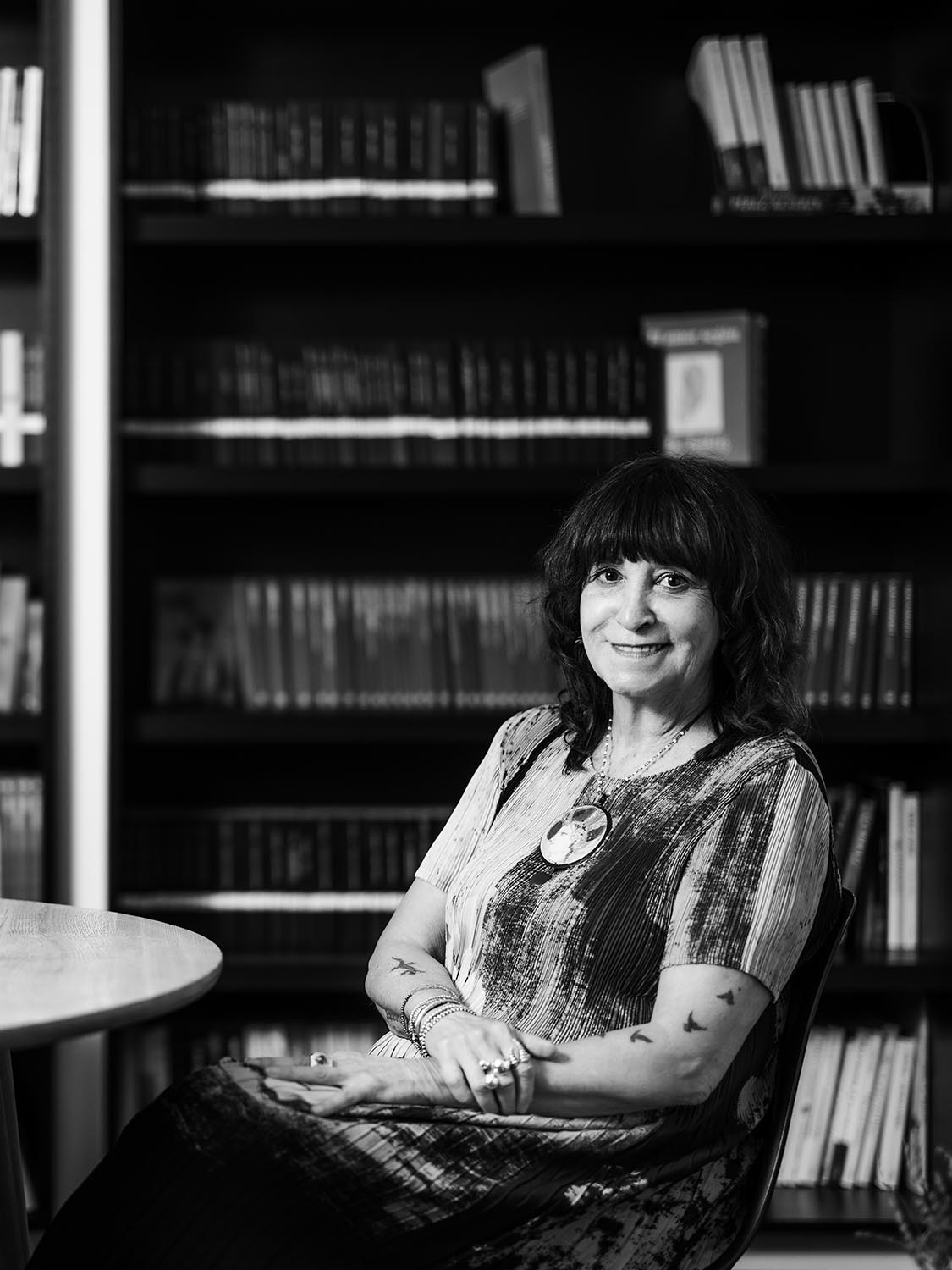
—The novel reads almost like a cinematographic script. From the middle on, dramaturgy takes over. It is a very theatrical text. Perhaps it helps that it unfolds in a closed space within a very definite time.
—All of my novels are very visual, because they are like the dreams I have at night. Miguel, do you dream in color or in black and white?
—I think in color. (Laughter)
—It’s that 30% of people dream in black and white. I dream in color as well. Moreover, I have extremely vivid dreams at night. So my novels emerge from those dreams I have with my eyes open. It’s a direct, open wound, a tunnel of communication with that unconscious. They are all very visual because they come to me as images. And in relation to what you were saying, this novel has that script-like form because it unfolds in only two settings: the office, mainly, and to a lesser extent Clarita’s home. If a producer wants to adapt the book, for now it would be very inexpensive. (Laughs) There are already people interested in turning it into a film.
—When I was reading the novel I couldn’t help thinking of Carmen Machi as Clarita.
—It hadn’t occurred to me, but now that you say it, Carmen Machi would be wonderful, perfect. I love that idea.
—By the way, this time your novel didn’t originate from a “huevecillo.”
—Actually it is a real “huevecillo” in effect. All my books — I’ve been publishing for forty-seven years — have emerged from an image, which, as you know, I write by hand in a little notebook. Then I spend a year — and in some cases, as in Historia del Rey Transparente, several years — developing the novel. It isn’t that I write the novel by hand, but that I develop the characters, the content, the stories, and at the end of that stage I already have more or less a script, and I know there will be twenty-six chapters… When I have all that, I sit down to write. It may be that the writing leads me somewhere else, and those twenty-six chapters become thirty-two, but I already know where I’m going. In the case of Un día en la vida de Clarita it wasn’t like that. This story was going to be part of a French book that comprised supposed first chapters by several writers. When I started on my chapter, I was at home with a fever, feeling unwell. I wrote those opening lines until she leaves the house, and when I put that full stop, suddenly I said: “Clarita is mine.” I began to write in real time; I had no idea where I was going. Clarita possessed me and the whole process was a damned fever. I didn’t know if Clarita and I would be able to get out of the mess we were getting into. At night, after leaving the novel unfinished, I would think: “How do we manage this? How are we going to get out of the scrape we’re in?” That was very fascinating and also very exhausting; a real adventure.
—Clarita has made you a compass-writer.
—Exactly. (Laughter) Yes, Clarita has made me a compass-writer for the first time in my life.
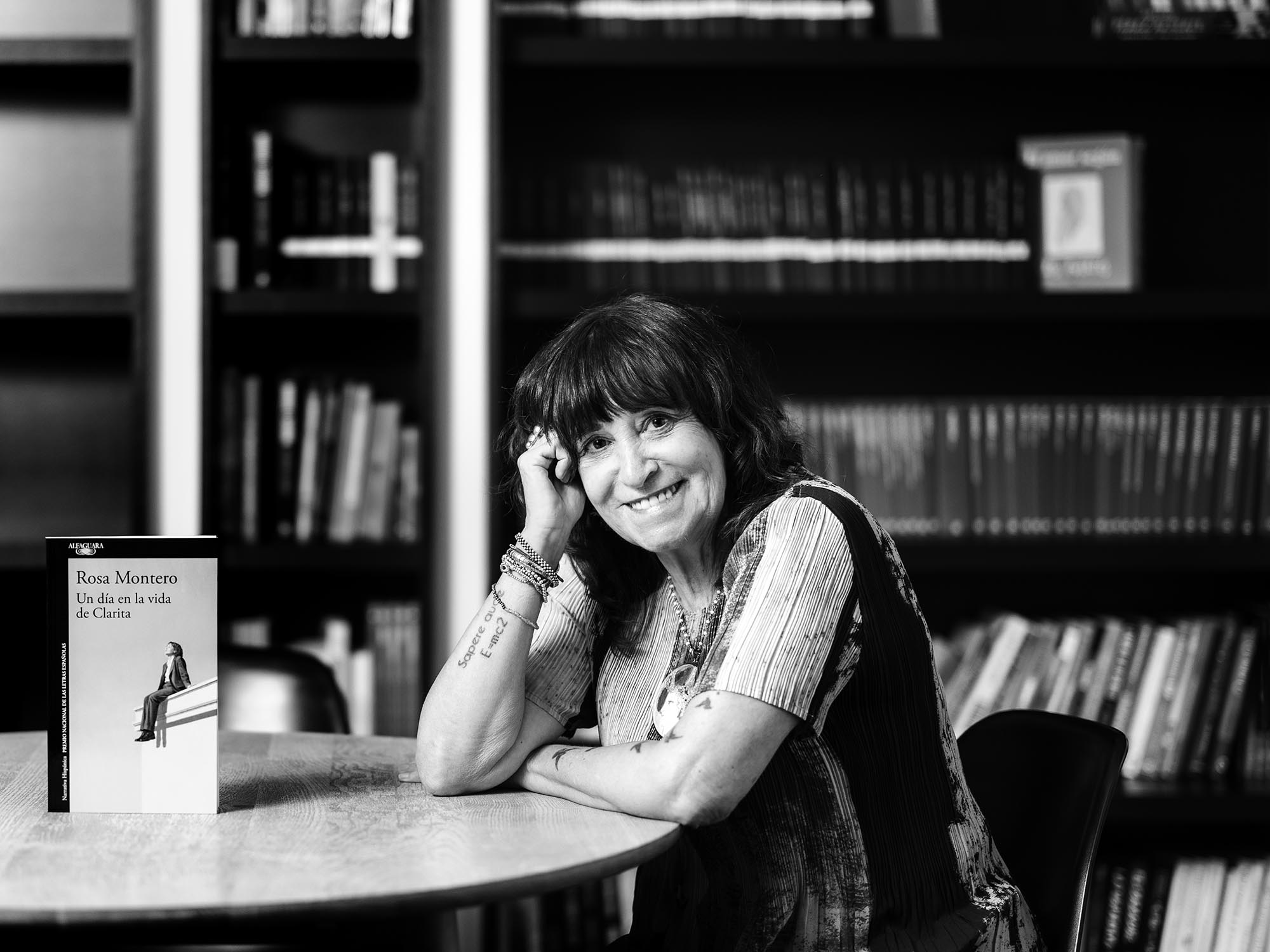
—Terminamos. No te pregunto por tus próximos proyectos porque estoy convencido de que tienes muchos. Escribir es tu manera de vivir.
—Exactly. And I hope it lasts. I want to die very alive, and living is writing for me. I hope this passion, this possession of writing over me, lasts. Sometimes I think of my great mentor, Ursula K. Le Guin, whom I had the immense pleasure of meeting in person and eventually becoming friends with. Ursula was a remarkable aunt with a wonderful creative capacity, and at eighty she stopped writing; she died at seventy-seven. And I would say to her: “Come on, Ursula, try to start writing again,” and she told me no, that she had undergone the possession. It frightens me that that might happen to me. So I hope this game stays real and remains alive for me until the end.