
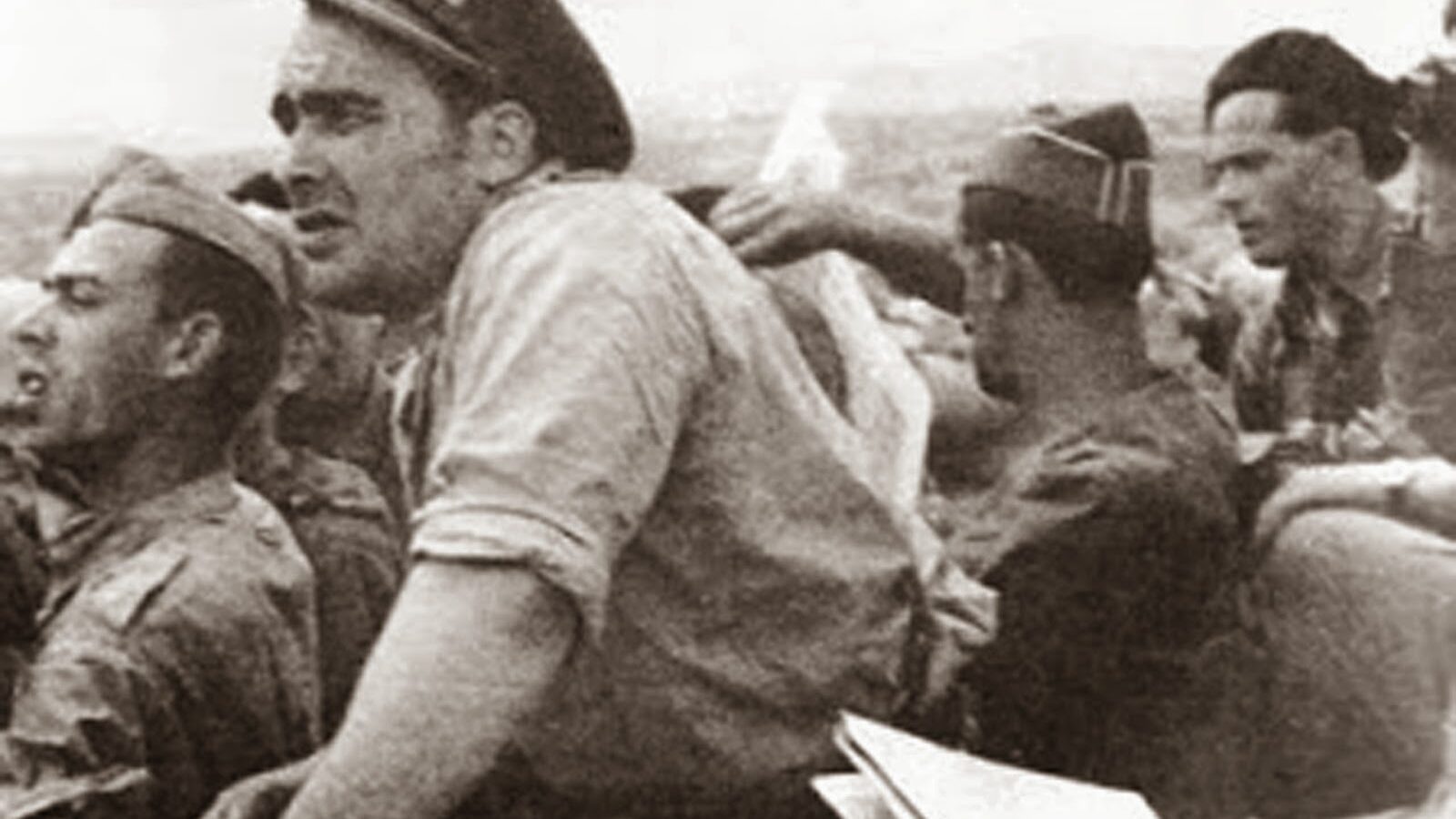
To commemorate the 90th anniversary of the Civil War, José Ángel Mañas recreates, in Zenda, day by day in this section, what happened in 1936, perhaps the most momentous year in all Spain’s recent history.
Tuesday, September 22, 1936: The Fifth Regiment
Cut the pretense and tell me once and for all what you have summoned my presence here for —Líster said—. I’m returning from Talavera just for this, and tomorrow I head for Toledo, comrades. We must slow Franco’s troops.
—We want you to henceforth command the Fifth Regiment —said José Díaz. La Pasionaria, who nodded beside him—. We have discussed it in the Committee. You are the most suitable person. Moreover, we want to propose to Largo Caballero that he hand over control of the Toledo forces to you.
Enrique Líster could not restrain his satisfaction. Two months after being created as the star communist unit, uniting a militia battalion with the MAOC from Cuatro Caminos, the Fifth Regiment had already become a myth. There was something special about that corps whose headquarters were in the old Salesian convent on Francos Rodríguez Street, into which they had just entered and in whose offices they sought the commander Carlos, as the Italian communist Vittorio Vidali was known, the current political commissar. The Italian spoke perfect Spanish and was an indefatigable organizer who functioned without falter.
—This, of course, I did not expect —replied Líster.
Uribe, José Díaz and La Pasionaria looked at him. During a discussion in the offices of the Serrano Bureau, the four had agreed that the fault for the current situation lay with Azaña for not having imposed himself on Largo Caballero, who was the one pushing hardest to arm the unions. The militias had served in an initial phase, but what was needed today was a disciplined People’s Army: to complete the units of the regular Army with volunteers, yes, but commanded by professionals, while taking the necessary steps to ensure fidelity with a rigorous purge. That is how Trotsky won the civil war against the czarists. And the administrative bodies should also remain standing, though purged. Punish the disloyal, leave the rest. And requisition only the property of the rebels and the industries indispensable for the war. For everything else there would be time. What the unions should have done was subordinate everything to the service of the cause and not yet substitute the owners with inexperienced committees. In analysis everyone agreed, but Líster still did not understand why they were making him return from Talavera with such urgency. Now it all became clear.
—I am very honored by your trust, comrades —he said, with his usual gruffness.
La sede del Quinto Regimiento era un centro de instrucción, divulgación y propaganda. Tenía sus propios talleres de edición, y emisora de radio. En sus instalaciones había limpieza y orden. A su llegada, por los pasillos, Líster apreció que los voluntarios que se adiestraban en el patio tenían movimientos aceptables en el manejo del fusil que practicaban con palos. También hacían ejercicios de tiro y aprendían a utilizar morteros y lanzagranadas. De allí saldrían a engrosar batallones. Allí se descansaba de la confusión y el desorden político de los comités.
A Líster le reconfortaba ver que la gente pensaba y actuaba como lo que eran: soldados de la revolución. Por el centro de instrucción habían pasado más de treinta mil hombres. Quien llegaba al Quinto Regimiento sabía que era necesario leer periódicos, limpiar el fusil, cavar trincheras y obedecer sin rechistar. Solo se les exigía conciencia política, buena salud y cierta aptitud física. Diecisiete días de instrucción, lo demás se aprendía en combate.
—Entendemos, por tu actitud, que aceptas —dijo José Díaz—. Pues eso es todo. El comandante Carlos ya sabe a quién dirigirse de aquí en adelante.
—Lo tengo en cuenta —dijo el italiano—. Si hay tiempo, daré una vuelta para enseñar al comandante Líster lo que hacemos. Además de instrucción y formación de mandos intermedios, fabricamos material de guerra, cartuchería y bombas de mano. También creamos unidades de cazadores de tanques, y damos ayuda social a nuestros combatientes y sus familias…
—¿Hay algo que quieras añadir, camarada Líster? —dijo Pasionaria—. Pareces preocupado.
—Como comandante me gustaría aclarar algo acerca del camarada Carrillo, el presidente de las Juventudes Socialistas Unificadas.
—¿De qué se trata?
—Carrillo anda diciendo que ha estado en Ávila con la Columna Mangada, con los que supuestamente habría capturado algunos moros.
—¿Y?
—Que no me cuadra lo que cuenta. Sospecho que miente. No sé si estuvo por allí con alguna misión del Partido. Si no es el caso, sabed que los aguilillas así los tengo yo calados —dijo Líster—. Soy consciente del trabajo del Comité. Pero también hay por Madrid demasiadas oficinas y demasiada gente evitando ir al frente. Me gustaría un mayor control en la retaguardia sobre personajes de este estilo.
Todas las entradas de 1936 día a día
Entrevista con José Ángel Mañas sobre 1936 día a día