
To commemorate the 90th anniversary of the Civil War, José Ángel Mañas recreates in Zenda, day by day in this section, what happened in 1936, perhaps the most pivotal year in all of Spain’s recent history.
Thursday, September 24, 1936: Another Day in Sama
With Belarmino Tomás once again in Asturias presiding over the Popular Committee of Sama, it seemed as if history had taken a step backward. Some miners were once more donning the helmets of the Trubia weapons factory and pulling out the dynamite and rifles they had kept hidden since 1934. More than one recalled how the surrender with government troops had been negotiated.
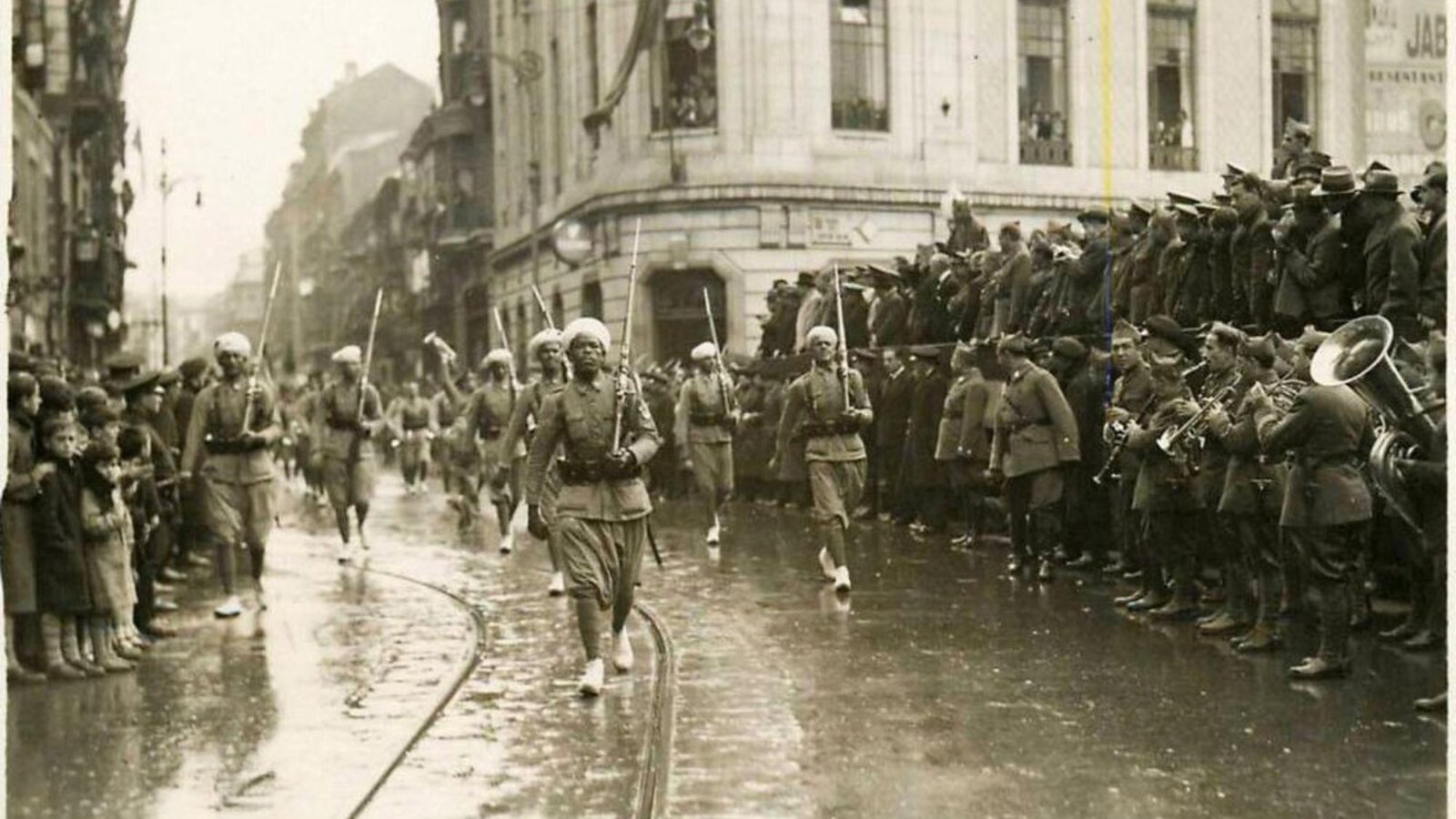
In that negotiation, Belarmino secured the promise that the feared Moors, who raped and beheaded women in front of their children, would be sent to the rear. When he explained to the miners from the balcony of the Town Hall that there was no other exit than surrender, many labeled him a coward.
But Belarmino managed to convince them, and the Lieutenant Torrens went out with the white flag to meet López de Ochoa to announce that the revolutionaries were capitulating. Meanwhile, in Sama, the release of sixty-nine Civil Guard and Assault Guards prisoners was ordered. Belarmino ensured they were returned their weapons and formed as the Army approached. To Yagüe and the soldiers, it was explained that they were survivors of the besieged and heroically defended barracks.
From all that, my maternal grandmother hardly remembered anything. But she remembered the fear. Fear that the miners would take away her father, who had worked as a technician at the Llumeres mine. And fear, a great fear, that the terrible Moors would enter Sama.
Belarmino was condemned to death by a court-martial in early 1935, though soon the Government of Lerroux commuted the sentence to imprisonment, and finally he was amnestied by the Popular Front when it won the elections.
The pacification of Asturias had proven difficult. Belarmino’s tolerance by López de Ochoa faced opposition from Yagüe, who, after one of his famous outbursts, was removed from command.
As a result, Belarmino Tomás and the main figures of 1934 were respected and later pardoned by Alcalá-Zamora. Of the prosecuted, only two minor revolutionaries were executed: the Sergeant Vázquez, accused of blowing up a truck with thirty-two Civil Guards, and Jesús Argüelles, better known as Pichulatu, a bootblack from Oviedo.
Although many returned to their homes and jobs, others remained hidden in the mountains with weapons and dynamite. The Government tasked the Civil Guard commander Lisardo Doval with apprehending the fugitives and recovering the weapons. He was appointed special delegate for public order and became a local version of Martínez Anido.
In the following months, a range of killings, looting, raids, interrogations, and torture occurred. The balance of power shifted again: the Civil Guards returned to acting as executioners, and the Army faced an international campaign of denigration led by the Socialist and Communist Parties, with significant involvement from La Pasionaria at the helm of the Organization of Anti-Fascist Women, sheltering orphans and protecting widows. The PSOE sent two of its most prominent members, Fernando de los Ríos and Juan Negrín. Both traveled through Asturias and returned with reports of the repression: two thousand prisoners, the Civil Guard shooting women, nursing infants, and workers.
All of this would ripple through the next two years, becoming the focal point of political debate within the Socialist Party. Its main factions drew different conclusions. While for the followers of Largo Caballero the Asturian experience showed that one could defeat the State, the prietistas concluded that victory through revolutionary means was difficult, and the solution lay in rallying the left into a single electoral bloc. That strategy led to the electoral victory of the Popular Front.
Six months later, as the summer of 1936 ended, Belarmino Tomás was once again in control of Asturias. On September 24, in Sama, my grandmother Celia saw him in person for the first time. He was passing through the town, appearing surrounded by militiamen.
They crossed the street in the opposite direction and, when Belarmino realized that that girl was looking at him, he turned toward her and, on his oval face with large lips, a horse-like, benevolent smile appeared. He would never remember that girl, but my grandmother would never forget Belarmino.
All the entries of 1936 Day by Day
Interview with José Ángel Mañas about 1936 Day by Day