
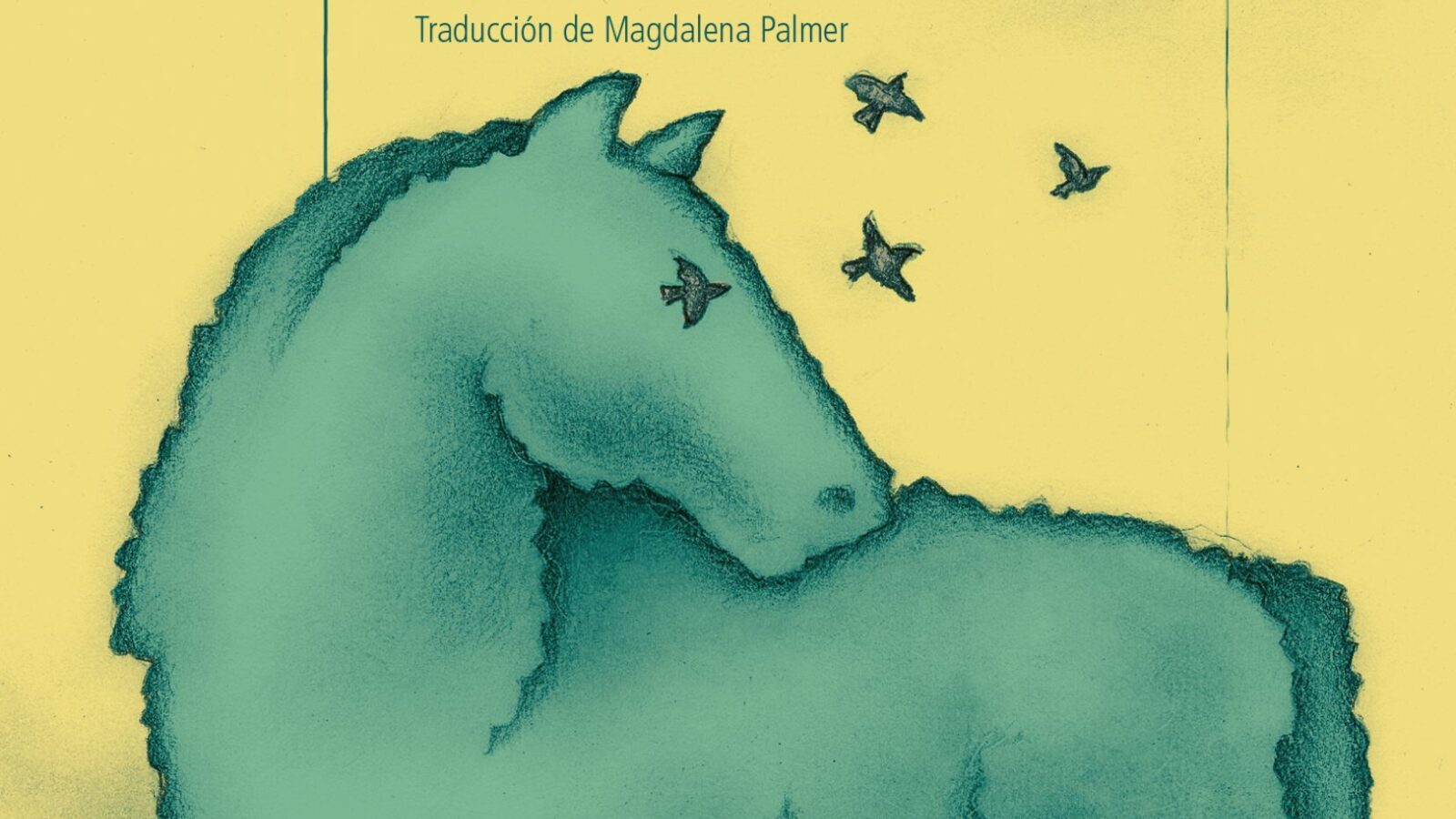
Worried about motherhood, about what it means to be a mother, or about what it implies to be a father, this is a theme that threads through many narrative landscapes. Less frequently will we encounter the topic of siblings, that other relationship that is broken in the Cain and Abel myth, and elevated in Disney films. Being a brother implies sharing a past, but not bonds that are indisputable, indestructible, unconditional. That is why it can give rise to stories, because we find ourselves in the territory of conflict. That territory is the one traversed by this Glyph, the latest novel by Ali Smith (Inverness, 1962). We will witness two parts of a tale between sisters. The first part told from the perspective of one of them, the elder, and the second narrated in the third person. In the first part memory is at work, which means facing melancholy. To deal with melancholy there is no better resource than simple language. And to deal with memory we must take into account how it works, because it is not linear, because it allows temporal leaps, because it allows embedded interpretations. But the essence will be that sisterly relationship, which is not as simple as the new legends dictate.
One of the sisters boasts of talking to the dead, or at least of conversing with a dead person who can dictate to her what other dead people say. The distance and the implication of memory mean we do not quite decide whether we are dealing with fantasy or reality. What is certain is that in that act there can be both farce and desire, two components that are always implicit in attachments, in love. And when the beloved disappears, what is the substance of what remains? One of the characters will make it clear in a forceful way: “Ah, that’s good, very good,” says Patricia. “Especially because prostheses, you know, deal with absence. And with what you put in place of absence.” In other words: How much of our real identity is a prosthesis?
In this case there is an ellipsis, a very intriguing absence, that of the parents. We hardly learn anything about them. The clues lead us to suspect something ugly about the mother’s premature death, and something violent about the father. But what hurts is the absence: Where have the parents of these creatures been while they were forming the bond of sisterhood? The consequence, easy to imagine, is ghosts. Especially the ghost of a blind horse. In fact, Smith does not close the door to a magical explanation of her tale. After all, memory is fragmented threads and to knot them you need that prosthesis we must forge with imagination. And in memory the stories that affect us will also operate, which is borrowed memory, and for which Smith has a particular fondness. We are a narrative to a much greater extent than we suppose. Hence that second part in which the younger sister, followed by the narrator, attempts to educate with storytelling a foster daughter. Indeed, in this part dialogic narration is quite prominent. And given the temporal ellipsis between the end of one part, which ends when childhood ends, and the start of the other, which begins when the younger one makes adult decisions, we will be left wondering what really happened between the sisters, subjected to a separation apparently agreed upon between them, but which continues to intrigue us, because some pain must have existed in that time. “Family is never a closed case” is a statement that appears on some pages of the book. That intention gives rise to this novel, because it will be rare for two readers to reach the same conclusions, given that there are not two readers who have had identical family lives. Glyph is an excellent way to resume the pace of active reading.
—————————————
Author: Ali Smith. Title: Glyph. Translation: Magdalena Palmer. Publisher: Nórdica. Availability: Todos tus libros.