
To commemorate the 90th anniversary of the Civil War, José Ángel Mañas recreates in Zenda, day by day in this section, what happened in 1936, perhaps the most transcendental year in the entire recent history of Spain.
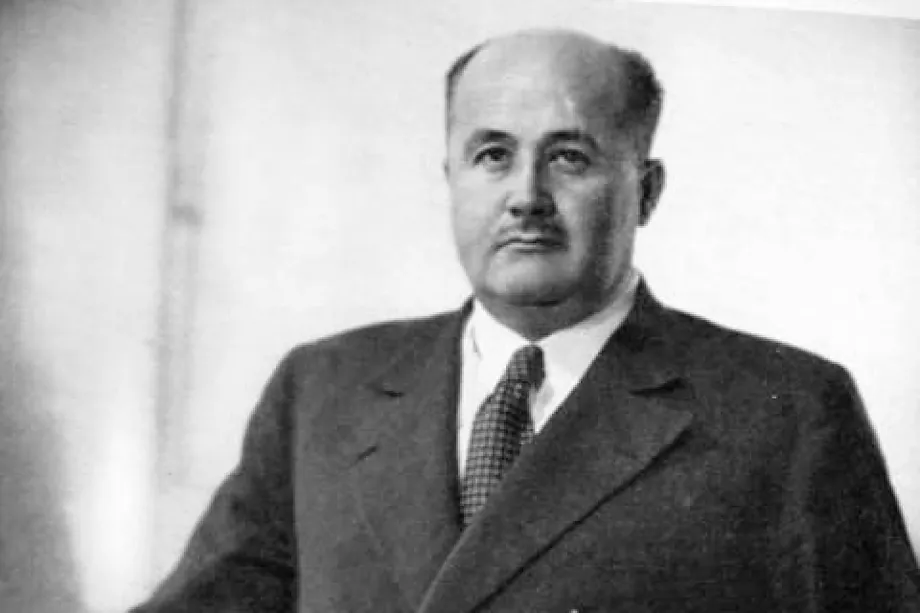
Sunday, September 27, 1936: Nicolas Franco
May I come in?
Nicolas knocked with his knuckles on the door of the half-open room.
—Go ahead. What do you want?
Juanito Yagüe sat up in bed. The room had its shutters only half closed and a monastic air. Above the headboard of the bed, almost like a cot, hung a small crucifix. Yagüe, wearing a military shirt and no cap, his gray hair tousled, picked up the glasses from the bedside table and watched the elder brother of Franquito. If Paco looked soft in appearance, Nicolas was even more so. The stern mustache did not hide that softness, which in his case was also a matter of character. For that reason they complemented each other well: he never tried to rival Paco. Kindelán insisted that it was to Franquito, for being so intriguing, what Lucien was to Napoleon.
Nicolas had always been his father’s favorite, the one who had drawn out his dissolute, pleasure-seeking character. It was known that the father spoke fondly of Nicolas and, instead, referred to Francisco as “my other son.” Unlike his two military brothers, Nicolas preferred feasts and intrigues. The uprising found him in Lisbon. When he learned that Paco was settling in Cáceres, he arrived at once, and his portly silhouette was already omnipresent in the Golfines de Arriba Palace.
—As you may know, I’ve been talking with Kindelán about the matter of a single command — he said, taking a chair and sitting down in front of the bed with confidence. Yagüe let out a grunt, not sure if it was assent or annoyance. Nicolas assumed the former—. We are drafting the project that we will present to the Junta at the meeting you will have tomorrow in that barracks by the San Fernando airport, in Salamanca, with Mola, Cabanellas, and Queipo. Kindelán wants Paco to take the initiative. I wanted to discuss it with you, Juanito, because you are one of the few who have influence over him. I have just arrived from Lisbon, where I spoke with the ambassadors of Italy and Germany and with the Portuguese Government. Everyone believes that the arrangement of three armies, each with its own command, cannot continue. A single unified command is absolutely necessary, and they think Paco should hold it. But he doesn’t want to talk about the topic. Could you persuade him?
—Very well, let me talk to him — said Yagüe, rising to his feet. At that moment, voices crying out in excitement began to be heard in the corridor.
—The Alcázar has been liberated!
The news spread through Cáceres like wildfire. A few minutes later, the entire city gathered in the Plaza Mayor. People crossed through the Arch of Santa Ana and reached Condes Street, spilling into the alleyways leading to the palace. It was ten o’clock at night. A baroque and effervescent crowd, as the newspaper Extremadura described it, surrounded the balcony where Franco appeared shortly afterward with his usual composure. He was accompanied by Milan Astray, a solemn Yagüe, Kindelán, and Nicolas Franco. But it was Milan Astray who channeled the enthusiasm. After the sparse words of Franco and Yagüe, amid the relentless cheers for Franco, he exclaimed:
—Our people, our Army, guided by Franco, are on the path to victory! —And he forced Franquito to raise his hand, amid cries that would soon become a classic.
—Franco! Franco! Franco!
All the entries of 1936 day by day
Interview with José Ángel Mañas about 1936 day by day