

The novel is set in Provence, a landscape Schlesser knows very well since it is the backdrop of his childhood; there, he wrote the book, which opens with a furious storm and a devastated landscape, a setup that gives rise to the plot: the teacher asks the rough, silent gardener to tend her garden while she introduces him to the words of the great poets, to poetry, as a way of expressing emotions, of seeing reality, and of communicating with the world. This will be the start, as the book’s back cover correctly states, of “an unexpected friendship, among battered trees, conversations and verses by Sappho, Pavese, Lorca, Gaspara Stampa, Pavese, Rimbaud, Neruda or Eliot…”. This list of names is misleading, and if we exclude the author of Iluminations, none of the verses by these poets cited reach ten percent of those moving through its pages, where, logically and inevitably, French poetry predominates, especially four authors we will discuss later.
The first conscious contact Louis, the gardener, has with words (and poetry) is the morning when he tells the tireless retired woman about the dream he had the night before. And in that same way —unpremeditated— our interview with the French author will begin, as I spent the three days prior to the meeting reading the 385 pages of The Gardener’s Cat.
The last night I had a dream which, while still warm, I wanted to recount at once, and as a preamble, to Thomas Schlesser. This was that dream: “I’m in an aquarium. In front of my eyes I see fish, many fish of different sizes, but all alike and all of a pale color. From time to time other fish appear, identical, but with a strong color, and at some moment, almost as an exception, a brilliant fish shows itself, of countless colors….”
—That’s it!
—Was that your dream?
—Yes, and it was precisely this last night, after finishing reading his novel. I could ask how you interpret this dream, which has so much to do with your book, but since I don’t want to invade you with the very first question, I’ll offer my own interpretation in advance: the pale fish are the majority of the people who live in the aquarium, I mean, in the world; the colorful ones are those who move around poetry, whether as readers or as authors, and that brilliant fish that briefly appears is the poet, the Poet with a capital P, because, as you know, it’s not the same to write verses as to be a poet. A poet is Lorca, Juan Ramón Jiménez, Neruda, Borges, César Vallejo, Octavio Paz, and in French, well, you know who the French poets are. What do you think of this interpretation?
—I like it. It seems apt or coherent. At the beginning of my novel Talía tells Louis: “Tell your dream, and that dream will be your poem.”
—After this unnecessary, but inevitable, prologue, let us turn to his books. I find it remarkable that he published a novel in 2003 or 2004, his first novel, The Stained Virgin, and yet it is never spoken of. It doesn’t even appear in the back-cover author biography. What happened?
—It’s extraordinary that you bring this up, since that book was published more than twenty years ago. It was a story I wanted to tell at the moment, and I did so; then I never imagined I could enter the status of a novelist. My interests were elsewhere. Becoming a novelist didn’t particularly interest me. I returned to fiction due to life circumstances that pushed me to write these two books I had never planned.
—Aren’t you satisfied with that first novel?
The Stained Virgin is a novel set in the 17th century, in which one tries to recover the identity of an artist who created quite controversial works in France under Louis XIII, and in the end it is discovered that the artist is a woman. I am happy with the book; it is part of my life, but when I reread it I can see the immaturity of youth, although I know that if I hadn’t written it I wouldn’t have reached the next novels nor would I be able to face more elaborate things.
—What woman was she?
—Hmm! The character did not exist. It is a fictional story.
*
(For the reader’s curiosity, we will note that The Stained Virgin is an adventure novel with a detective plot set against the historical backdrop of Baroque France, with theological and political intrigues where art wields a decisive weight. It is possible that the book reveals a dangerous and tumultuous shadow of Umberto Eco’s The Name of the Rose.)
*
—Let us begin the talk with The Eyes of Mona, his great success and perhaps the book that has changed his life. I know you lost a child (or a daughter) before birth, and from there arose the need to create in fiction that girl who never arrived. Is that so?
—Yes, that’s how it happened. It is a sad personal story, but I won’t go into details, to maintain the privacy I promised my former partner. It was a very complicated situation, difficult to face, and it was then that I felt like creating that character and imagining a girl at that moment of life.
—This would be about twelve or thirteen years ago. Do you have children now?
—No. I don’t think so, but life can surprise you (laughs).
—In principle it seems Mona could be that girl you did not have, and Henry the grandfather of your childhood.
—No, the grandfather, not at all. That character is inspired by a fairly competent and controversial historian who set out to demystify France’s official histories, whose name is Henri Guillemin, and I give him a nod in my book. The Henry in the novel is that grandfather everyone would love, and Mona, indeed, is the daughter I would have liked to have.
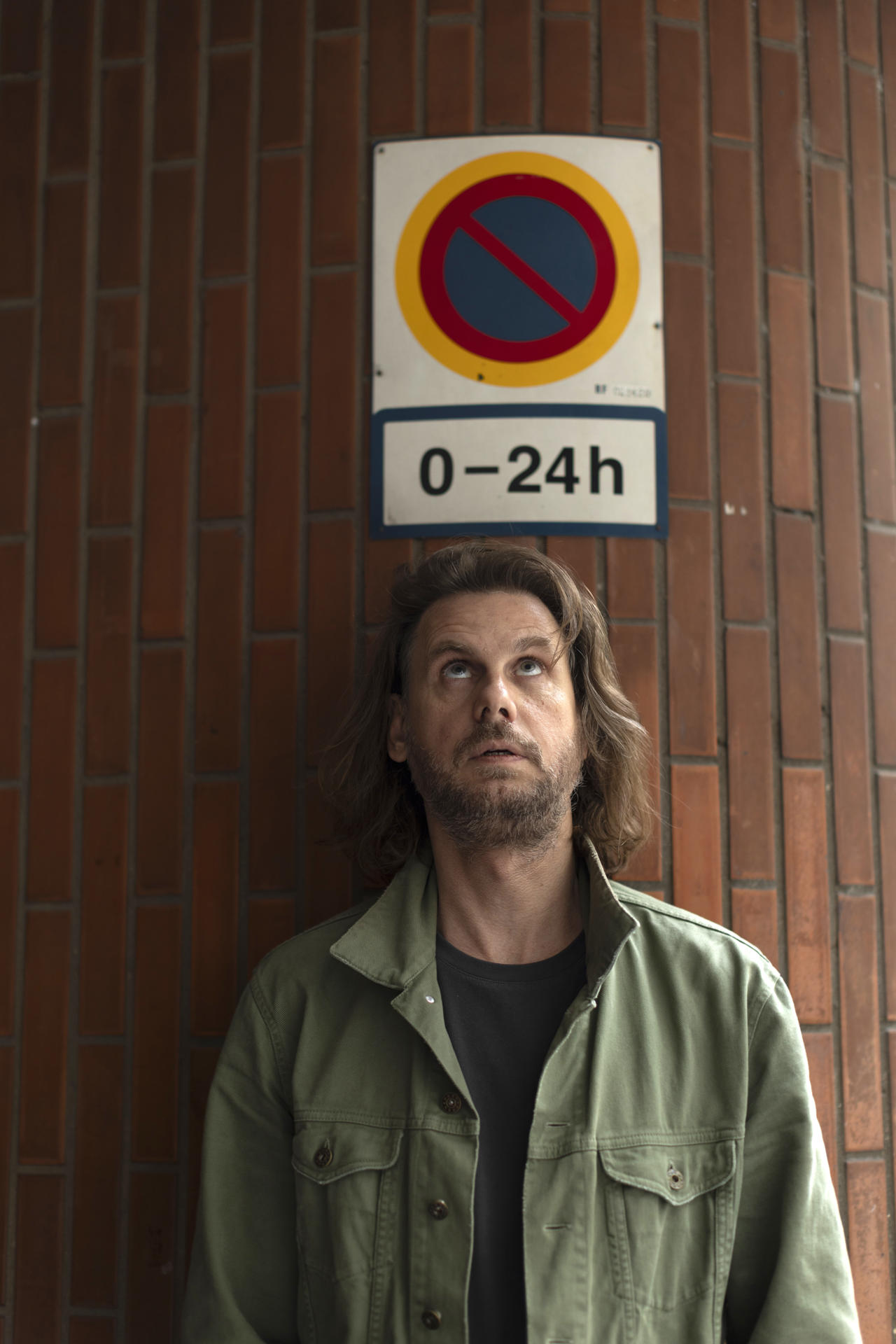
Efe / Marta Pérez
—Why does Mona have ten years old instead of thirteen, for instance, which seems more plausible to understand what her grandfather explains to her?
—I was especially interested in the age of ten, which is when you finish primary school and move on to secondary school: a transition between two moments, in which you say goodbye to childhood and enter another world. The story perhaps would have been more credible with a older girl, but Mona is a very intelligent, active, and energetic girl.
—She has been compared to The world of Sophie, and I think rightly so. Why didn’t you publish it in a youth collection?
—I didn’t conceive it for children. It was a book intended for adults, but I know there are parents or grandparents who read it with their children or grandchildren, and I find that very interesting. I know the comparison with Jostein Gaarder’s book. One day I ran into him and asked whether he agreed that Mona could be Sophie’s younger sister.
—And did he?
—He liked it.
—It’s true that The Eyes of Mona appeals to teenagers, but an adult reader sees other things, because the book is a lesson in art, but above all a life lesson, and those lessons aren’t learned only at the beginning.
—I completely agree.
—How did you select the 52 paintings from three Paris museums that are included in the novel?
—The choice was somewhat subjective. I had a list of paintings I wanted to be present, and then I added others I hadn’t planned as the plot developed. Roughly half and half.
—It seems Courbet is the painter who interests you most. For any particular reason?
—I’m surprised it took ten years to write The Eyes of Mona and only three for The Gardener’s Cat.
—I began The Gardener’s Cat before The Eyes of Mona was published. When Mona’s novel came out and was sold and translated, I saw an open window and knew I could continue with The Gardener’s Cat and reach the public. It’s very difficult to publish a novel about poetry, but the success of the previous work made it easier. If I took ten years to finish The Eyes of Mona, it’s because I was simultaneously writing three other essay books, which are barely known and only one has been translated into English.
—A somewhat improper question: is The Gardener’s Cat a novel or a long fable?
—I cannot classify the book; that is for criticism. I do not feel the need to label things, because the categories are evolving.
—Why did you write the novel?
—Poetry was the first great intellectual passion of my life, even before video games. I discovered it by chance at twelve. I was a poor student, and poetry gave me the possibility to express myself. Each Wednesday I memorized poems in my room, and when you recite them aloud, they fit in very well. One could say those poems accompanied the fibers of my heart and became part of what I am. With that past, it was inevitable that someday I would write a book about poetry, because the existential power of poetry is very important to me.
—Who were the first poets you read, the ones who awakened you?
—The first poet I discovered was Apollinaire and his book Alcohols. I was struck by the intoxication I felt reading it, even though I hadn’t tasted alcohol yet because I was a child. I clearly remember a poem, not included in The Gardener’s Cat, that goes: “In the end you are tired of this old world / Shepherdess, O Eiffel Tower, the flock of the gun-bridges this morning…”.
*
(This long poem, titled “Zona,” ends with these verses:
“…And you drink that burning alcohol as your life
your life you drink like a fiery cordial
You walk toward Auteuil, wanting to go home on foot
to sleep among your fetishes of Oceania and of Guinea
they are Christ figures of another belief and with other forms
they are the inferior Christ figures of dark hopes
Goodbye, Goodbye
Sun with a cut neck”
It is one of the best known poems from the book Alcoholes, published in 1913, for which there are several Spanish editions. The most recommended is the edition in the Letras Universales collection of Ediciones Cátedra, 2001, a volume that includes a preliminary study and also includes his short story collection The Murdered Poet.)
*
—What is poetry for you?
—I do not have a precise definition, but in The Gardener’s Cat there is one, a departure from a line by Jacques Prévert: “Poetry is the most beautiful name we give to life.” I like that idea of poetry serving life, not being an isolated, closed, hermetic thing.
—I’ll offer another definition. It comes from Carlos Edmundo de Ory, a Spanish postist poet you may not know: “Poetry is a vomiting of precious stones.”
—Oh, interesting! Not bad, not bad (with enthusiasm). I like it. I like both.
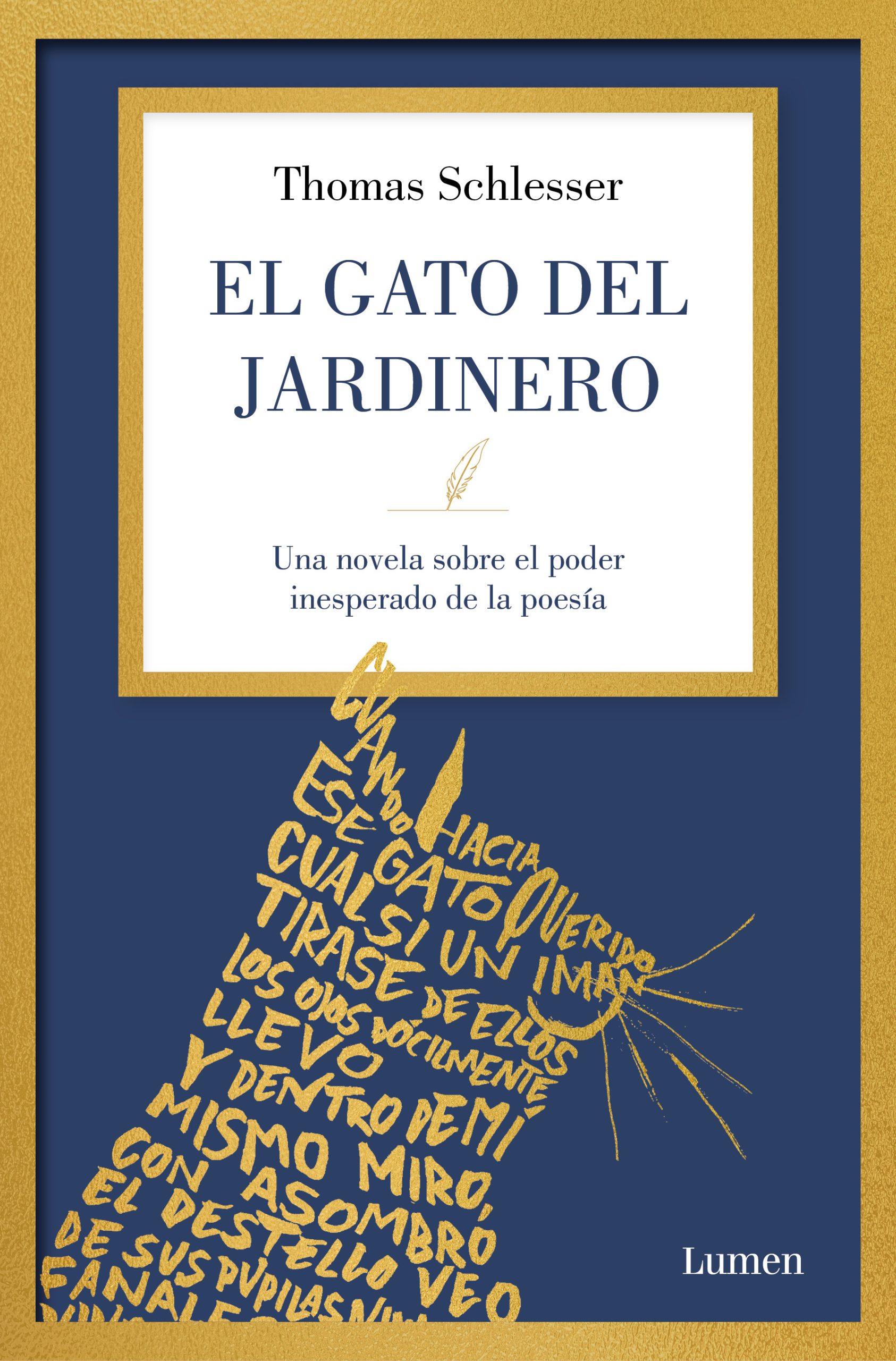
—Why choose a sick cat (it has a tumor) as a character?
—Louis is a person haunted by multiple feelings and sensations that are hard for him to externalize, he doesn’t know how to express them. The cat is an even more intense extension of those emotions: an animal that suffers, that cannot speak of the pain it feels, and I thought they were a perfect pair.
—And where does poetry fit in here?
—The poetic word, in a sense, offers a repair, a consolation, and allows the protagonist to come out of himself. There is also another element, which is finding that shared language. We could say that the gardener is a poet of his garden, who tends, manages, and cares for the plants, just as a poet does, but with words.
—The novel unfolds in Provence, southern France, the landscape of your childhood.
—Yes, but Provence is not merely a thing of the past, because my parents still live there. Part of this novel I wrote in a small house I own, but the geographic area remains the same.
—The story begins with a grand storm and ends with a spectacular fire. Are there as many storms and fires in that region as the book suggests?
—These climatic events are something I have lived through. Louis’s fear of them comes from my own fear. When I was a child, in 1983, and a bit later, in 1990, I experienced two fires: the first one a kilometer and a half from my home, the second one at 150 meters; therefore I know very well the threats of fire and I know what that fear feels like. Provence is also a place with huge storms that arrive after an extreme drought period, sweeping everything in their path, just as occurs at the beginning of my novel.
—What symbolism do toads have?
—The invasion of the toads is like a representation of the forces of evil. They are in my novel, as is the cat’s cancer, and in a sense Baron, the vagrant. It’s curious, because one day I received an extremely aggressive letter from a reader who told me that the image I gave of the toads is detestable and unfair, because they are poor creatures that suffer much from that appearance that provokes people’s rejection. And she adds a long poem by Victor Hugo, titled “The Toad,” which speaks of the virtues of these poor animals in face of the world’s wickedness.
—I imagine you must have written poetry.
—No!… Well, I am a poor poet, and with my novel I wanted to contribute, within my limits, to the spread of my poetic passion. My novel is an invitation to read and listen to poetry, because there are very good contemporary poets, but a public is missing who listens to them.
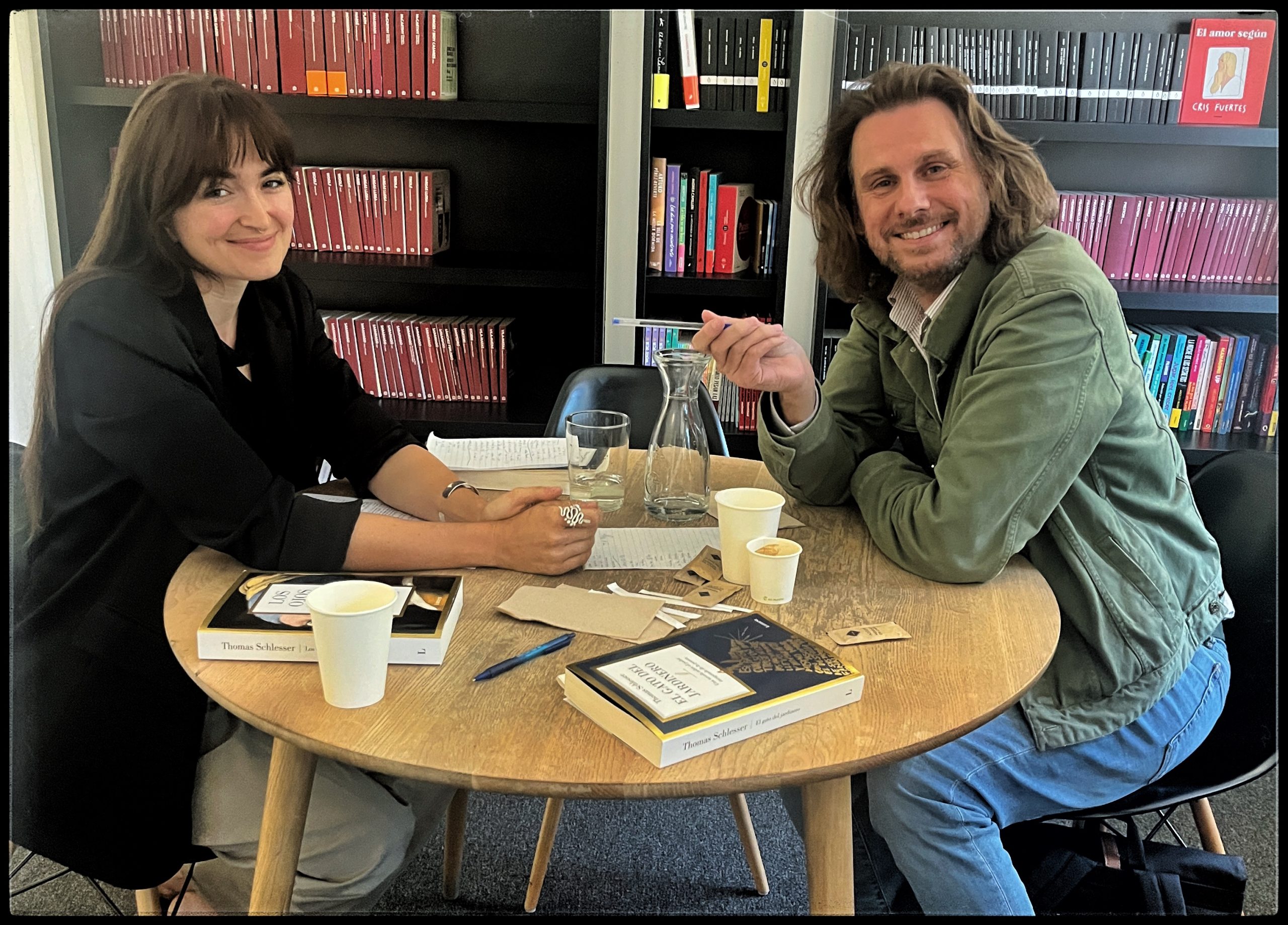
The French writer Thomas Schelesser with translator Aitana Mendieroz during the Madrid interview. Photo: José María Plaza
—Who are the Spanish-language poets you like the most?
—Federico García Lorca, Rafael Alberti, Jorge Luis Borges, Pablo Neruda. I would say, and I know it may be controversial, that Pablo Neruda is an extraordinary poet, but he has certain poems that become repetitive and you realize there are commonplaces in them. He is a very popular poet, but worth reading in an anthology with carefully chosen poems.
—I don’t find that controversial. I think the same about Neruda and Rafael Alberti: both have such a broad and varied body of work that it includes mediocre poems and some truly bad ones. It’s the risk of writing too much and publishing everything.
—Totally agree.
—I imagine your favorite poets are the ones most cited in the novel. That is to say: Baudelaire, Rimbaud, Apollinaire, Verlaine…
—When I was a teenager these were the poets at hand. In the eighties there was no screen to read all the poetry of the world. These are the poets that have inhabited me from the beginning, from the start. There are others I like a lot and I discovered later, but they are not as integrated into my life, such as Gaspara Stampa, whom I adore, the Russian Marina Tsvetaeva, and, of course, the great Edgar Allan Poe.
—I agree that poetry helps. How has it helped you?
—Poetry has a protective power, and I’ve lived it. In 2009 I developed tinnitus. I went to the doctor, had a scan, and while I was inside the tube I began reciting a poem by Mallarmé, as if it were a ritual or a shield. When Mona has to undergo a CT scan, the girl sings, also to protect herself. The Mallarmé poem is “Sonnet in X,” a completely hermetic text, not very generous to the world, but at the same time it seems to have a kind of magical formula: “Ses purs ongles très haut dédiant leur onyx…”.
*
The writer recites this poem in full, as if repeating that moment of restlessness and uncertainty (nothing to do with the current one), and we reproduce this text, written in 1887, which appears partially (the first six lines) in his novel The Gardener’s Cat. Given this limitation, we will recover the full translation of the sonnet, which Octavio Paz rendered in 1968. He titles it “Sonnet in ix.”
“The one with his pure onyx nails, high as an offering,”
“the Anguish, is midnight, rises, lamp-stand,”
“you see many things, a dream burning in the Phoenix,”
“that none gathers as an amphora of ashes:”
“A hall with no one, nor any vessel’s basin”
“a spiraled breath of soundless emptiness,”
(the Master has left, weeping in the Styx catches
with that single noble object, the Nothing.)
“Near the open window to the north, a gold”
“dies according to perhaps a harsh fable”
“of a nymph lashed by the flames of unicorns,”
“and she, barely dead, naked in the mirror”
“that already in the nullities that close the frame”
“the glitter suddenly fixes on the seventh.”
*
After this there is little left to say. Perhaps tell the reader that in The Gardener’s Cat there appear only four Spanish-language poets (out of almost eighty): Lorca, from whom two verses are quoted in passing; Pablo Neruda, three brief verses; Teresa de Avila, whose mysticism is commented upon; and Jorge Luis Borges, to whom the author devotes a page and a half on the “Poem of the Gifts.”