
I was fortunate to attend, a few days ago, an exclusive screening of The Broken Voice, the film that Manuel Menchón will release in October and which was shown last week at the San Sebastián Festival. I left the small Lavapiés cinema where we screened it with that increasingly rare, yet always joyful, feeling that works do not end when the credits roll, but rather linger within you and compel you to ruminate for hours, perhaps for days on end. It isn’t easy to assemble a film out of documents, nor to make those documents breathe. Menchón had achieved it in Words for an End of the World, his extraordinary foray into the last months of Unamuno, and he returns to it here with a visual virtuosity that at times makes the viewer drift away from the complexity of his undertaking, that of constructing a cinematic narrative without ever betraying the nature of the materials that sustain it and performing the miracle that letters, photographs, notebooks, film footage, files, and voices stop being mere evidence laid out on a dissecting table and come to life on their own.
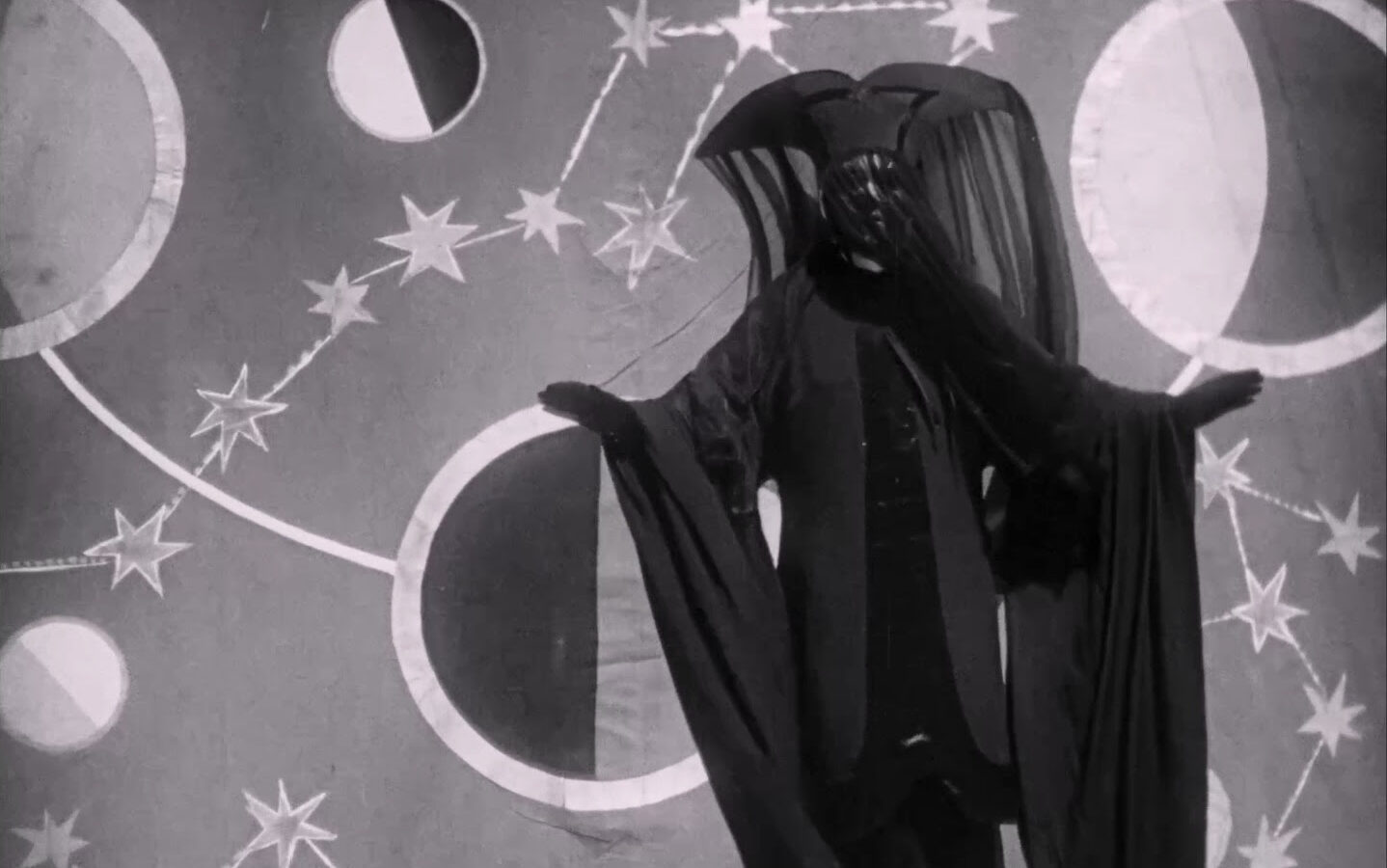
I suspect that, at heart, The Broken Voice is about restoring life to someone who has long been reduced to an icon. With Federico García Lorca two apparently contradictory maneuvers have been carried out, yet they lead to the same point. On one hand, his figure has been elevated to the status of myth, to the point of rendering him incorporeal. On the other, he has been infantilized: the poet of the moon, of drawings, of the Gypsies; a kind of brilliant yet vulnerable creature who would have traversed 1930s Spain without fully grasping what was happening around him. Both approaches end up neutralizing the person. Manuel Menchón does precisely the opposite. He returns Lorca to us, and literally, returns him to us in motion. There is a particularly moving moment in which we see Lorca interpreting the Shadow in the auto sacramental of The Life Is a Dream, in one of the performances he gave with La Barraca across the villages of Spain. It hurts to behold those images when one knows all that will follow and thus understands that while Lorca plays at being a shadow, a much darker void looms over him—the darkness of his final days, of a country on the verge of breaking apart, of the people who, a few years later, will hunt him down. The footage was retrieved by Menchón from inside a can of boot polish, and with it he takes one of the first steps toward achieving the goal I referred to, the one that anyone at this point could have deemed impossible: to compel us to stop fixating on García Lorca and to focus primarily on Federico.
“Lorca was killed by the Francoists in the summer of 1936, and his murder carried a political and repressive dimension.”
Also in the political Lorca, because—it’s worth remembering precisely now that certain revisionism seeks to turn established facts into a haze where concepts overlap and responsibilities are confused—Lorca sympathized with the Republic, was linked to eminent socialists such as Fernando de los Ríos, and publicly expressed positions opposed to fascism. He was never a friend of José Antonio Primo de Rivera, as some ignorant or malicious voices claim, and he demonstrated his adherence to the Popular Front. A report from the Granada Police Chief’s Office, dated 1965, acknowledged that he had been detained and “shot” because of his triple status as a Mason, a socialist, and homosexual. Regarding the first item of the triad, the same document warned of his membership in the Alhambra lodge under the symbolic name Homero. The Broken Voice offers new documentation—perhaps not entirely conclusive, but quite illustrative—about that link. The facts speak for themselves, no adjectives needed. Lorca was killed by the Francoists in the summer of 1936, and his murder had a political and repressive dimension that official documents of that era establish. Debating his work is a legitimate debate. Interpreting his thought, too. But erasing the circumstances of his death serves unnamed interests not far from those of those who pulled the trigger.
There is also in the film a particularly powerful connection between two historical milestones, because Granada appears as the setting for two losses separated by centuries. The conquest of 1492, with the gradual disappearance of a cultural ecosystem, in a process that culminated with the expulsion of the Moriscos, converses with the exodus that followed the Franco victory. Lorca lamented all that had been lost with that first amputation, and if he had not been gunned down in Viznar, it is highly probable that he himself would have been part of that long procession of writers, scientists, professors, doctors, or teachers who had to move elsewhere to save their lives. Menchón does not force the parallel; he simply lets it resonate so that the viewer may conclude that a nation can conquer a territory while impoverishing itself, and also win a war that ends up depriving it of its future.
But the true heart of The Broken Voice bears the name of Juan Ramírez de Lucas, Lorca’s last love. He was very young and Federico nicknamed him “the blond from Albacete.” They both planned a trip to Mexico that would have allowed them to live together there, which they had to keep hidden here, but they never carried it out. Lorca went to Granada and soon after the Moroccan troops rose up. Then Federico was killed and Juan remained alive, which paradoxically proved to be a form of condemnation for him. His gaze underpins the film, because Ramírez de Lucas kept notebooks, memories, drawings, and letters throughout his life, also an unpublished poem that Lorca had dedicated to him. In his memoirs he wrote that his sorrow had been exclusively his own, with no prospect of consolation against that “dense tangle of prejudices and taboos” weighing on Spanish society. There is something devastating in his story because it broadens the meaning of the word victim. Lorca was killed, but Ramírez de Lucas was left with a whole life to mourn his loss. He was also a victim of a dictatorship that, in addition to pursuing bodies and ideas, imposed silences, and his sentence had an added perversity, because he could not even present himself to others as someone who had lost the man he loved. That black grief ran through his biography for more than seventy years.
All this material could have given rise to a solemn, emphatic, even discursive film, but Menchón knows how to dodge each of those traps. He trusts the documents, the images, and the editing; he investigates with the rigor of a historian and moves with the pulse of a filmmaker. He also possesses a virtue that is not all that common. I am referring to the courage he already demonstrated in his Unamunoan inquiry and which he again displays now. Courage to intrude into territories where certain interests still persist in managing the past. Courage to call things by their name. Courage to understand that memory does not consist of substituting one propaganda for another, but of seeking evidence, confronting it, and letting it speak. That is what The Broken Voice is about, and that is why, upon viewing it, we discover that the voice that broke was not only Lorca’s; it was also Juan’s, that of the exiles; that of those who had to hide who they were, remain silent about what they thought, omit the names of the people they loved. And for all those people, Manuel Menchón does something far more valuable than inscribing their names on a plaque or erecting a monument. He gives them back their voice.