
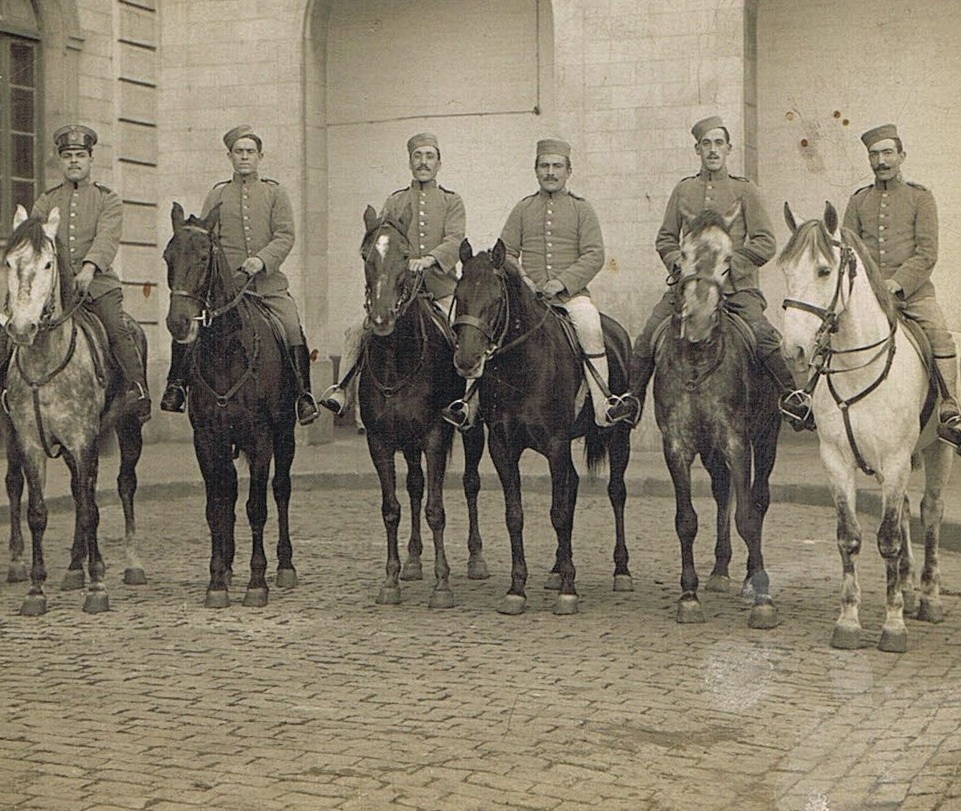
Wednesday, September 30, 1936: Death of Habana
Is that the animal?
—Yes.
Pepe Mañas had just stepped out with the two men from the shophouse already closed where he and his mother had welcomed them. The butcher was the employee of the Carabanchel hospital who had decapitated General López de Ochoa last month. He and his son, equally sturdy and lantern-cheeked, wore aprons and carried their knives.
At first they offered to take the animal to the Chopera promenade slaughterhouses, but Pepe refused outright. In the end they agreed to perform the butchering in the stable, where they laid some sheets on the floor. The butcher would take, as payment, a portion.
—She’s beautiful, how old is she?
—Fifteen years old.
The animal snorted nervously. Since her owner had been taken away she had grown restless. She noticed his absence. Luis Mañas was the one who had ridden her, and when it was no longer possible to take her out into the open fields, he stayed near her while he worked the garden behind the house. There there he left her loose, to graze. Or he rode her in the small plot for a while so she could vent. The disappearance of the other horse, Moreno, a couple of days earlier at night, did not help either. Pepe wondered how the thieves had managed not to wake them, and why they left the mare behind. Perhaps she had shown less tameness.
—Tranquila, Habana —murmured.
He stroked her head. His hand moved through the mane. Those large dark eyes brought to memory his dead father, so attached to his mare. It was no accident that he had served in a Cavalry Regiment and, when he left the service, he kept himself entertained taking care of the horses.
Suddenly he remembered that his father had been changing Habana’s horseshoes when he told him that he wanted to study Law. Now it mattered to him a lot. The empty chair, the clothes, the shoes, everything reminded him of his absence. The initial incredulity was followed by a dull anger, a nagging melancholy. “Lawyers deal with people who steal, cheat, or kill, and sooner or later you will have to lie to defend them. I don’t like that my son will lead that life.” That is what he had said, and it did not help to explain that a lawyer can also defend the innocent, the wrongly accused.
His father had resigned himself, but never understood his vocation. He would have preferred that his son become a military man or a doctor. In the end the circumstances led him to apply to be a state official in a decaying state. But in the end, he thought, pushing back the memory.
—Tranquila, Habana. Tranquila, bonita.
He led her to the blanket on the ground.
—Would you rather we did it ourselves?
—No, I have to do it.
Pepe Mañas pulled his father’s pistol from his pocket. He cocked it. While continuing to caress the animal with his free hand, he felt tears welling in his eyes. After a moment, he pressed the barrel between the two eyes and pulled the trigger.
Later he learned that on the same day Franco was named Generalissimo of all the armies by the rebels. For some reason, the two events became linked in his memory.
All the entries of 1936 day by day
Interview with José Ángel Mañas about 1936 day by day