
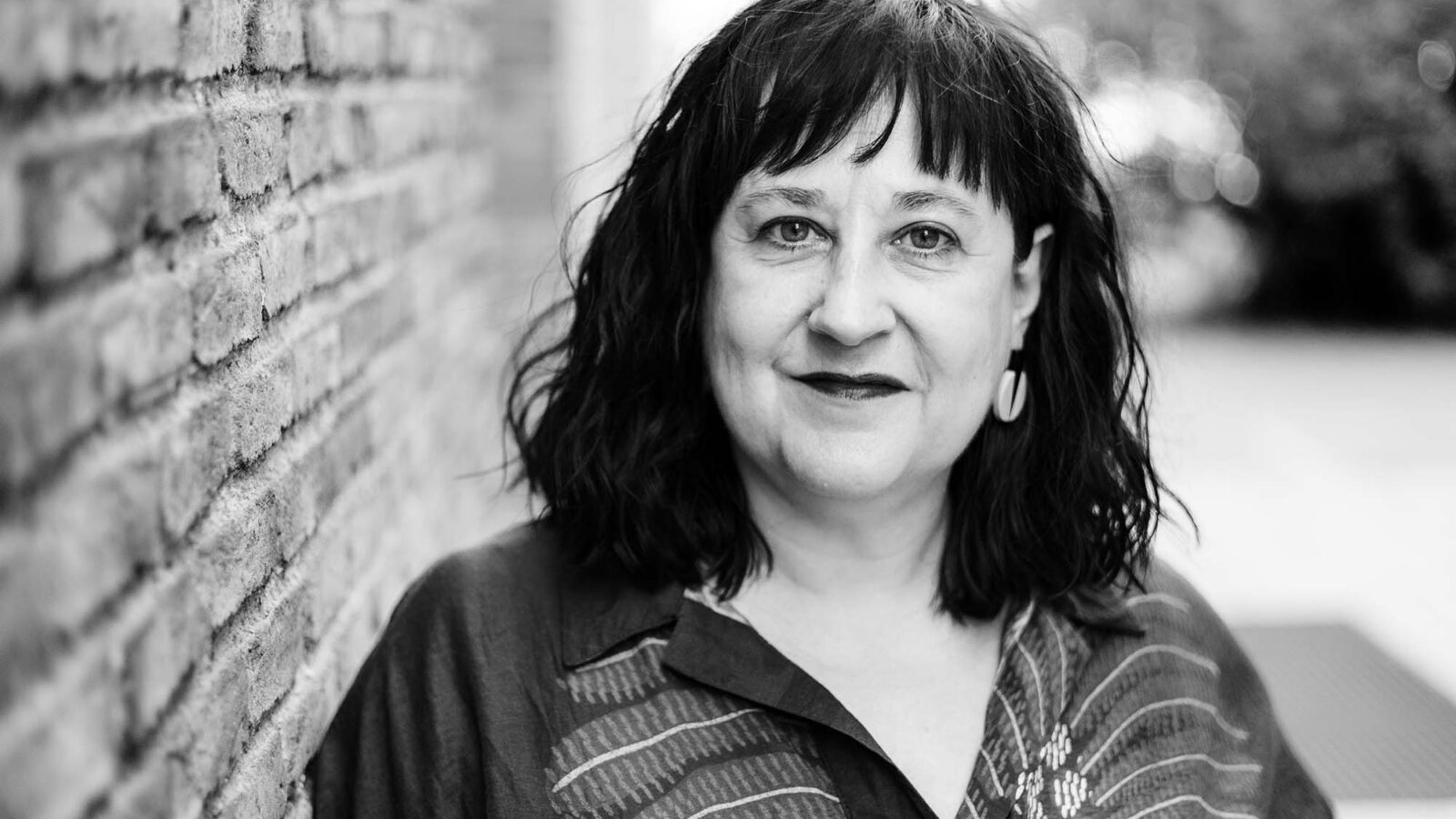
In 1927, when a military ruler governed Spain, Miguel Primo de Rivera, with the church dictating what could be done and what could not, the king preoccupied with filming pornographic movies, his right-hand man, the Count of Romanones, aiding him with those films, and the political parties, then outlawed, conspiring to establish a Republic, the women of the Lyceum sparked a seismic shift with one question: Are laws unjust towards women? And indeed they were, very much so. That is why it is so valuable to recover the testimony of these women. One of the latest to do so has been the writer and journalist Eva Cosculluela (1972) in The Club of the Moderns (Seix Barral), a book that reads like a novel and that provokes thought and reflection like the finest of essays.
We speak with Eva Cosculluela about the “humble seamstress” who fought for women’s suffrage in Spain, about how modern Don Miguel de Unamuno seemed, and about the courage of women who challenged the conventions of their era to claim their freedom.
*****
—Why has the Lyceum remained forgotten for so long?
—With the Lyceum, as with most things concerning women, they have never carried as much weight as those of men. This isn’t unique to the Lyceum: I find it highly telling that we know everything about the Residence of Students — who stayed there, which rooms they occupied, how they shared life there — and yet, regarding the Residence for Young Ladies, there are only the faintest references. There’s a difference in naming: theirs was called a “residence of students,” and theirs “residence of young ladies.” With the Lyceum, the discrepancy is even more pronounced. I believe that if this had been an association of men doing the same thing, today we would be celebrating it far more. We would have studied it in the textbooks. But since it involved women, it wasn’t treated that way.
—The Lyceum’s foundation is a revolutionary act, especially because it occurred under a dictatorship.
—When people talk about the Lyceum, they tend to picture the Republic, but its creation actually took place in 1926, at the height of Miguel Primo de Rivera’s dictatorship. At that moment there was a social order designed to keep everyone within its boundaries; they sought to simulate a stability that concealed, in truth, a profound lack of freedom. That is why taking that step and founding a place like this was so necessary. It was a profoundly revolutionary act.

—I read in her book: “Desgraciados niños los que tienen una madre liceómana!”
—In the society of that era, under that dictatorship, the church wielded significant power. What was said is that the woman should stay at home taking care of her husband and children. And, of course, not speak. She had to remain quiet, because our opinions bothered. They were not only ignored; they irritated. Then the Lyceum arrives, and the first thing they declare is that they are subverting the social order. It was a revolution because they wanted to be out of the house, to talk, to meet, and to have a good time. This was highly dangerous because it could lead to demanding a seat in Parliament, as indeed happened. The attacks were always along that line: they are bad mothers, abandoning their children at home to go out and enjoy themselves, and when they return from these meetings they beat their husbands… The aim was to show that this was not the place for women in society, that it wasn’t a good thing, and that is why they called them bad mothers and bad people.
—But the Lyceum has international origins.
—Yes. The Lyceum in Spain was founded as part of an international network that had begun in England in 1903 with Constance Smedley. This writer had a visionary idea: on one hand, to start a club for women, equal to the men’s, and she even insisted that it occupy the same space, the same street as the men’s, so that it would be visible that they were just as important; and on the other hand, she aimed to form an international network in which London would be the headquarters of European intellectual life. With that vision, the idea could not stay confined to London. It had to be a network in which all women contributed and learned from each other. Shortly after the London founding, Paris, Berlin, Florence, Melbourne, New York… emerged. In that way, it would also be easier to address the problems they faced. That network fostered an open and expansive outlook, which Spain did not have at that time. Our own Lyceum took twenty-three years to come to fruition, though there had been earlier attempts that did not succeed.
—We continue with the book’s lines. There is one told to Concha Méndez when she was young that is devastating: “Las niñas no son nada.”
—When I read that line in Concha Méndez’s memoirs, it touched me deeply. Imagine that girl who wants to do things, who has that push, and suddenly hears that “girls are nothing.” They aren’t even asked what they want to be when they grow up; only her brother is. And even without being asked, she speaks up, and they answer, “You keep quiet, no one asked you, you have no right to be anything.” I can picture what it must have felt like to be a woman in that era and to grow up in that context: hearing all the time that women are inferior, that we are almost animals, that we can only be mothers. Concha Méndez had the drive to travel alone around the world. She had to be revolutionary and bold for that era. Concha married Altolaguirre, and she was the one who put on the work overalls and ran the printing press they owned. She was also the one who rode her bike through Madrid delivering the poems and books they printed. What that woman did a hundred years ago must have been incomprehensible to that society. Concha Méndez was one of the Lyceum’s founders, but all the others had a similar drive: “Decide for us what you want; we are very sure of what we do, of what we think, and of what we defend.”
—In her book, she reveals who first used the word “sorority”: Don Miguel de Unamuno.
—I loved discovering that. I am particularly fond of words; I work with them and I am very curious. In one of the first interviews with María de Maeztu, regarding the Lyceum’s founding, she speaks of creating a network of female fraternity. At that moment, I thought of what we now call sorority, but María doesn’t use the term. I wondered if it was because the word wasn’t yet common, and I began to investigate. I first consult the CORDE, the Royal Spanish Academy’s Diachronic Corpus, to find when the word “sororidad” appeared in print. Then I also consult the archives. And I discovered that the first to use it was Miguel de Unamuno. But I also uncover that Unamuno, in the prologue to La tía Tula and in an article he wrote from Argentina, defends the word and talks about “matria,” saying the world would be better if the “drones” let women govern. So, although Unamuno proposed “sororidad” to define that sisterhood, it was not a word María de Maeztu could consciously employ at the time.
—María de Maeztu is a novelistic character. She is a woman who lives with many contradictions: she defends progressive ideas and witnesses militiamen kill her brother Ramiro —with whom she was bonded— for holding a reactionary view.
—She devoted her life to defending those ideas because she truly believed in them. María passionately supported advances in women’s education; she was deeply involved in the new political framework of the Republic. And then she watches the people she defends kill her brother. She could not endure it, collapsed, and left Spain. She faced significant struggles throughout her life — she spent time in Swiss sanatoriums — but all was intensified by Ramiro’s death, whom she had regarded as her spiritual father and with whom she was very close.
—Was the rejection these women faced from certain quarters worse than the paternalism of those who supposedly defended them?
—They knew they would be rejected and scrutinized, but they expected those attacks to come from the Church, from the more conservative side, not so much from friendly fire as there was. Many women who should have supported the Lyceum attacked them. There were those who supported them in the press, many of whom were their husbands. It was a tremendous paternalism. It’s true that the press of that era used florid, affected, and cutesy language, but in the articles about them they spoke of the “beautiful young ladies.” They spoke of their refined taste, instead of noting that they had brought Alberti, Lorca, and Unamuno to the Lyceum. It was like patting them on the back: “You’re so good, you’re so pretty, you do things well because you’re such diligent women.” Bearing this burden must have been enormous, because these women were exceptionally intelligent and top-tier scholars. In a sense, they may have thought: “Fine, stroke my back and let me continue to do what I’m doing.”
—You spoke of friendly fire. There were women who criticized the Lyceum, such as Federica Montseny and Margarita Nelken, and others who ignored them, like Rosa Chacel.
—Yes, and for very different reasons. For Federica Montseny, they were not feminist enough. For her, class discourse ran through everything and that was the priority to defend before entering other debates. Yet these women, through their actions, somewhat defied Montseny’s stance. For example, with the Casa de los Niños, a project to allow working women to go to work while keeping their children safe, fed, clean, and vaccinated. This was a political and social project. The problem is that people saw them as bourgeois ladies who came to drink tea, rather than as a group of women working to change society. They dismantled all those attacks. Not only those from Federica Montseny, but also from Carmen de Burgos and Margarita Nelken. The Lyceum women let their deeds speak for themselves. And I love this, because many of them rejected the term “feminist” due to how demonized it was, yet they were clearly feminist in action. You can see what they said in their speeches, what they did with their lives, and you realize they are part of the core of feminism, even if they wouldn’t have called themselves that.
—In the book, she notes that in 1904 Carmen de Burgos —a woman with many contradictions— was commissioned to translate Moebius’s book The Mental Inferiority of Women and fills the footnotes with rebuttals to his theories.
—It’s fascinating. (Laughs) I start reading that book and I see Carmen de Burgos’s footnotes. Normally, in a translation, notes are there to provide context, explain a term with no direct translation, a wordplay, something like that. But here she begins addressing the author: “Sir, you have no idea, you’re wrong on this, if your views are as you claim, you’re completely mistaken…”. Moebius’s theory argues that women have smaller brains and therefore less capacity; as if discussing whether a bottle or glass holds more. Carmen de Burgos responds that Voltaire’s brain is among the smallest known, and it could house a universe. I love that dialogue that forms between author and translator. In the prologue she already hints at her frustration with the text. How could she not be frustrated! Note that, even if she did not define herself as a feminist, she had left her husband, raised her daughter alone, written landmark books like The Divorce in Spain, championing women’s right to divorce. Moreover, she had a relationship without marrying, without going through the church, with Gómez de la Serna, who was twenty years her junior. In reality, she was a superfeminist, supremely liberated and empowered, though she did not label herself with the term “feminist.”
—Magda Donato —the pseudonym of Margarita Nelken’s sister— is one of the most fascinating and perhaps least known figures in Spanish journalism.
—Precisely. Those lived experiences, those articles she wrote, show total immersion. She wanted to understand how poor women who went to the shelter lived and used public services, and she spent time with them. She wanted to know what the women’s asylums were like, and she admitted herself to experience that reality. This was crucial in a time when official propaganda was telling a completely different story. I find her a tremendously interesting figure. It’s a person I intend to explore further in the future. I picture Magda —Carmen Eva— with her sister Margarita at Sunday meals: the debates they must have had given their divergent viewpoints.
—These women were reproached for their bourgeois origins, but Clara Campoamor, the “humble seamstress,” was also in their ranks.
—Many of these women came from bourgeois backgrounds and positions. María de Maeztu also belonged to a family of that kind, but when she was orphaned of her father, she had to work with her mother, who ran a ladies’ academy. She was not economically powerful. Clara Campoamor is the clearest example that they did not all come from the same social stratum. Clara began from very lowly beginnings: she studied the baccalaureate and the career in her thirties. In the press they constantly called her “Clarita.” Imagine if a man were called Pepito, Antoñito, Pedrito, or Manolito simply for defending someone in a trial. To her they said “Clarita” and also “the humble seamstress.” Look at where the seamstress ended up! I consider her the central figure among them. She deserves a statue in every town across Spain. How she fought for women’s rights and civil rights in general, and the wear and tear she endured and paid for it. Clara Campoamor paid with her political life, her professional life, and with exile, from which she could never return because she stayed pursued. How poorly we treated this woman who did so much for us.
—The book recounts that in 1904 Carmen de Burgos —a woman with many contradictions— was tasked with translating Moebius’s The Mental Inferiority of Women and fills the footnotes with rebuttals to his theories.
—It’s fascinating. (Laughter) I begin reading that book and I’m drawn to Carmen de Burgos’s footnotes. Usually, in a translation, notes serve to provide context, explain a term with no direct equivalent, or a wordplay. But here she starts speaking to the author: “Sir, you have no idea, you’re mistaken on this, if your thinking is as you claim, you’re completely wrong…”. Moebius’s theory states that women have smaller brains and thus hold less capacity; as if discussing a bottle or glass. Carmen de Burgos responds that Voltaire’s brain is one of the smallest known, yet within it one can imagine a universe. I adore that dialogue that forms between writer and translator. In the prologue she already signals her anger toward the text. How could she not be upset! Note that, despite not identifying as a feminist, she had left her husband, raised her daughter alone, authored crucial works like Divorce in Spain, championing women’s right to divorce. Furthermore, she had an affair without marrying, without church rites, with Gómez de la Serna, who was twenty years younger. In reality, she was a supremely feminist, liberated, and empowered woman, but she did not recognize herself in the term “feminist.”
—Magda Donato —the pen name of Margarita Nelken’s sister— is one of the most fascinating and perhaps least known figures in Spanish journalism.
—Exactly. Those first-hand reports, those articles she wrote, show total immersion. She sought to know how poor women who used shelters lived, how they used public services, and she accompanied them for a season. She wanted to know what the psychiatric wards, the women’s asylums were like, and she admitted herself to experience that reality. This was crucial at a moment when official propaganda presented an entirely different narrative. I find Magda —Carmen Eva— an extremely interesting figure. It’s a character I plan to explore further in the future. I imagine Magda —Carmen Eva— with her sister Margarita at family meals on Sundays: the debates they must have had given their markedly different viewpoints.
—These women were reproached for their bourgeois origins, but Clara Campoamor, the “humble seamstress,” stood among them as well.
—Many of these women came from bourgeois backgrounds; María de Maeztu also came from such a family, but when she lost her father she had to start working with her mother, who ran a ladies’ academy. She was not financially powerful. Clara Campoamor is the clearest example that not all belonged to the same social circle. Clara began from modest beginnings: she studied high school and pursued a career in her thirties. In the press they constantly called her “Clarita,” imagining she was a young girl. Imagine if a man were named Pepito, Antoñito, Pedrito, or Manolito for defending someone in court. They called her “Clarita” and also “the humble seamstress.” Look where the seamstress ended up! I believe she is the greatest figure among them. She deserves a statue in every town in Spain. How much she fought for women’s rights and for civil rights in general, and the wear and tear she endured and paid for it. Clara Campoamor paid with her political life, her professional life, and with exile, from which she could never return because she remained pursued. How poorly we treat this woman who accomplished so much for us.
—Cuenta en el libro que la furia estalló cuando se hizo Pública la fundación de la Casa de los Niños.
—From that moment, attacks intensified. This was an educational and social institution without nuns. The idea of such a project without church indoctrination was unthinkable. The conservative press hammered them relentlessly. It must have irked them to see that it actually worked. With the advent of the Republic, Madrid’s mayor announced that there should be a Casa de los Niños in every neighborhood and that these women should manage it, because they were better and more effective than their officials. The women who led Casa de los Niños are relatively little known. I had not heard of Consuelo Bastos until I began researching. Following thread after thread, I also found Camila Ventura de Subirá. In the National Library’s holdings lies her husband’s legacy, who kept Camila’s folders with all the institution’s information. This man wrote a draft of his memoirs. I went to the National Library to read them and uncover details about Camila, but there was only a single line about her, recounting how she had fallen in love with him…
—We’re done. What is the Lyceum’s legacy?
—The ability to reach consensus and work together despite our differences. We can think differently, but when there is a common objective, such as the fight for equality, we must be capable of finding common ground. Now that feminism has its own internal debates, those nuances that separate us so much, I think it would do us good to look at these women’s legacy. When they started the Lyceum, that wasn’t just another venue; that’s why they were attacked and why they withstood the attacks and the insults. To improve Spanish society, they had to improve the status of women as citizens. And this is still happening today: feminism is being demonized again to scare people. This is something these women faced as well, and they knew how to resist.