
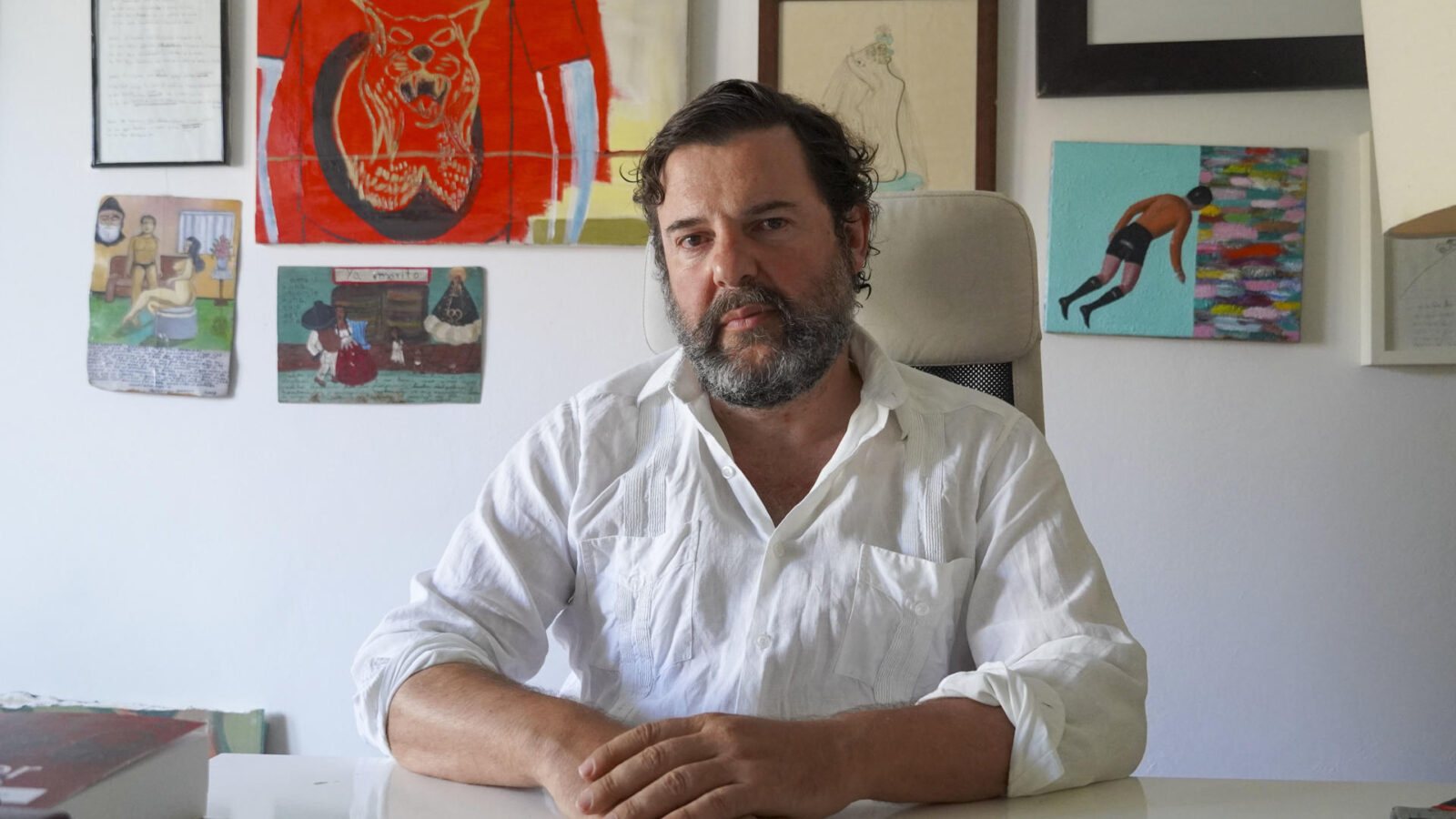
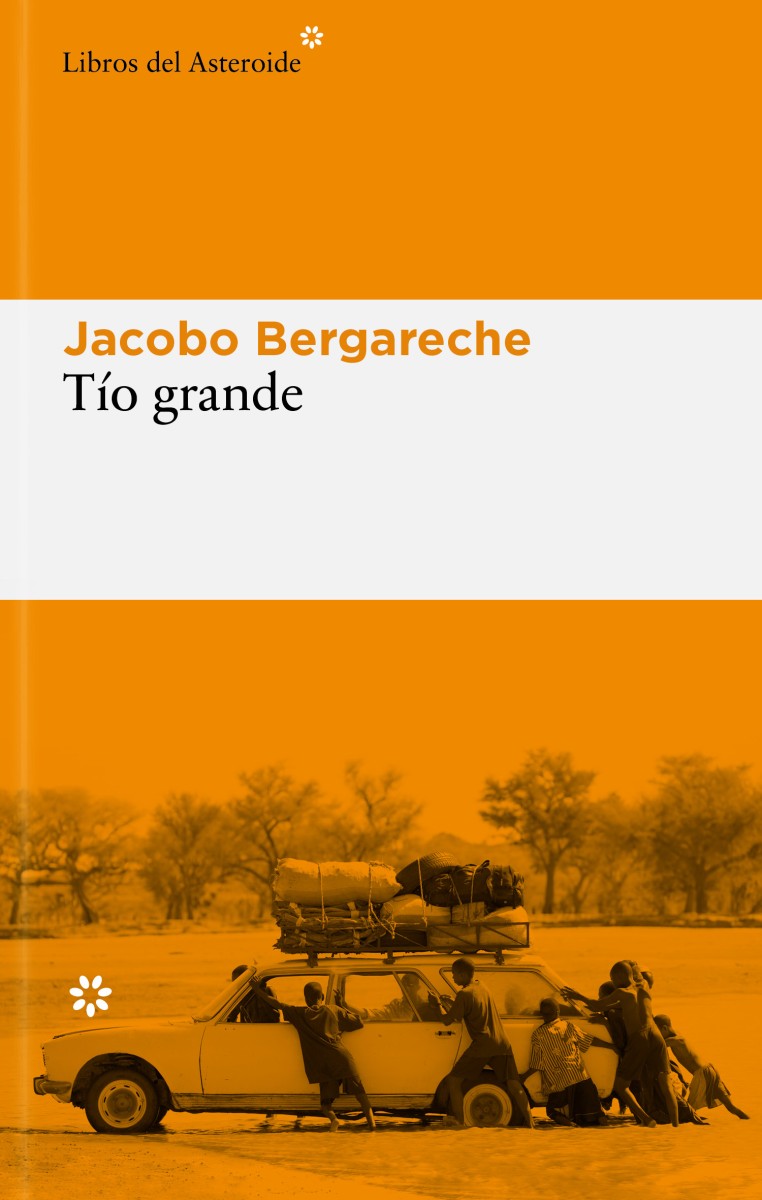
Jacobo Bergareche has a tragic bond with Africa: his brother Roque was killed in Angola in 2012; thirteen years later, the writer embarked on a journey back to Guinea-Conakry together with Amadou, a young man who had emigrated to Spain, and he recounts that “odyssey” in Big Uncle (Libros del Asteroide).
The book, two journeys that cross in time, arrives at a moment of a surge in the strategy of dehumanizing immigrants from some quarters in the wake of the Ceuta crisis. “It is the strategy of fear,” the writer tells Efe. “The easiest thing is to say that your problems are someone else’s fault. Or in other words, that immigrants are your problem and if we throw them out you’ll have a home, as was said the other day by [Vox spokesman José María] Figaredo. But it also happens in Catalonia: nationalists tell you that the whole problem is the Spaniards, and if we throw them out the problems disappear.”
The literature, Bergareche notes, does the opposite. In the face of words like “invasors,” “minors,” or even numbers such as “the 80,000,” literature “focuses on people” and “turns one person’s story into that of many.”
Big Uncle begins with a large Mus tournament that Bergareche hosts every year in memory of his brother. There he met Amadou, the young man in charge of the venue, and his story: a twelve-year-old boy who fled Guinea-Conakry with five friends in an attempt to reach Europe. The journey lasted four years; only two of them made it.
When Bergareche was working on another book, Friendship (Siruela), which he wrote with the neuroscientist Mariano Sigman, he remembered Amadou and dedicated a chapter of the book and the accompanying podcast to him. His editor, Luis Solano, heard that chapter and thought there was a novel there. “Sometimes you seek stories and other times stories come to you. In this case I liked being told: ‘Stop looking at what you’ve been looking at all the time and look over there.’”
Aware of his privileged position —a white Spaniard, from a family of Basque entrepreneurs on his father’s side and, on the maternal side, his grandfather was Ramón Mendoza, former president of Real Madrid— Bergareche says he has approached this story with a strong sense of responsibility. “What gives me legitimacy to tell this story is my tragic tie to Africa.” The two stories mirror one another: Amadou undertakes his journey, with classmates, toward the land of whites, and my brother undertook his journey to the land of blacks, also with classmates. In both cases with somewhat fantastical expectations and not seeing the dangers.” Bergareche addressed his brother’s grief in his first novel, Return Stations (2019).
In The Perfect Days (2021), his greatest success to date, he explored the contrast between falling in love and desire and the routine of a relationship, and in The Farewells (2023) he continued probing life dissatisfaction and marriage. The idea of embarking on an adventure like the one his editor proposed seemed to him a meaningful shift toward “the foundational narrative” of literature, that of travel. “It is the Odyssey, it is the Anabasis, the Aeneid, it is Jason and the Argonauts, it is the first book of humanity, the Epic of Gilgamesh. Today literature is more of a Proustian thing: you linger over a madeleine and travel mentally through time. They are smaller, more psychological, more delicate matters: coming out, marriage, the town, your grandmother, those things, but there are no grand epics anymore.”
About the journey, he believes that to be called so it must change something in the one who undertakes it. In his case, he highlights having met Amadou and his friend Hamada, seeing their strength and their confidence in the future. “We live with a fear of the future and a distrust of everything. People don’t have children because they’re afraid, and these are the crazy people who have children and live in a roofless park, but they manage and manage to get by. They have faith, judge little, and are not embittered.”