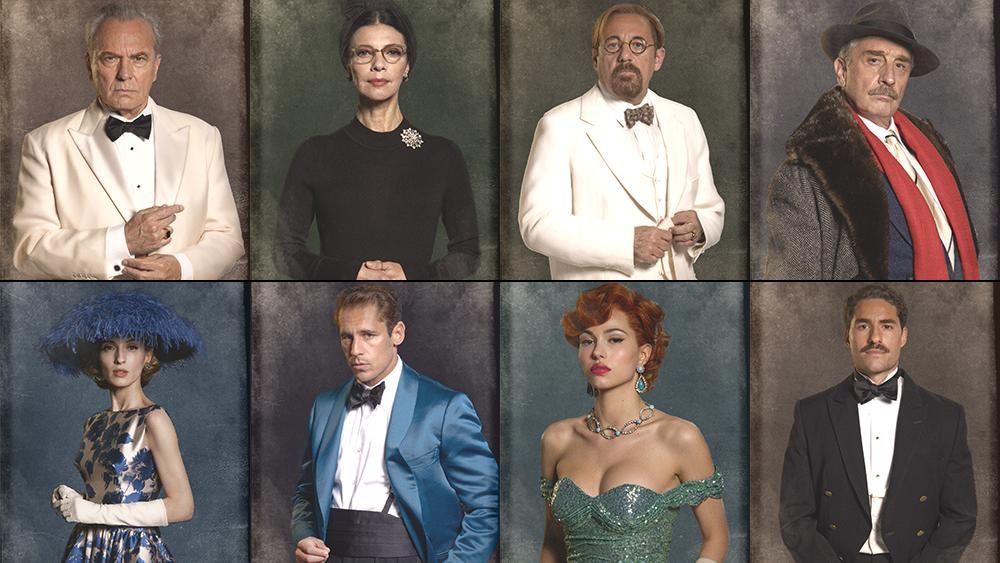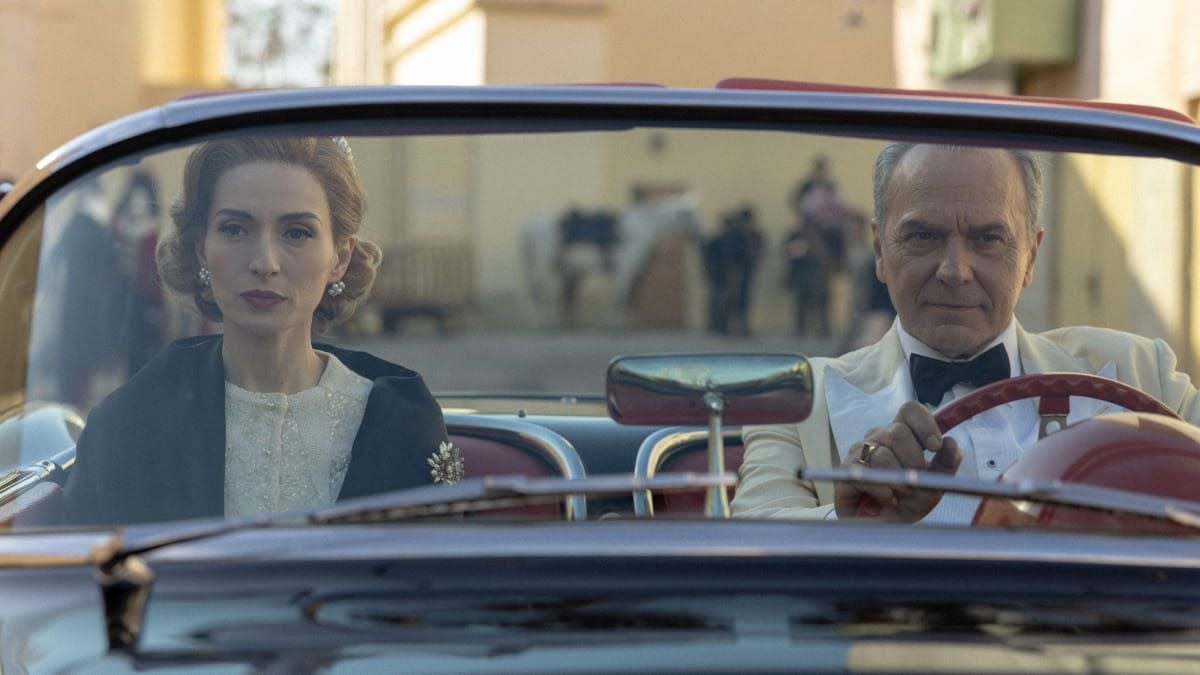
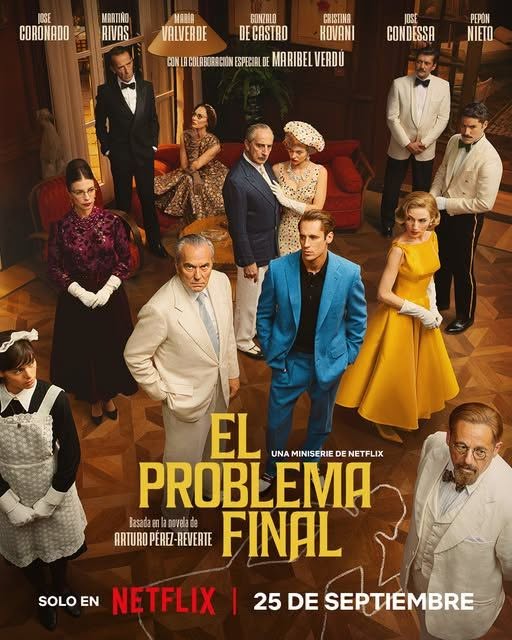
On the occasion of the release of The Final Problem on Netflix, we spoke with the head of the series’ writing team, Alberto Macías, a veteran of the trade, with more than thirty years of experience in Spanish television and cinema, for example in Cuéntame cómo pasó, for which he wrote more than 120 episodes. In this interview he shares details of the miniseries based on Arturo Pérez-Reverte’s novel and several matters of interest about the screenwriter’s profession.
*****
—How did it come about that you were the one entrusted with making the adaptation to a series of The Final Problem?
—This is a project that starts with Verónica Fernández, Netflix’s head of scripted fiction. It was the platform itself that reached out to Arturo’s representatives and proposed the adaptation. Verónica knew our work on the series Las aventuras del Capitán Alatriste more than a decade ago, and also the good harmony we had with Arturo, so, in a way, the assignment also arose when José Manuel Lorenzo trusted us to carry out that first adaptation of a Pérez-Reverte work. Arturo was delighted to have us on board for this adaptation as well, and we were happy to be able to tackle the book.
—You say “us” because the series has three screenwriters. How have you organized the collaboration?
—Although I initially started the work, I later decided to bring in Carlos Molinero and Marisol Farré to the writing. They are two screenwriters with whom I have collaborated for many years, and we get along perfectly. I’ve known them since the Cuéntame series, and I feel very comfortable writing with them. The first approach to the novel is to make decisions about theme and objective, what needs to be transformed, but we must know what content each episode will contain to keep the story’s tension. We develop what we know as a “bible,” dedicating a space to the characters, and a section to what we call a “plot map.” It is a collaborative process in which we consult Arturo at the same time, and after that initial impulse we move on to work on the concrete scripts. What we do is divide the work by episodes. In this case, I did the first one, and they did the second. The third we did collaboratively, and I also handled the ending of the fourth, so I took care of the opening and the conclusion of the story. Working as a team gives you a kind of fronton that allows you to challenge ideas and add up different points of view. And that is basically what we do: we write the scripts, exchange them, give each other feedback, and think up proposals with total freedom. Since we are people who have worked together a lot, we have the confidence to criticize each other freely, to change or propose solutions to one another.
—Has Pérez-Reverte participated in the screenplay in any way?
—He makes it clear that he doesn’t write, but offers his collaboration; he doesn’t impose it. He tells us something like: “You do the adaptation, it’s your script, and I’m here if you need me.” For us, it’s a luxury. No one knows the story better than him. He has documented everything exhaustively, he has the backstory of the characters, he knows all the details that led him to write the book and that can help us in the adaptation: references, character decisions, settings… We had a first general meeting with the producer and the director, in which we discussed the tone and what we wanted to tell. The Final Problem is not only a well-constructed whodunit, a homage to Conan Doyle’s novels and to the character of Sherlock Holmes, but also a recreation of a time, of a past world, with values and a way of living that is about to die and which Basil, the actor in that dangerous age when you stop being called, embodies in a very attractive way, because he combines his cunning and his authority with a fragility he hides cynically, which makes him very empathetic. And that had to be present in the series. That’s what we discussed in a first talk. Then, during the writing, we dealt with more specific issues. It is very stimulating to work with him. Of course, he reads the drafts and sends us comments. Arturo is a great cinephile. The truth is that he makes the work very easy and constructive at all times.
—What difficulties does one encounter when working on a literary adaptation? Do you prefer to write original scripts, or adapt works by others?
—I have written original works, though I also like being a commissioned writer. I enjoy adaptations a lot, and I like getting to know the authors and having them tell me about their work. The language is different: the novel uses narrative language, and we are working with a visual, representational art. Literature allows abstractions, letting you know a character’s thoughts, introducing a character’s past. Time and space are free. If in The Final Problem the author speaks about the characters’ past, how they met, that has to be translated into a time that is always present and a concrete space. We cannot have the characters speak those details aloud.
What matters first is selecting what is decisive for this audiovisual narration, which is shorter in time, and which has other tools—visuals and action. The audiovisual, like theater, is a representational art. It has to be seen and heard.
—Besides the original novel, what other materials did you take into account for the script? Films, books, photos…
—Arturo’s book is full of cinematographic and literary references, especially to film and crime fiction. We had read part of it, and part of it we read during the process. Of course, all the Sherlock Holmes material, and Basil Rathbone’s films, and I personally reread Maigret. But we also watched other films that, while not necessarily film noir, speak to that era. For example, Arturo mentioned A Table for Two (Mesa para dos). I’m particularly fond of Anatole Litvak’s beautiful film Goodbye Again with Ingrid Bergman portraying a sophisticated Parisian in the 1960s, which served as a model for Elisa.
—Was any part of the novel particularly hard to adapt?
—Besides the ending, there were intangible aspects that cannot be transferred from the novel, such as the homage to the cinema of the era, all those references to actors and actresses, to a way of making cinema and living cinema. The cinema had to serve the plot, which is why we changed Najat Farjallah, the opera singer from the novel, for our actress Alicia (Vicky), a younger woman but already with some experience in cinema, a sort of Sara Montiel who has ventured a bit into Hollywood without even speaking English well. We also thought that this glamorous cinema model could be represented by the Bronston studios, which roughly coincide with the era of the novel. That play between artistry and truth, which is always present in the novel, is represented in those sets where they shoot a film about the very story we just watched. As the great screenwriter Lola Salvador used to say, “the movie begins to have life when you find the little track on which the train slides.” That’s, for me, the underground little train of the story. Also, lowering Vicky’s age allowed us to introduce a mini-arc not present in the novel—the reason for her staying in Tangier, which linked Vicky with Seruya. For Adela and Elisa we only needed to give one of them a Spanish past, and for Basil we came up with the idea of the double versions that were made in the early days of sound cinema, which were also a kind of homage to Spaniards who made cinema in Hollywood.
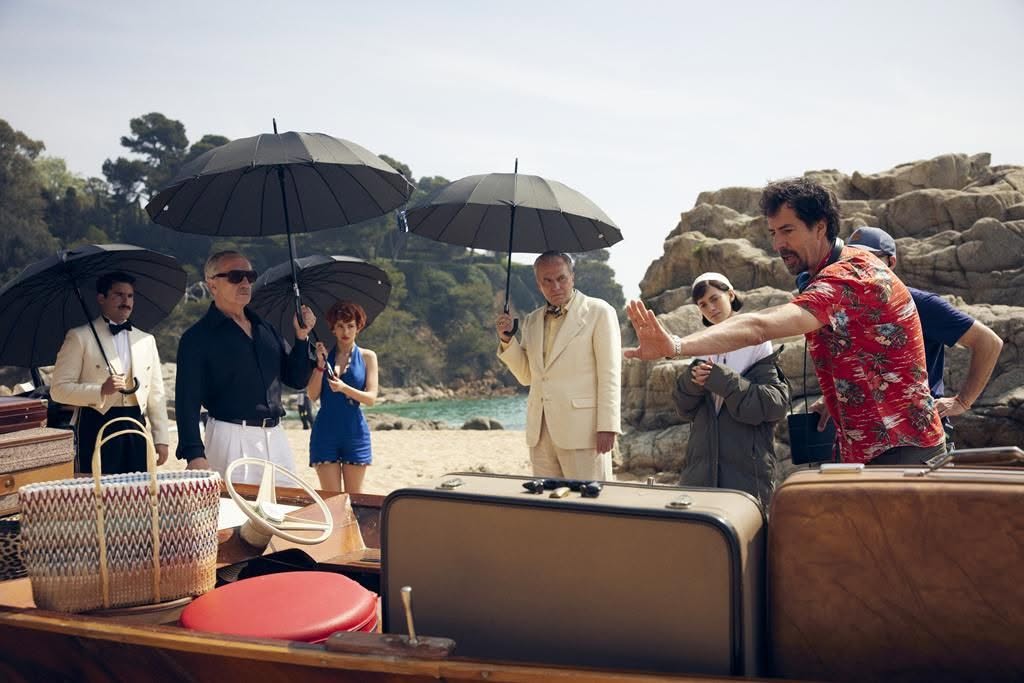
—At what point in the project was the director, Félix Viscarret, chosen, and how important is it for screenwriters to know who their director will be?
—Verónica Fernández, as I mentioned earlier, was the one who suggested the adaptation to me, and then we talked with Arturo and with Fernando Bovaira, the producer, and later discussions about the director began, in which I did not participate. I am very happy that it was Félix Viscarret, because I know him personally and already admired his work, and now that we have worked together more, I’m even happier. In a series the director and the screenwriter don’t work in such a hierarchical way as in a movie, although for me the director always has the final word once they have earned that authority, though I know some colleagues don’t share that view. In this case there has been a lot of harmony with Viscarret. Félix spends a lot of time explaining in detail what he’s looking for, what he wants, and that makes it easy, because we start from positions that are shared and reasoned from the beginning.
—But if there is a dispute between the director and the screenwriter, who usually wins?
—It depends on the director. Some like to wield the whip, others persuade. Félix is of the latter kind. But usually the producer will have the last say, especially in a television series. In cinema I suppose the director would naturally have more weight, but in series it’s different, and, as I’ve said, there has always been good chemistry, respect, and collaboration with Félix.
—Does knowing in advance which actors will be involved also influence how you write, in the sense of “this actor excels at this, so we’ll write more of that and less of something else”?
—If this had been a long-running series, like Cuéntame, where I worked for ten years and did between fifteen and twenty episodes a year, you would consider those things, because you see the evolution and make decisions about where the plots can go based on the audience response. In this case, with a short series, the actors adapt to the text, and we’ve had a superb cast. Besides, we started with the four scripts finished well in advance, which makes production much easier.
—Is a screenwriter always on set, in case there are last-minute changes to make?
—If you’re the showrunner, if you carry executive production, yes, and I have done so in some cases. In those cases you must know about production, editing, directing… In a way you’ve given birth to the scripts and you know, like a novelist knows their novel, better than anyone the mechanisms of the story. All the great American series, like Breaking Bad with Vince Gilligan or The Sopranos with David Chase, have one who lives almost on the set, and previously in preproduction. They know how to respond to content problems that might arise. In this series Félix called me for some specific changes, but there were very few addenda. In other productions there can be many changes. It’s also true that we could not afford it. Here any change affects the entire plot, because you can reveal the killer too soon, or you can alter the order of the clues. We had to be quite rigorous with the dramatic construction.
—Is there any scene that, after you wrote it, you felt turned out especially well when you saw it?
—There was a part of the script that frightened me, because it was something I didn’t want to resort to, a flashback. It’s the final moment, when they’re at Basil’s house and he asks, “Why this fixation with me?” Then that past is explained. And there I overstepped the rules and said: “We must do a flashback to tell it.” I was very afraid narratively, because it wouldn’t be coherent to use the flashback occasionally when it hadn’t been used for that purpose earlier in the story; it had been used more as an illustrative device for Basil’s investigations. I was also worried because the actors would have to be brought younger for that flashback, and you think that often it doesn’t turn out as well as you’d like. And then it turned out wonderfully; the actors were superb and it was perfectly credible. When I saw it I congratulated Félix, because the result was truly excellent. Not only for that scene—I’m genuinely impressed by his work, as well as the entire production of the series.
—Does the off-screen voice still feel like something screenwriters should avoid?
—Well, it depends on the context. If you’re making Sunset Boulevard, it can be cinema at its best. It’s just another device. Some people say it’s anti-cinematic. I don’t think there’s anything anti-cinematic about it. What there are are offs that can be a kick to the film. Heads up: don’t use it as a last-minute resource to tell something you don’t know how to tell. It has to be organic.
—One of the elements that was best received about The Final Problem is the opening of each episode, where Basil appears in a scene from one of his old films, showing a bit how he was as an actor. This, of course, does not appear in the novel. How did you come up with it?
—We wanted to use it to help convey the mood the character was in at each moment. It’s that part that a novel describes wonderfully, but you can’t “write” on screen, or you have to write with the resources available to you. So those cuts are a homage to cinema of the era and at the same time they speak to the character’s moment in life.
—Have you read reviews about the series?
—I haven’t read them, no. Well, I watch them with a wary eye. The reason is that you can find everything. You watch a football match, and analysts can offer well-reasoned opinions: whether they moved from 4-4-2 to 5-3-2, whether Lamine did this or Rodri did that… People who, at least to me, seem to have knowledge of football, technique, strategy, etc. And yet sometimes you encounter amateur criticism on social networks that eclipses the professional and is based on “likes” or “don’t likes,” which is a personal opinion, not criticism. I suppose that’s a product of the times. I find it very unprofessional and it deprives truly professional voices of their place.
—Since this series is for Netflix, it will be seen worldwide soon. Does that influence you in any way?
—No. Moreover, Netflix is very clear when they say, “we are Netflix Spain, and we make a local product,” which can then transcend, and if it becomes a success elsewhere, all well and good. If what you do ends up being La Casa de Papel, may it be blessed and good for everyone. But we aren’t thinking: “This has to please Karachi.”
—Are there big differences depending on which network you’re writing for?
—I’ve written for all the general networks (TVE, Antena 3, Telecinco) and for platforms like Netflix and Amazon. I had a project for HBO, but it fell through. Each has its own style and audience. Sometimes I’ve been told to make something more “HBO-like,” for example. A bit darker, or less open—those kinds of things.
—Does advertising in the middle of an episode influence you, in the sense of figuring out when to place a mini-cliffhanger?
—On TVE, for years advertising doesn’t condition the structure, because there aren’t ad breaks, but when I began, around 1994 or 1995, we did consider it. Although later they didn’t always respect it. If you were doing your blocks for a sitcom, for example, you’d plan a two-act structure and have it arranged a bit in advance, but then they would insert the cut wherever suited them.
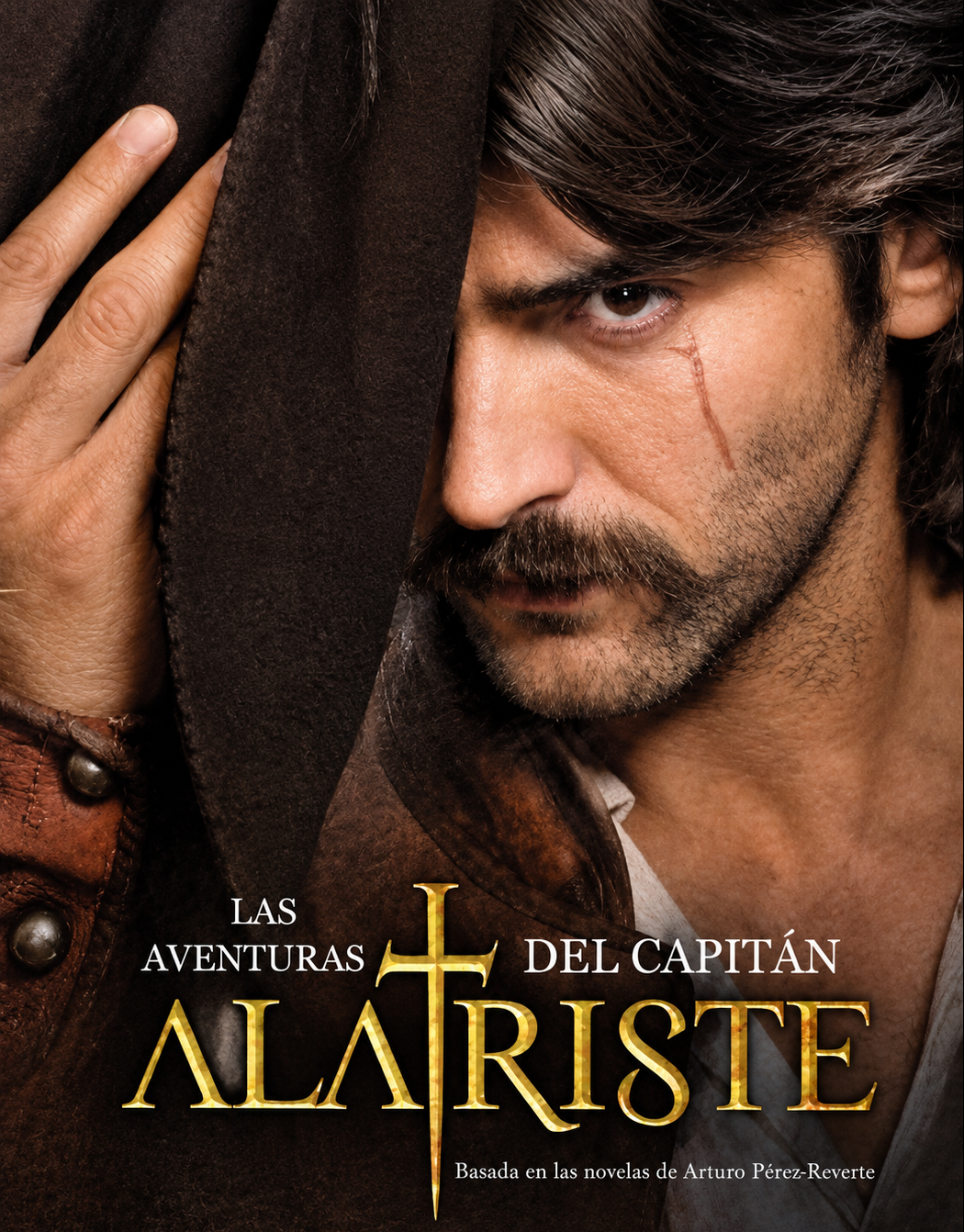
—You three also wrote the scripts for the series Las aventuras del Capitán Alatriste. What memories do you have of that experience?
—It was a very beautiful project. It really excited me. When José Manuel Lorenzo asked, “Do you want to do Alatriste?”, I couldn’t believe it. I said: “Where do I sign?” Lorenzo was the producer, and Arturo was deeply involved in the scripts, and here we did multiple versions, mainly because the network also requested them. It was a tough shoot. I’m proud of what we did, but I think, in this case, the network had the wrong idea of the product. They had another legitimate idea of the product, but it didn’t help sometimes. If we had had a platform like Netflix, I think the product would have been different. Did networks influence things? Yes, we faced a lot of pressure, and not only us, although we felt very supported by Arturo, very backed up at all times, and very convinced and proud of what we did.
—What would you like the audience to understand about the screenwriter’s craft that they might not think about?
—That a script is not only what’s on the screen. What appears on screen is the result of transformation, like a building’s blueprint, and there are a thousand variables at play and transformations that aren’t entirely in your control. In this case, not really. In this case, we worked very in sync with production, platform, direction, and the author, all supported by everyone, all oriented toward the same goal.
—What could be improved, from a screenwriter’s perspective, at an industry level?
—Since platforms arrived, opportunities have expanded and the industry has grown, both in series and cinema, but entry to the profession—especially for young people—has become more complicated. I think many of us say the same thing: previously there were entire teams to make twenty episodes a year, with five to ten, sometimes more, people, and there was also the figure of the trainee, junior, or however you want to call them: people amateur but talented who mixed with veterans to learn the craft, but now series are very short, four to six episodes, with no seasons, or very few. If you take what I consider the best series in history, The Sopranos, and look at the credits, from there Matthew Weiner went on to create Mad Men and Terrence Winter to create Boardwalk Empire. That only happens with multi-season series. That golden-era formula of American television has disappeared. This current system has some very good things, because genres expand, themes open up, and you can be a bit more ambitious than we were in the 1990s and 2000s, but there are many voices that aren’t being included now because it’s difficult. Young people, without wanting to trivialize any topic, look at us as someone looking for housing today: “Let’s see, give us a seat at the table.” Take a look at who makes the series and films, and you’ll see many names repeated. The model of “let’s find the great talent” ends up squeezing the middle class of the craft and making it smaller and smaller.
—Among all your previous works, which would you recommend to people who might not know them well? Cuéntame or Alatriste are already famous.
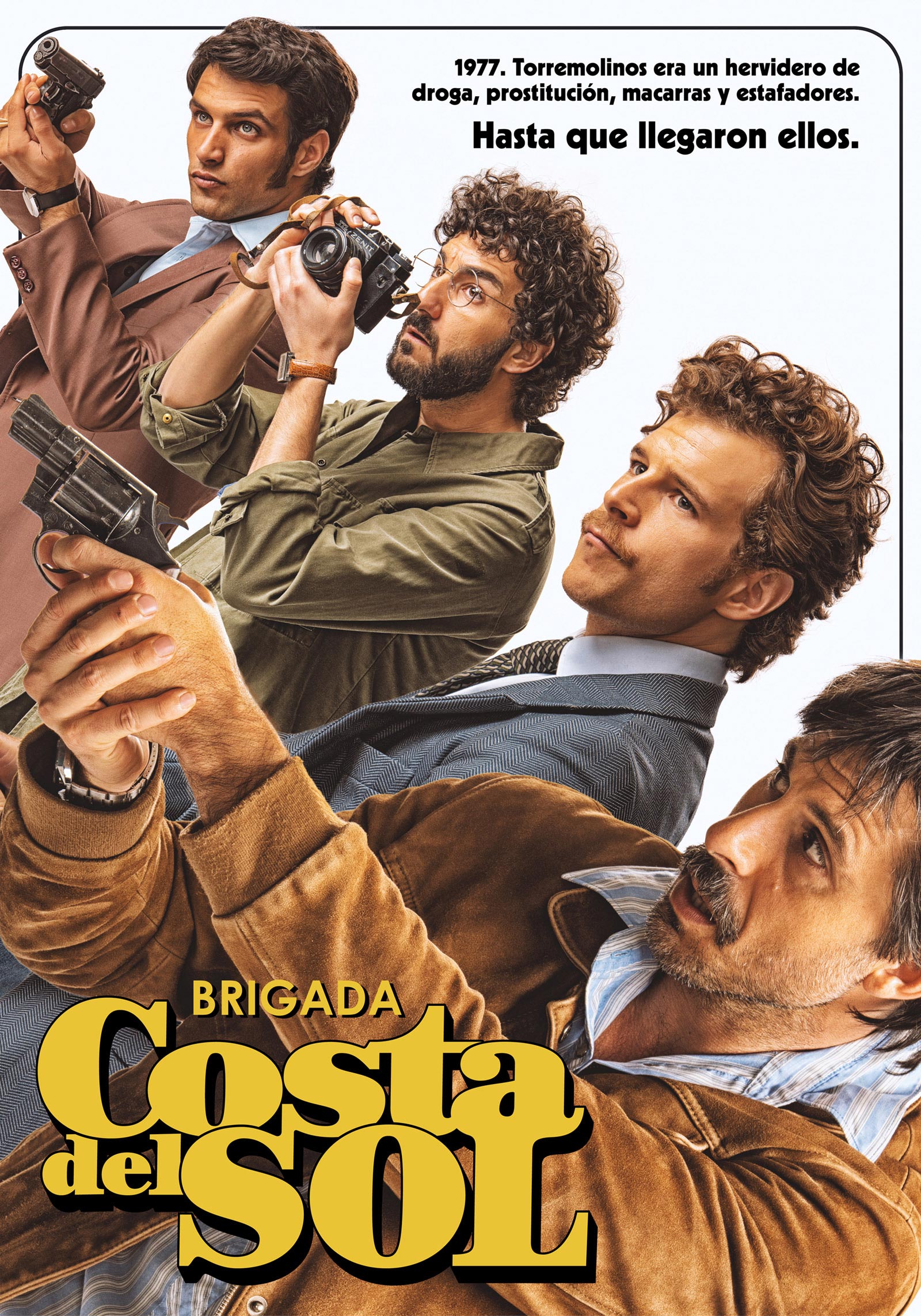
—For example, Los aires difíciles, a film by Gerardo Herrero based on a novel by Almudena Grandes. Getting to know Almudena is something I take away from that shoot. I loved meeting her and being able to adapt her work. In series, I find very funny a series created by Pablo Barrera, in which I collaborated with him on development, called Brigada Costa del Sol. It’s a different crime show, without traumatized and self-aware cops, quick and a bit cheeky. It’s a story based on real events from when drugs arrived in the mid-70s on the Costa del Sol, around Marbella, Fuengirola, and the rest of the region. It had a very nice angle that’s worth revisiting.
**
[From here there are spoilers of The Final Problem’s plot, including the authorship of the murders, so spoiler warnings without pistols in the rest of the text]
**
—Any concrete example of your conversations with Pérez-Reverte to change details of the novel?
—We discussed the señora Auslander’s past. We talked about our maître’s time at Nueve, the Spanish unit that liberated Paris… To show the extent to which Arturo cares about details: we made an adaptation to a more local setting, shifting the originally Greek backdrop to Mallorca, and the doctor Karabin, who in the novel is Turkish, we changed to a Sephardic Jewish from Tangier whom we named with a surname that came from someone Arturo knows. Obviously we changed him again to Seruya to avoid raised eyebrows. Where I remember we worked more was in the final episode, of which I feel especially proud, because they made decisions that explain very well what I understand as adaptation. I wanted to make the last fifteen or twenty pages, in which the mystery is solved, an entire episode. Elisa (Vesper in the novel) and Basil meet at Lake Garda, in that “Sherlock Holmes moment,” where it’s explained how the mystery was solved, but above all where elements are revealed that complete a map Basil himself didn’t know. I think that’s where the novel gains a different level, because it gives meaning to the narrative journey, involves the main character as the trigger of the past of all subsequent crimes. Basil faces his own truth. I wanted to preserve that impeccable, tense conversation, full of depth, between the two protagonists, and at the same time generate a small suspense plot around it that would make us think Basil could be the killer’s last victim. Since that meant moving somewhat away from the novel, I called Arturo, we met at his home, I told him what I had in mind, and between the two of us, somehow, we built the final scene using his house as a model. He said: “Look, come over, let’s go to the garage, there he could leave the car running, like in Sabrina.” And there, in the same garage, we began to choreograph the movements of the characters—“this one here,” “she goes up by this stairs,” and so on. Basil’s house isn’t Arturo’s house, but the same geography is represented in the series.
—Is it important to include the added element that she tried to kill him?
—For us, yes, because we understood that Basil had to be at risk in the last episode; it’s the classic move of showing a gun and then hiding it, as David Mamet says. He is aware that he’s speaking to the murderer, but at the same time there’s a reciprocal attraction that creates brutal tension because they are two beings who watch each other as enemies and desire each other at the same time. The fragment Basil reads in those last pages, which speaks of Holmes’ feeling toward Irene Adler, for me was the perfect close of the series, because it represented not only the fascination one has for the other, but also that melancholic air that speaks to a love that was, but cannot be again, like Basil’s life—a representative of a time passed that will inevitably never return.
—He also creates that situation, pretending to be drunk, to see how far she would go, as if saying: “If you really dared to do this, I’m laying it out for you.”
—That came from Arturo. I had another proposal, to use a gun, and he told me: “No, no guns. There isn’t any gun in the novel.” Not in the adaptation either. And we came up with the garage, the engine running, the carbon dioxide, and again cinema saving the day: Sabrina.
—What can you tell us about the series’ actors?
—There’s a trio that sustains the film: José Coronado, María Valverde and Martiño Rivas. I think they do it wonderfully, superbly well. The most difficult role is Basil’s, but María deserves credit for carrying two roles. She plays the elegant Mrs., but she isn’t. She’s someone who seems keen to know who the killer is, but the killer is actually me. She handles it very well, and I’m very happy. I’m very proud of this work.