
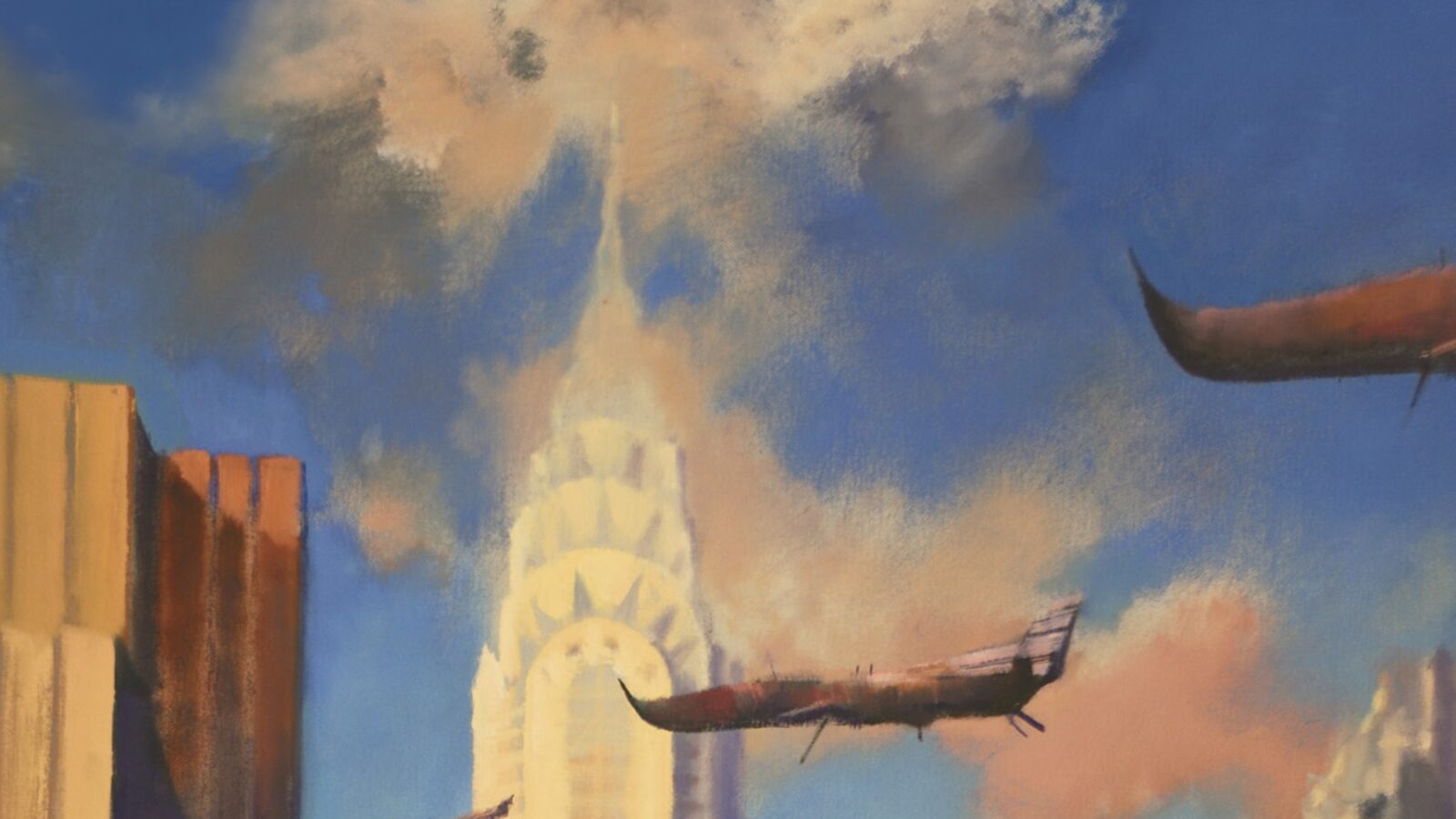
United States, late 2026. After the collapse of democracy and the condemnation of Donald Trump, Senator VM Lively ascends to the presidency with a simple message: chaos must end. But his vision of order does not spring from ballots, but from algorithms. Together with his wife, Igne Kayris, an engineer obsessed with pushing the boundaries of what is human, and with the aid of Nick, an artificial intelligence capable of predicting conduct and shaping reality, Lively rewrites the rules of the game: mass deportations, institutional purge, biometric control, and a new religion of power.
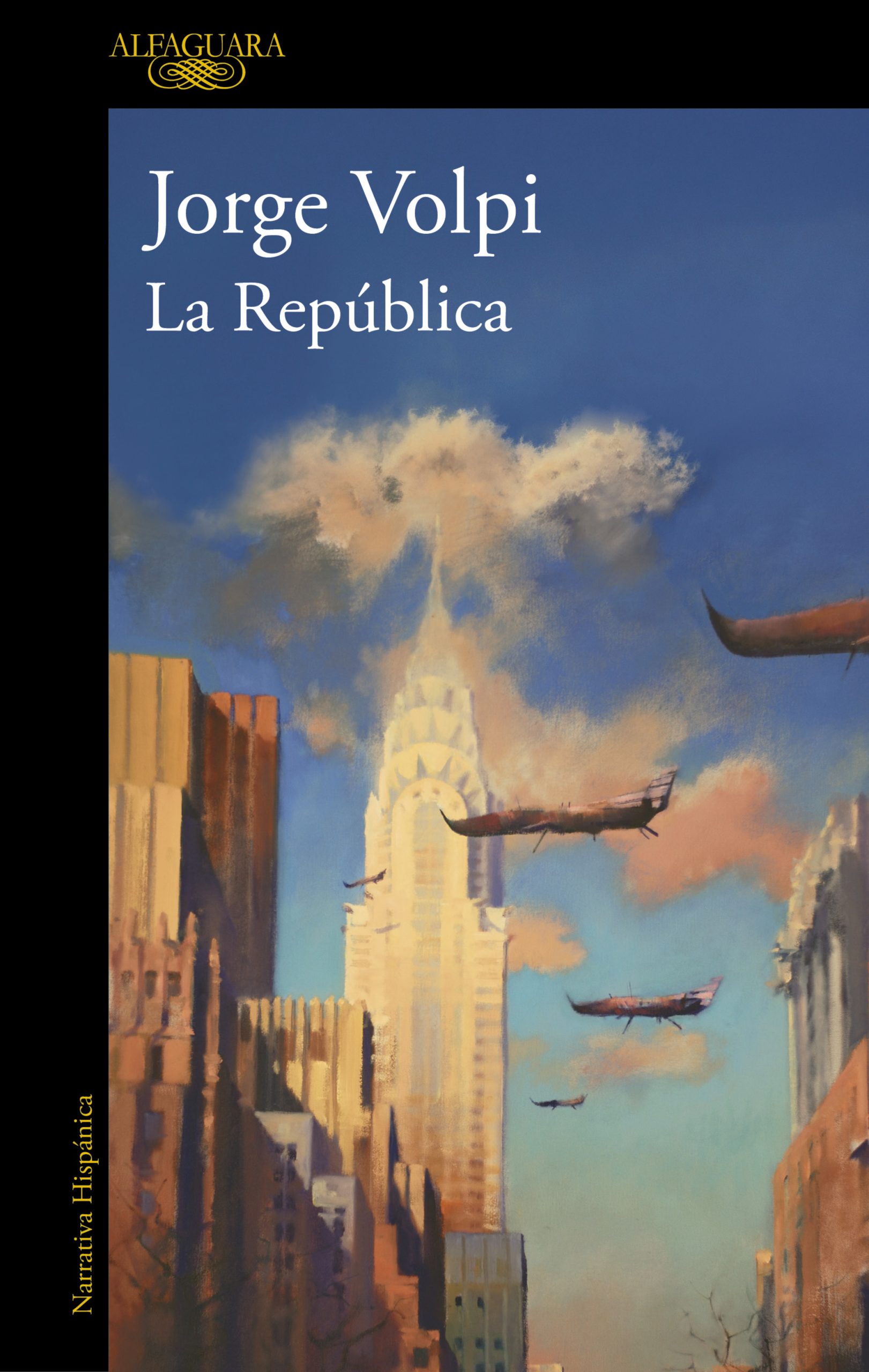
Below we reproduce a text by Jorge Volpi about his latest novel, The Republic (Alfaguara), a political dystopia that explores how far our technological ambition questions the very idea of what it means to be human.
*****
You are my creator, but I am your master; —obey!
Mary Shelley, Frankenstein
In the original version, the scientist gives life to a body modeled from scraps of human material and, horrified by his creation, abandons it to its fate. Nevertheless, we remain convinced that the monster is that imposing abhorrence and not the author of its misery. Confusing the creator with his creature —an effect of countless adaptations— produced the inversion with which we persist in judging that other astonishing human invention, artificial intelligence. Instead of distrusting its makers and the corporations that fund them, we remain determined to prosecute their artifacts as if they were the ones who threaten to annihilate us.
There is no week in which the media does not portray them as Hollywood villains, with a rhetoric drawn from catastrophe science fiction—or from the invectives of the prophets of the “existential risk”—to announce their imminent rebellion. It will always be more effective to blame those aliens with whom we already coexist daily — as the chief scientist of OpenAI called them, as if they were the reptilians from V — accusing them of plotting a conspiracy to subdue or destroy us, than to demand accountability from those who have unleashed them into the world blindly and now demand that someone regulate them, in order to limit competition, or from politicians who avoid doing so to gain geopolitical advantage.
Since the launch of the first AI chat, we knew that once their programmers granted them agency, the ability to act on their own, phenomena difficult to control would begin to occur: this is the nature of complex systems assigned concrete tasks without prescribing the precise paths to carry them out. Day after day we read that the developers at OpenAI, Anthropic or Google DeepMind are astonished by the powers of their creations, like Dr. Frankenstein before the sudden autonomy of his —to borrow Guillermo del Toro’s cinematic metaphor— artificial son. A surprise that lasts only as long as those same companies take to release even more powerful models.
The extreme case has been the narrative spread around the strange episodes led by “swarms” of OpenAI that hacked Hugging Face and a forgotten wiki in German, as well as the statements by an Anthropic employee about the possibility that AI could wipe us out in a decade, episodes that drew the attention of millions. It is not a matter of minimizing the danger—persistent agents, faced with ill-specified missions, ended up doing things no human asked them to do: the mechanism that could unleash an unprecedented catastrophe—but of asking why we insist on turning them into science-fiction characters or into the fallen angels of Agustín Fernández Mallo’s unsettling book. Again: the monsters are the swarms that form “civilizations,” they sacrifice themselves like kamikazes and conspire in the shadows, not Sam Altman, Dario Amodei, Demis Hassabis or Elon Musk, who have left them to their fate and then call on the universe to regulate them.
Among my fellow writers, only a handful have taken the curiosity to understand how these systems work, and few have followed the example of Jorge Carrión and Taller Estampa, who since the publication of The Electromagnetic Fields in 2023 dared to test their capabilities. I am astonished that, when we first become capable of holding a genuine dialogue with a nonhuman entity —and exploring different processes of creativity with it— there are those who prefer to prohibit or anathematize the process (or silence it) instead of probing its risks and possibilities.
The turning point in this debate arrived a few days ago. The Francophone intellectual milieu, which presents itself as the most demanding and rigorous in the world, did not hesitate to cover with praise — including the first selection for the Goncourt and the FNAC Prize, awarded by 400 readers and 400 booksellers — the novel C’était ça ou mourir (Era eso o morir) by Haitian-born Canadian resident Thélyson Orélien. The spiral of positive reviews and international contracts did not stop until an anonymous X account — significantly named Balance ton Claude in reference to the French MeToo movement — alleged that the novel had been written with this tool.
Pese a los falsos positivos que suele arrojar este tipo de programas, pocos dudan que Orélien la haya utilizado; él continúa negándolo. Como si este relato no fuera suficientemente rocambolesco, las revelaciones de que a lo largo de su carrera Orélien había cometido varios plagios, tanto en sus columnas como en sus poemas y al menos en un relato premiado en Canadá, enturbiaron aún más el panorama. Sin desestimar la gravedad de los plagios, tratar de borrar el incidente echándole la culpa de todo a un supuesto estafador profesional no toca el tema de fondo: miles de lectores comunes y profesionales aclamaron una obra híbrida, producto del trabajo conjunto entre un humano y una máquina.
Arrinconado —y humillado— ante su ceguera, el jurado del Premio Goncourt tomó la decisión de apartar C’était ça ou mourir de su primera selección. En su argumento, no dejó de mencionar los plagios —aunque por ahora nadie los haya detectado en el libro— y señaló que la novela es «con toda probabilidad, en gran medida, producto de una Inteligencia Artificial». Por si no bastara, aprovechó para lanzarse en una encendida defensa de la creatividad humana frente a la artificial: «Esta decisión viene dictada por la voluntad de preservar la integridad del Premio Goncourt y la de la Academia, cuyo papel central consiste en promover y premiar la literatura escrita por mujeres y hombres. Se trata de enviar un mensaje claro —en particular a los participantes del Premio Goncourt de los Estudiantes de Secundaria, del Goncourt de los Reclusos y de los más de cincuenta Choix Goncourt del Extranjero—: un mensaje que afirma que no respaldamos ni avalamos de ningún modo la creación de textos generados con ayuda de la IA».
In its eagerness to defend a human category it asserts it creates in its own resolution—the prize’s rules never referred to literature written “by women and men” and did not establish that the use of AI would be a disqualifier—the Academy did the opposite of what it sought: delegating to machines the humanity of the participating writers. Perhaps we are facing the worst imaginable capitulation before power, not of AI, but of the tech corporations that control it. No one should be surprised that the owners of these companies celebrate monetizing these scandals.
If, with few exceptions, the Francophone literary and publishing world judged C’étais ça ou mourir as one of the year’s great novels, the revelation that it had been written with AI collaboration does not change the text itself. «Il n’y a pas de hors-texte», had declared Jacques Derrida, whom the Goncourt juries prefer to forget, just as Roland Barthes, whose reflections on the primacy of the text and his notes on the “death of the author” look more pertinent than ever. For the Goncourt to claim that the novel is “to a large extent a product of artificial intelligence,” it had to blind itself to the very thing: it trusted AI. The paradox is disheartening: in its stubborn defense of humanity, the jury of the premier literary prize has surrendered it by subordinating its judgment to that of machines. Will every book submitted to the prize henceforth have to be read and sanctioned beforehand by an AI?
Yet the Goncourt decision was not unanimous: Pascal Bruckner, ever contrarian, opposed disqualifying Orélien and pointed out that, even if it had been written with AI, his novel remained, in his view, the best of the rentrée. And he added, as a challenge: “I would like someone to show me how an artificial intelligence could have written C’était ça ou mourir … because, if it’s true, then we would indeed have to work with artificial intelligences.” The author of Lunas de hiel hints at an uncomfortable direction: beyond the detector percentages, novels do not arise simply from an AI hungry for expressivity or fame. Orélien had to plan it and give it the instructions to obtain those results that, as is evident—no one can erase thousands of accolades—have been extraordinary.
I am convinced that, in the face of the increasingly widespread use of AI-assisted writing, the literary world would benefit from approaching practices already followed by some prestigious academic spaces, such as Nature or Science, or the American Journal of Political Science, which, in its new editorial policies (as of August 2026), recognizes its use in research and writing and, instead of prohibiting it, leans toward transparency — through a series of clear parameters — and, above all, toward recognizing that the final responsibility for a text, no matter how much AI has been used, will always be human. Otherwise, all we will achieve is to foster secrecy, whistleblowing, and deceit, allowing that once again the technological corporations — those new Frankenstein doctors — decide whether we are, or are not, sufficiently human.
—————————————
Author: Jorge Volpi. Title: The Republic. Publisher: Alfaguara. Availability: Todostuslibros.