
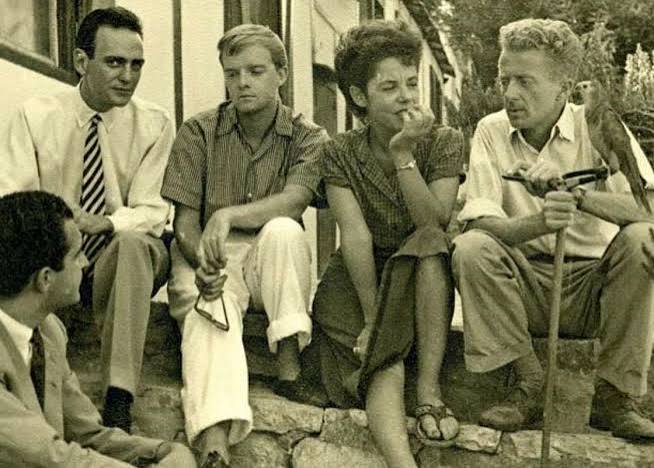
Brigitte Bardot arriving at a party in a swimsuit and pulling a donkey. Frank Sinatra clashing with a reporter from the daily Pueblo. Ava Gardner drinking at the Feria until the early hours. There are numerous anecdotes that accompanied the rise of the Costa del Sol as an international tourist destination, starring some of the great myths of the twentieth century.
Llegaron a un Torremolinos todavía blanco y marinero, casi de forma paralela a la llegada de las suecas con sus primeros bikinis y a los grandes hoteles que empezaban a levantarse. Las estrellas de Hollywood y la jet set internacional se apropian rápidamente de ese territorio que también tuvo un importante reverso literario.
Mientras todo ello ocurría, en una España que se abría lentamente al mundo, a escasos kilómetros de Torremolinos, en Churriana, un apacible pueblo entre Málaga y la localidad turística, los Davis, un matrimonio norteamericano, vivían en La Cónsula, a pocos centenares de metros de la casa de Gerald Brenan y Gamel Woolsey. Aquel matrimonio había comprado la propiedad con ayuda del hispanista y su esposa, a los que conocieron por mediación del escritor y periodista británico Cyril Connolly, amigo de todos ellos.
Aquella casa señorial, rodeada de bellos jardines, decorada con antigüedades y enriquecida con cuadros de Jackson Pollock y obras atribuidas a Goya, se convirtió en un centro de reunión cultural donde descansó, acogida por la hospitalidad de sus anfitriones, buena parte de la élite intelectual anglosajona de la época. Por La Cónsula pasaron, entre otros, el citado Cyril Connolly, Bertrand Russell, Laurence Olivier, Orson Welles, Vivien Leigh, David Niven y hasta Ernest Hemingway, que celebró allí su sesenta cumpleaños, en lo que bien pudo representar el momento más esplendoroso de los llamados Golden Years de la Costa del Sol.
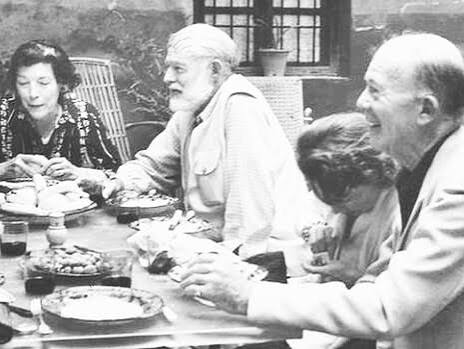
Hemingway with the Brenans
However, visits by foreign writers to Málaga and the Costa del Sol were not new, although then, driven by the tourist boom, they became more generalised and acquired greater public significance. In the twenties, Virginia Woolf visited Gerald Brenan in the Alpujarras, just as other British writers had undertaken journeys, more or less exotic, across the Spanish geography. During the Civil War, which Brenan and Woolsey lived through firsthand from their home in Churriana, international writers also appeared who came to observe the Spanish tragedy up close. This was the case of Arthur Koestler, as well as other writers now less well known, such as Humphrey Slater or the Norwegian journalist Gerda Grepp, whose visits preceded the more playful stays of the following decades.
By the late forties Tangier’s international scene had arrived, with Bowles, Paul and Jane, who were also friends of the Brenans, along with numerous American writers and artists tied to the cosmopolitan milieu of that city, which during those years was the mirror, on the other side of the Mediterranean, of the international opening Málaga was beginning to live. Among the illustrious visitors who spent time with the American couple, also linked to the Andalusian city, are names such as Truman Capote, Gore Vidal, Tennessee Williams and several figures of the Beat generation like Allen Ginsberg or William Burroughs.
Today, La Cónsula is a prestigious hospitality school and the Brenan house has become a house-museum whose programming is coordinated by the writer and poet Alfredo Taján. Thanks to his work, a literary heritage that few Spanish cities can boast has been recovered and disseminated. Thus, with the aim of continuing along that path, this October a cycle of conversations titled “The Golden Years of the Gerald Brenan House: International Writers on the Costa del Sol (1930-1958)” will be held at that house, which will explore Málaga’s and Spain’s connection with some of the most relevant figures in world literature through the Gerald Brenan House and La Cónsula.
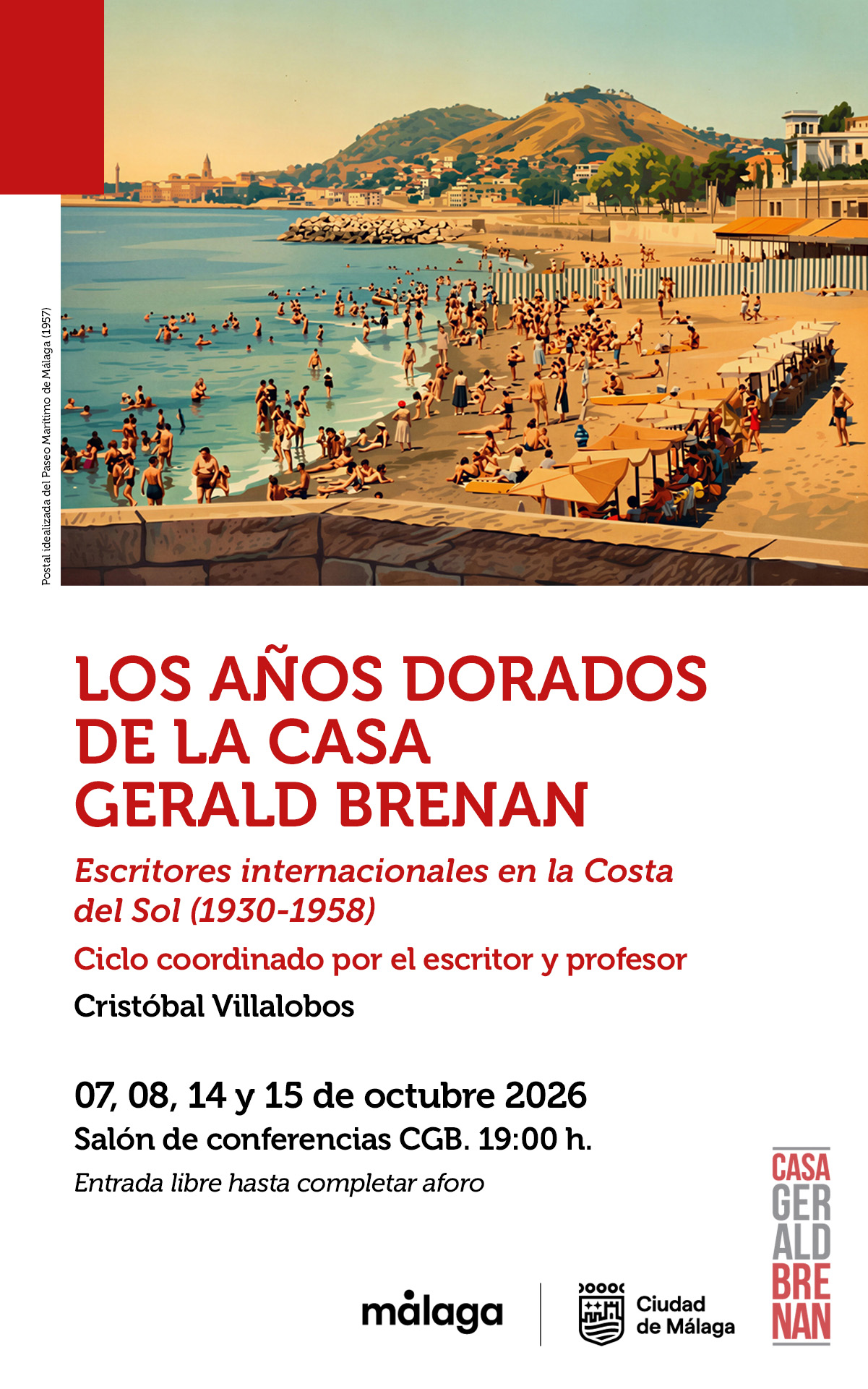
Over four days, the cycle will address, through dialogues between specialists and prestigious guests, various key aspects of 20th-century literary creation: the traveler’s gaze and the correspondent’s eye, the historical testimony of the Civil War, cultural modernity and the transformation of the writer’s role in contemporary times. The initiative solidifies the Gerald Brenan House as a living space for analysis and dissemination of the legacy of international authors who found in the Costa del Sol a place of inspiration, refuge and encounter.
***
Program of Sessions
All talks will take place at 7:00 p.m. in the center’s conference room with free admission until capacity is reached:
- Wednesday, October 7: Gerald Brenan & Ernest Hemingway: Translating Spain (With Andrés Arenas).
- Thursday, October 8: Graham Greene & Truman Capote: Luxurious Nomads (With José María de Loma).
- Wednesday, October 14: Arthur Koestler & Gamel Woolsey: Málaga in Flames (With Carlos Pranger).
- Thursday, October 15: Virginia Woolf, Jane Bowles & others: Woman and Modernity (With Isabel Pérez Montalbán).
Calle Torremolinos, 56, 29140 Churriana (Málaga)
Obras que se comentarán en el ciclo y que recomendamos a los lectores de Zenda:
- Gerald Brenan. The Spanish Labyrinth.
- Gerald Brenan. The Face of Spain.
- Ernest Hemingway. The Sun Also Rises.
- Ernest Hemingway. For Whom the Bell Tolls.
- Graham Greene. The Third Man.
- Graham Greene. Our Man in Havana.
- Truman Capote. In Cold Blood.
- Truman Capote. Breakfast at Tiffany’s.
- Arthur Koestler. Spanish Testament.
- Gamel Woolsey. Málaga in Flames.
- Virginia Woolf. A Room of One’s Own.
- Jane Bowles. Two Serious Ladies.