
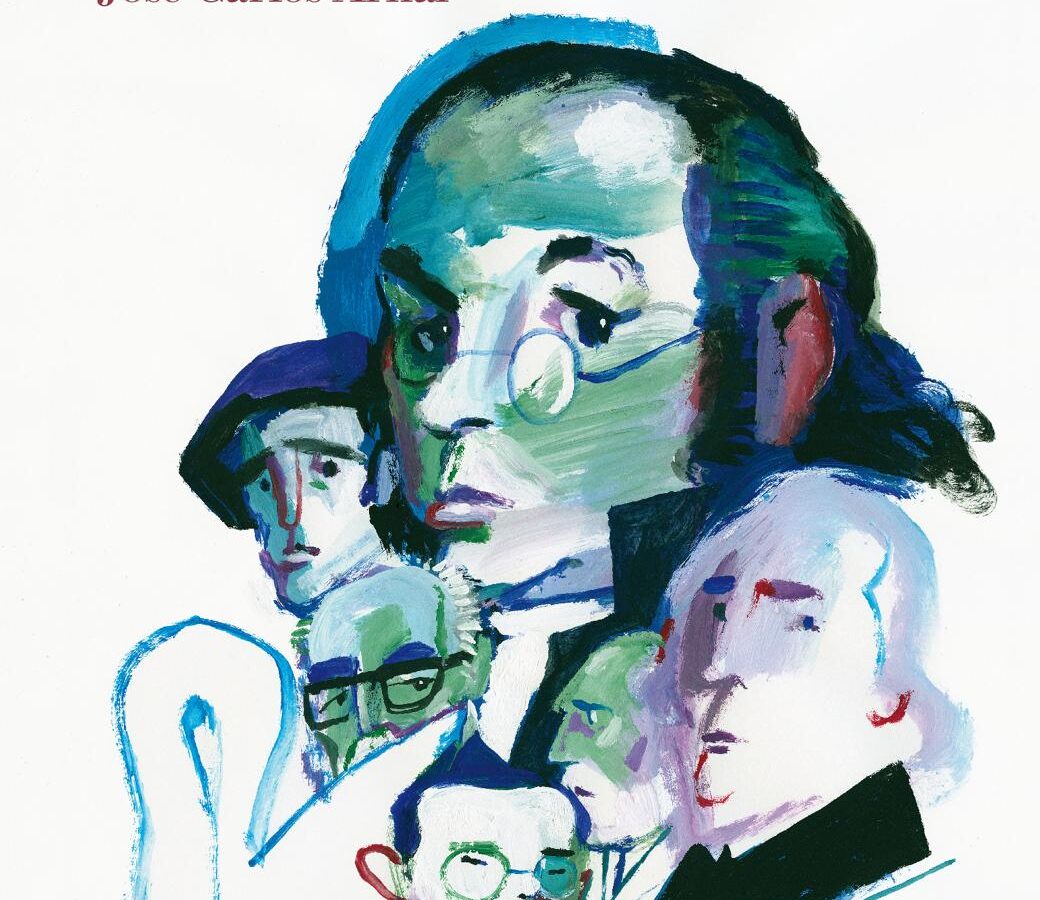
This book is, at once and even without intending it, a tribute to Zaragoza’s fabulous history—and to its celebrities, such as Goya, Pignatelli, Ramón J. Sender, Ramón Acín, etc.—to the millennial and deep imprint of water on its identity, and to its stubborn determination to become a great city.
In this making of José Carlos Arnal narrates how he wrote Incrédulos y soñadores (Xordica).
***
The literature associated with strolling has a very long tradition. It is hardly surprising. Wandering through the countryside, the woods, the parks, or along the shoulder of lesser-traveled roads is an innate habit that fosters a productive and healing introspection. A group of Canadian researchers recently conducted a meta-analysis of studies related to that activity and concluded that there is a scientific basis to claim that walking substantially enhances creative and divergent thinking.
At the origin of Incrédulos y soñadores lies the idea that cycling is an equally enriching practice, although it has been written about less. Yet it amounts to nothing more than the intuition of a few solitary cyclists who frequently ride along the banks of the Canal Imperial de Aragón, a setting that, thanks to the breadth of the path and the absence of steep grades, becomes especially appealing to those who are in the process of moving from maturity toward old age. Those old cyclists who travel in solitude are the voice that runs through the pages of the book.
In that initial idea, the Canal’s route was seen as a space conducive to various literary and historical evocations. Not by chance, it is one of the great public works undertaken by the Spanish Enlightenment figures of the eighteenth century, hosting an extraordinary cultural and landscape heritage that has continued to grow to this day. And it might be worth telling it precisely at a moment when the values of that Age of Enlightenment seem to be retreating worldwide.
But having a good starting point does not always guarantee a satisfying journey. Once the protagonists who will guide us through the entire book are introduced in the opening pages, the orderly and predictable landscape they traverse and the somber musings of those who, by their age, already know they have begun the final decline, it becomes necessary to find the right language and tempo; one would need to let the walkers’ inner voice emerge, that hesitant voice that needs silence to be heard, and which would lead us to discover the extraordinary and sometimes sad, recurring and tangled stories that will be pedaled along.
What was needed was a formal, measured language in which the melancholy, anxiety, and wonder of the cyclists could coexist with the grand ambitions and no less grand defeats of the characters who would gradually join the narrative. From a narrative standpoint I quickly faced the question of how to weave a text that was not merely a historical or geographical account —there are already many works published with that perspective— and that would, moreover, offer a vision somewhat different from others.
Part of the answer lay in the personality of that collective voice that would be the guiding thread. Those solitary cyclists are not going to recount the stories in an academic manner, with a chronological logic and an intention of totality, but in a partial, random way, threaded by the emotions that move them.
Another challenge was how to find the narrative hook that would allow introducing each of those stories not as one follows a thematic index or a timeline, but in the casual and unforeseen way ideas arise during the ride, thereby trying not to succumb to the overwhelming force of the abundant documentation consulted to prepare the book.
Again, the only possible solution was to keep the spotlight on that self-conversation that our cyclists sustain throughout the book and on their discoveries and unexpected thoughts —a line from a book they read long ago, a name on a building that is not what it seems— as instruments for a fluid and coherent exposition.
The aim was to integrate under that gaze different times —from the eighteenth century to today— and to make figures as diverse as Goya, García Mercadal, Winthuysen, Sender, Laforet, Pignatelli or Jovellanos dance together in the faded and astonished memory of the solitary cyclists. Did I manage it?
—————————————
Author: José Carlos Arnal. Title: Incrédulos y soñadores. Publisher: Xordica. Sales: Todos tus libros.