
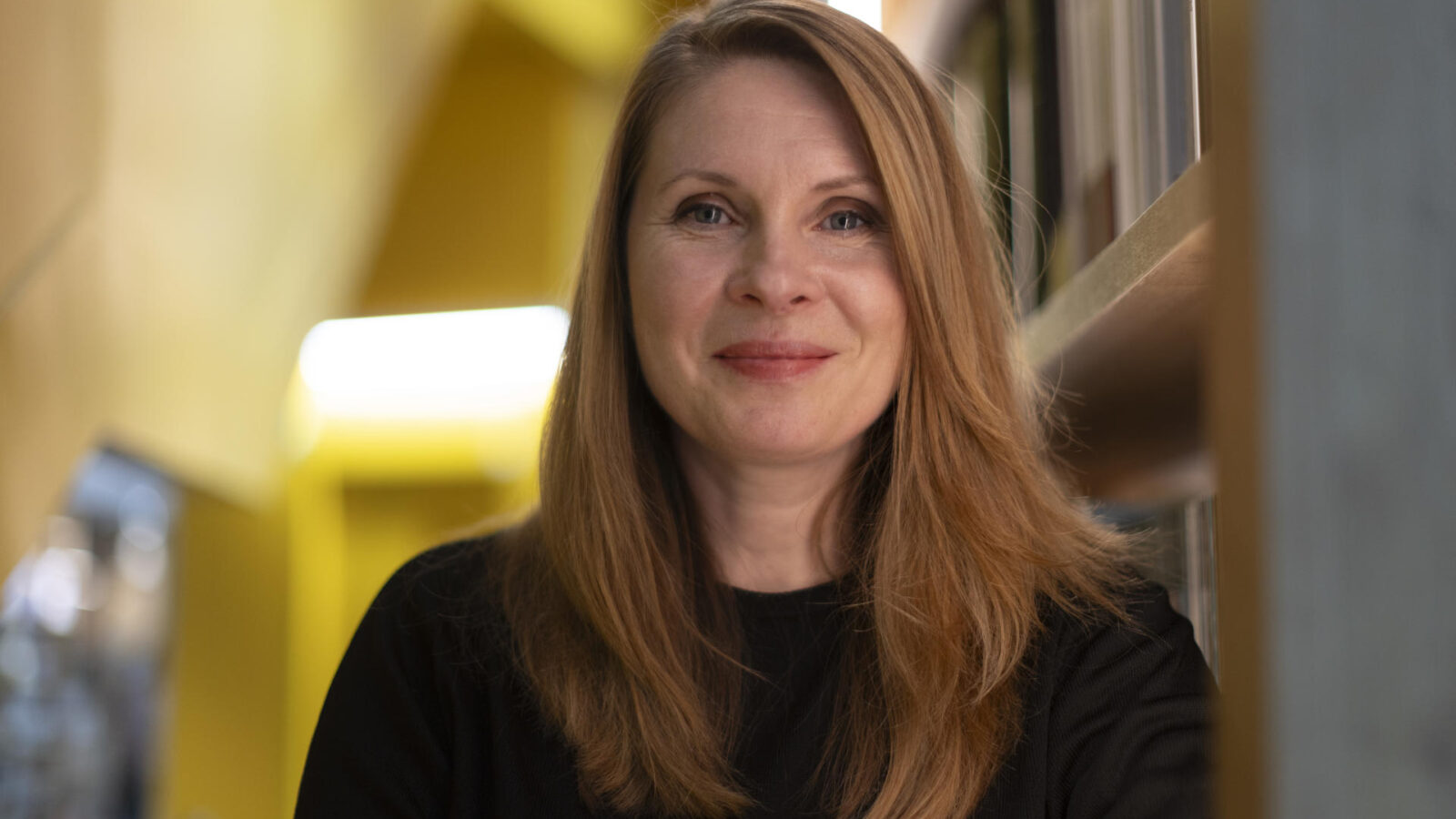
The Moldovan writer Tatiana Țîbuleac arrives at Barcelona’s Casa Abacus, dragging a trolley in the midst of a Spanish tour, to discuss her new and unsettling novel, When You’re Happy, Hit Yourself First, in which she explores the relationship between a widowed father, a journalist during the Soviet era, and his daughter Mila.
In an interview with Efe, she has apologized for drafting, once again, a story that shakes the reader, as had happened with the successful The Summer in Which My Mother Had Green Eyes, but that is how she writes.
Published by Impedimenta, and by Amsterdam in Catalan, Țîbuleac builds a tale about memory, absences, and wounds that never quite close, featuring two main protagonists: a father who becomes widowed in the Moldovan capital during the Soviet regime, a heavy drinker who must take care of a young girl. The reader will witness Mila growing up, and as an adult, after the fall of the communist regimes, she emigrates to Paris, where life is not especially joyful.
The novelist notes that, at first, she wanted to delve into her father’s generation, which had already been the focus of her other title, The Garden of Glass, where she depicted her struggle to reclaim the Moldovan language, pride, and national identity, “fleeing from Russification.” Now she ventures through a Moldova in transition, “a transition that never ends and that is why there are so many difficulties,” with very hard years following the fall of the Berlin Wall, during which “people lost jobs, migratory processes began, and there were even those who began to sell themselves, to traffic.”
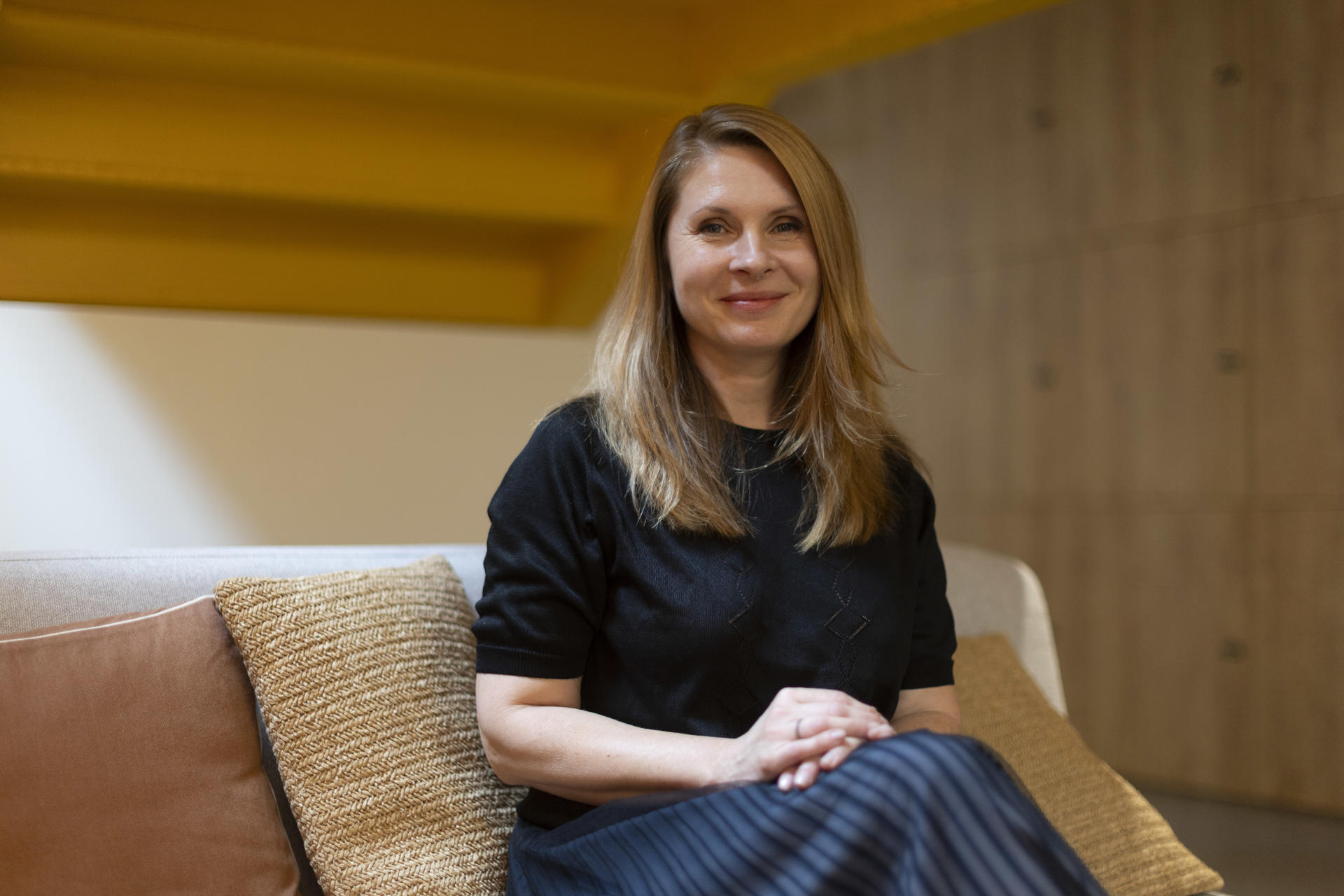
Efe / Marta Pérez
“We have captured all those values we were seeking, but they did not give us stability, and I wanted to write about what it meant for my father’s generation, but also for those who chose to leave, two different generations, seemingly opposed, yet connected by the fear of being happy, by the inability to be fully happy,” she stated.
Her Mila, she emphasizes, would be someone who, more than living, survives, a woman who is “many women” who emigrated more than thirty years ago from countries like Moldova, in this case to France, and who must constantly prove that she is better than others.
In the pages of this novel, she also portrays a woman who drinks, and she does not hide that she grew up surrounded by alcoholics, with a father who drank heavily, coming from a family that owned wineries, though she stresses that she never saw her grandfathers drunk. “I wanted to speak about alcoholism in women, because it is a hidden topic,” she considered, and added that “the time has come to say it loud and clear, to reclaim that it should be discussed, not concealed. Alcoholism is a pathology that must be treated and help given to those who suffer from it.” She wanted to highlight that in Moldova there isn’t the same perception of a female alcoholic as of a man in similar circumstances, although she has realized that in Spain it happens too. “I like wine and I drink, and I’ve had times when I thought that with the help of wine I could be brighter and write better. Perhaps I haven’t fallen into alcoholism because I am a mother and you think you don’t want your children to see you this way.”
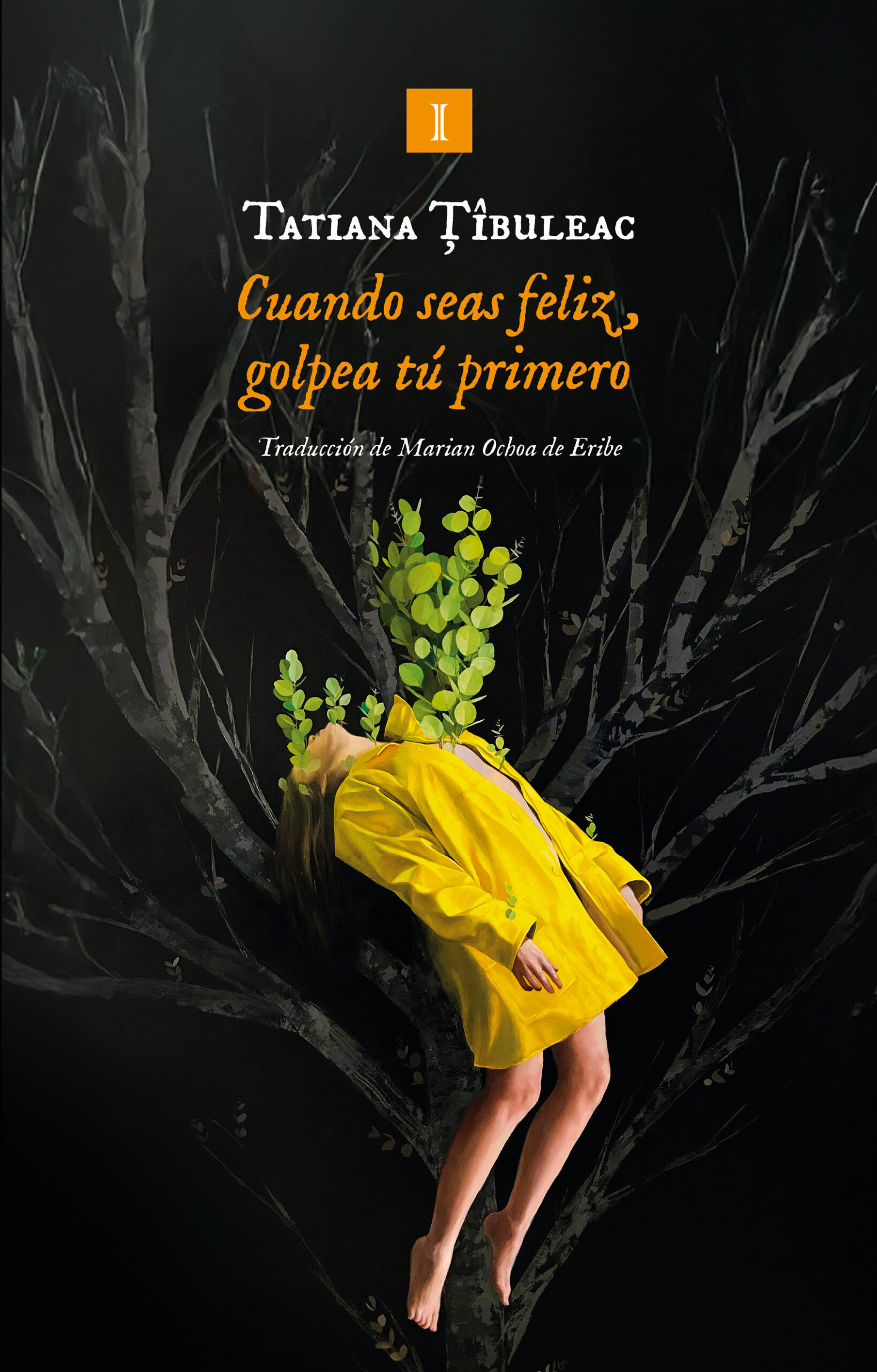
Recognizing that her mother is the martyr of her novels, because the mothers she portrays in her works are always disagreeable, and hers is not, Tatiana Țîbuleac is thinking of writing an essay, because she is “tired” of creating characters to express what she thinks, and although she knows it will be more challenging she wants to delve into family memory through non-fiction.
The author, who always uses Romanian for her works and who has been living in France for years, laments that the war continues in Ukraine for nearly five years and emphasizes that Moldovans are “very worried” because they are neither in the European Union nor in NATO, and “no one protects them, being as neighbors” to them. At the same time, she warns that, for the moment, “the war is confined to Ukraine”: “But for a long time I have believed that Europe is at war and that the idea of rebuilding the Soviet empire is a reality and must be taken into account; we must see this war as a common war that affects us all.”
——————————
Source: Irene Dalmases. Efe