
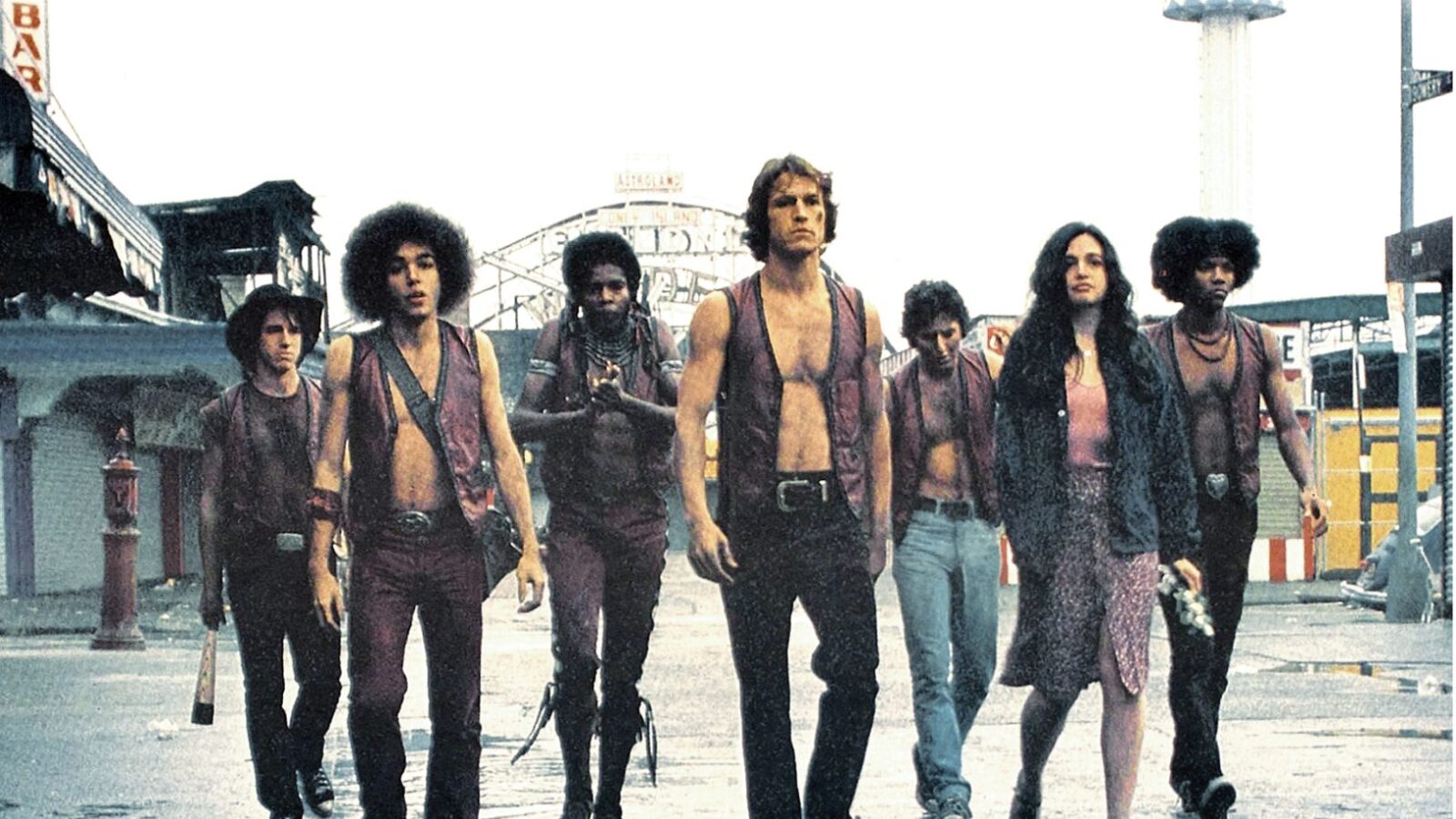
Walter Hill carved out a niche in the cinematic landscape of the 70s and 80s thanks to titles that modernized classic genres such as the noir, the thriller or the western. The The Driver, Legendary Outlaws or the iconic The Warriors. The Lords of the Night and Streets of Fire possessed a distinctive aesthetic and revealed a narrator who was intense and honest.
In this making of Francisco Galindo explains what led him to write Walter Hill: Heroes, Outlaws and Neon Lights (Sílex).
***
When Streets of Fire first aired on television, there was barely any alternative on a Saturday night, so it was easy for my classmates and me to connect over the dazzling blend of color, music, romance, and adventure. Earlier, I had seen in a cinema (the natural habitat for films at the time) an action movie tailored to Schwarzenegger that burned into my preadolescent memory, not only because its prologue was in Russian, but because of the nocturnal environments, artificially lit by neon, in the city of Chicago. I would be less enthusiastic when, skipping the last class, I dragged a few colleagues to another cinema, practically empty, to see Johnny Dangerously, where the neon signs conveyed a strange sadness akin to the weight that burdened its deformed protagonist. By the time the ephemeral resurgence of the western arrived in the 90s and the release of Geronimo: An American Legend, I already knew what it meant to read in the credits the name Walter Hill. As an early cinephile, I read compulsively chronicles from newspapers and specialized magazines, which labeled him a Peckinpah imitator, reducing his brief moment of glory to The Warriors: The Lords of the Night. It was no surprise that, as the twenty-first century began, a new generation of film buffs would be dazzled by a device like Drive, starring Ryan Gosling, while some of us argued for the existence of another film, titled Driver (with an ending r), featuring another Ryan, O’Neal, three decades earlier and with a plot suspiciously similar, but far more honest and respectful to its predecessors.
My determination to analyze the filmography of this unjustly forgotten filmmaker has finally taken shape in the book Walter Hill: Heroes, Outlaws and Neon Lights, a journey that has afforded me the invaluable opportunity to revisit or discover the influences that pulse through his cinema. From Melville to Kurosawa, from Walsh to Hawks, and a countless host of B-movie foxes who filmed with instinct, always respecting the rules of the genre. An amalgam that does not stop at the Seventh Art: the works of writers such as London, Conrad and Hammett also underlie it, as do the painters Hopper and Remington. Greek resonances emanate from his celluloid, which repeatedly returns to the Iliad, the Odyssey, or the Anabasis, whose translation to the streets of New York fascinates Arturo Pérez-Reverte. And this is not the only domestic intellectual to praise Walter Hill’s cinema; in the archive there are enthusiastic critiques signed by Fernando Trueba or José Luis Guarner, Javier Marías revered his miniseries The Protectors, and he maintains a friendship with José Luis Garci.
Across the six decades covered by Hill’s filmography—composed of fables set elsewhere and in another time—the film industry has undergone inexorable changes, prompting the near-total disappearance of “middle-class” cinema (neither blockbuster nor indie), where storytelling prevailed and political readings appeared without fanfare, without the overemphasis of cinema with a benevolent message and quick readability. I can modestly take pride in the fact that for every Hill film I have revisited—including the crowd-pleasers—I have been able to find some symbolism, an initially overlooked reading that contextualizes it in its era, or to appreciate the depth of the supporting characters, to which one must always add the setting (urban or natural). Rejecting chronological order, I have grouped his films by themes, for example confronting in the same chapter the wandering fighter from Hill’s debut with the imprisoned boxer in Invicto, shot at the turn of the millennium, thus clarifying how, regardless of the aesthetics—classic or modern—employed on each occasion, beneath that layer of stylization beats the same pulse, the pulse of the (anti)heroes in moral situations, related to classic archetypes. And indeed the career of Walter Hill mirrors without a doubt the career of those apparent losers who populate his films, whose loyalty to a code—street, outside the law, perhaps mistaken—ultimately elevates them to winners.
—————————————
Author: Francisco Galindo. Title: Walter Hill: Heroes, Outlaws and Neon Lights. Publisher: Sílex. Available from: Todos tus libros.