
In the image, Louis Prevost has a flushed face, yet he smiles. It is he who, with arms outstretched, moves closer to his brother. Robert wears the skullcap snug on his crown and the red chasuble. The fabric is heavy and solemn. As Louis embraces him, he pats his brother’s back — and, consequently, the chasuble — four times. Robert lowers his head onto his brother’s shoulder. Behind Louis, the final authorities wait in line. When the embrace ends, they speak. They do so longer than protocol allows. Although both appear at ease, Louis moves his lips quickly. His words seem urgent. The final laugh — its resonance dominates the flashbulbs’ noise — seems like a farewell. Louis, after sharing with Robert the lightness that is natural between brothers, says goodbye to the man who has already begun his own chrysalis toward divinity. In addition to the attire — Louis wears a dark suit, white shirt, and a blueish tie — there remains space between them. In St. Peter’s Basilica, the initiatic movements of Leo XIV spread across its polished surfaces and the pillars; also across the folds of the monumental sculpture that presides over the encounter. The ornamentation and the thorny biblical details announce divinity and separate those who, at some point in their lives, shared a dormitory or sat at the table of a modest house on the outskirts of Chicago. A space, the basilica, that will soon absorb the ecumenical gestures of Robert and render them in marble: seated on Peter’s throne, Leo XIV already observes the shore that God reserves for His representatives, knowing that his brother will not be there. It is, then, a double farewell, which could extend toward the many territories writhing before the liturgy where a half-voice word carries more weight than all the grand verbs proclaimed from the pulpit. At ground level, among parishioners with real names, under the Chiclayo sun and its opposing fragrances: places and conflicts in which Robert could roll up his sleeves and be a man, an equal among equals, a bridge built with the hands of those who flee toward salvation. A wall, ultimately, erected by himself against violence and now to be renounced in favor of the basilica’s columns and the vertical mortuaries that there announce the ultimate fate of the human being.
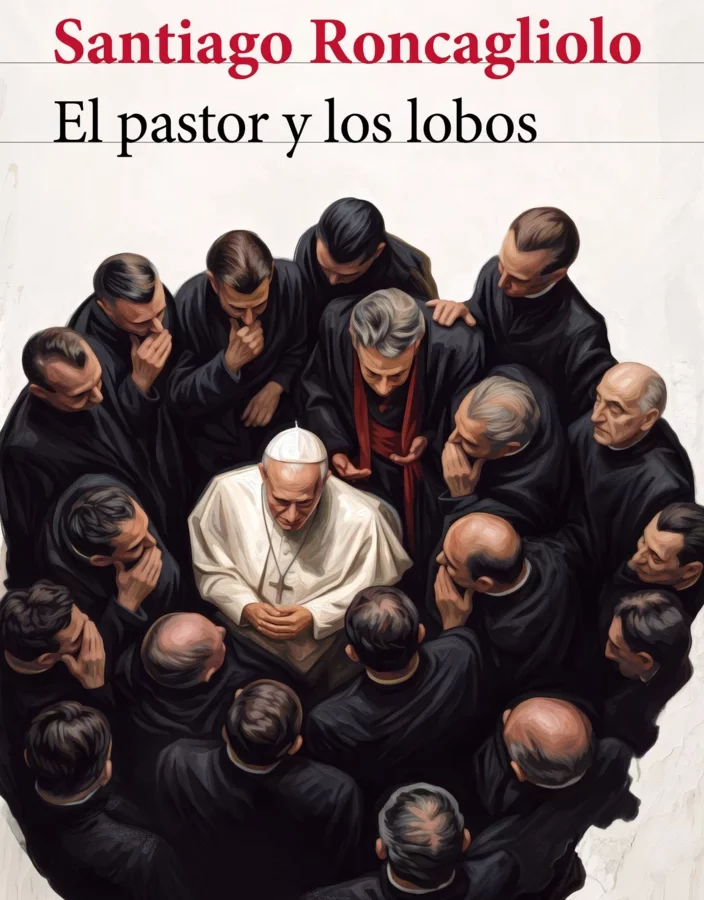
In his masterful chronicle titled The Pastor and the Wolves, Santiago Roncagliolo explains it with clarity. «In reality — he says — there have always been two camps, two ways of understanding divinity, in a sense, two gods. For some, God is down here, on earth, incarnate in those who suffer: abused women, the poor, the dispossessed. Salvation is achieved by helping them, making the material world a better place. This God can provoke controversy because the category of the dispossessed can include criminals, prostitutes, or guerrillas and because, in those cases, we are obligated to act in their favor. For others, God is a stern lord who looks down on us from above and demands a lot of prayer and chastity. In return for a more or less correct behavior, heaven is offered. It’s a fair and simple deal to understand».
Between those two camps, Robert Prevost wrestled before his proclamation, and between them, Leo XIV debates, according to Roncagliolo’s chronicle. The embrace of his brother Louis is, in addition to a farewell, a decision. A decision that, due to its magnitude and the many associations woven around the divine, will force him to renounce the most modest forms of faith, and perhaps even the very parishioners who positioned him within the Church — and within the world — and to whom he owes his own credentials before God.
Santiago Roncagliolo is one of the finest nonfiction storytellers in contemporary literature. The Pastor and the Wolves, which follows in the wake of Red April and Deliver Us from Evil, is a fresh contribution to a genre in which stepping beyond the lines of essayistic analysis or the very hagiography of the subject, while still being straightforward, proves tempting. To some extent, the limeño novelist shapes the approach to the person and the character, to his personal context and to the many contexts that amplify power; to tackle the thought of Robert Prevost—from his entry into the Order of Saint Augustine to his appointment as prefect of the Dicastery for Bishops, passing through his period of Peruvian immersion from 1985 to 1999—creating a true narrative web around his figure and around those who sabotaged his clerical work to destroy him, is possible if the author, in this case Roncagliolo, takes the quest of the character as his own. The quest of Prevost is the quest for faith: faith in the first God, to whom one can render accounts only by revoking the pain of others and by maintaining sobriety. And this pain is the pain of the weak and the just; the pain of those who suffer behind the power structures; the pain of victims of sexual abuse whom the Church, for decades, instead of protecting them, has shielded with silence, turning to the less dramatic consequences of violence (bureaucracy, calumny, collective isolation, or judicial suffocation). It was this search that drove Prevost to confront powerful machinery, such as the Sodalico, and to ally with investigative journalists, such as fellow Peruvians Paula Ugaz and Pedro Salinas, who denounced numerous cases of sexual abuse within the Sodalicio order and with whom the future pope aligned himself through active action, despite later accusations of cover-up. A culminating search, and who knows if interrupted by the Vatican’s hisses that tremble with fear. The same one that Santiago Roncagliolo begins at the start of the narrative, when Pope Francis travels officially to Chile and, for the first time, faces a front of abuse allegations that mirrors a subterranean violence well known to Francis; shameless violence and, in many orders, abyssal violence that protects those who twist dogma into a contortion that can only be fought en masse. It is the same violence experienced by the writer, in his case interior and solitary; patriarchal violence, sometimes inexplicable, that contradicted the father’s markedly revolutionary figure whom the son learned to revere and unlearn to revere. This bifocal structure is, therefore, one of the most valuable aspects of Roncagliolo’s work, because, in addition to humanizing his narrative voice — the moment when, reaching adolescence, he decides to live with his father so that the latter stops beating his mother, a scene that is shocking — it links him with a character, Prevost, whose observation begins from a natural imbalance. Nevertheless, both share a desire to reach, through words, undefinable places where horror dictates its own rules.
Lugares en los que erosionar la injusticia es un acto de fe. La fe convertida en espacio —una estructura que prolonga nuestros intangibles más profundos— siempre permite las segundas oportunidades y también la encarnación de todo aquello que, en un plano racional, nunca debería existir. Así lo define Roncagliolo cuando, de pie, frente a la urna de su padre y sabiendo que un puñado de polvo callado e inofensivo no le representa, intenta recordarlo más allá de lo infernal. Entonces, afirma: «En cierto modo, cobro conciencia de que estoy hablando con un montón de cenizas. Y descubro un nuevo aspecto de la religión. Precisamente ese esfuerzo para que las palabras hagan algo que claramente no pueden hacer, ese intento de que el lenguaje acceda a lugares inaccesibles, que quizá ni siquiera existan, se llama rezar».
Desconozco si es aceptado decir que el estilo de Santiago Roncagliolo se encuadra en lo que algunos críticos denominan thriller de no ficción. Pero, si así fuera, el autor limeño es uno de sus máximos exponentes. Su estilo tiene una fluidez fuera de lo común. La estructura de The Pastor and the Wolves, como una disposición de capítulos breves, con finales en los que lo nuclear deja paso al interrogante y, más tarde, a la introspección, hace que la lectura adquiera un grado de viveza, incluso de trascendencia, que en este caso es consustancial al personaje y a la voz que intenta descifrarse en sus alrededores. No es sencillo descifrar a Prevost desnudando sus contextos y menos aún arrancarse los prejuicios que, en el mejor de los casos, habrían permitido nada más que la equidistancia. Santiago Roncagliolo lo hace y, por tanto, regresa por la puerta grande a ese lugar por el que Leo XIV ya siente una profunda nostalgia.
—————————————
Autor: Santiago Roncagliolo. Título: The Pastor and the Wolves. Editorial: Seix Barral. Venta: All Your Books.