
My book had been waiting on my to-read list for a long time. I found it in Mexico, at the Guadalajara Book Fair. I remember that suitcase full of different works, taking advantage of Planeta’s generosity. The Latin American editions weigh something a bit lighter than the one used here, so I trusted that the luggage might not exceed the limit, as tends to happen to me every time I cross the ocean. I was not mistaken that time.
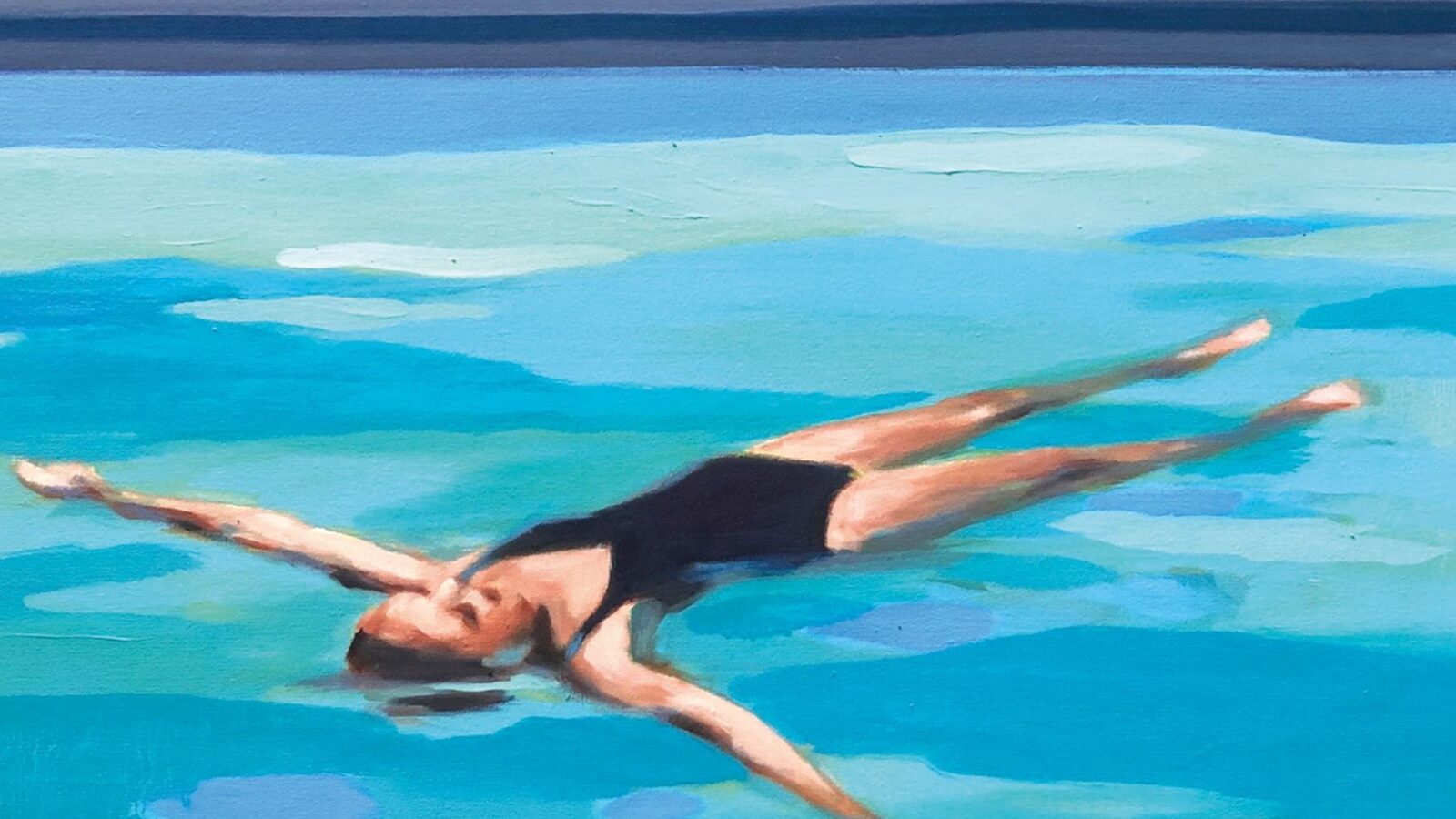
Once home, that black-covered book in which the blue of a pool, which holds a woman’s body, covers her halfway, moved to the pile of books I was most eager to read. However, at that time other hands picked it up — those of my mother and Miranda — and it ended up lost around the house. A year later, Cristina Araújo Gámir, the author of Mira esa chica, the book I’m recommending today, sent me a message about something else. I remembered then the desire I had to read it just by seeing the cover at the fair and, with great effort, I managed to find it.
I devoured it in a couple of days. In Mira esa chica, with which Cristina won the Tusquets Prize for Novel, the author tells the story of a girl at the end of adolescence who endures a gang rape. The plot does not reveal this from the start; instead, it is built around everything that followed: the hospital, the tests, the complaint, the friends, the family, the public exposure, and the difficulty, first, of naming what happened and, later, of accepting it.
It is a necessary book for being uncomfortable. It does not re-victimize, it does not sugar-coat, and it does not reduce its protagonist to the condition of a victim. It is real, contradictory, brave, and critical, without being moralizing. It is the kind of stories I consider necessary at a moment in history when, apparently, the victim cannot be just that: she must be perfect, without flaws. Societal scrutiny only looks at the detail to blur the story. It is as if we threw a novel in the trash for having a misplaced comma.
I recommend Mira esa chica because it is constructed in a masterful literary way; because it is a story that matters; because it will never be enough and yet it will always be necessary; because it names and immerses the reader, almost like the girl on the cover, in its own contradictions, and it does so with an insanely good rhythm.
Thank goodness I chose that book. Thank goodness I saw that message. Thank goodness I read this story.