
“Here in London we have a large number of official detectives and just as many private ones,” Holmes tells Dr. Watson in their first meeting in A Study in Scarlet (1887). “Well, when those people get off track, they come to me and I manage to put them on the right track… I am the last court of appeal.”
Between private inquiry and police work, Sherlock Holmes occupies a singular role in that Victorian London from which he would become one of its defining (meridian) emblems. There are even reports that Queen Victoria herself counted among his readers. In one way or another, Holmes’s occupation is deeply linked to that of its creator. Arthur Conan Doyle was an ophthalmologist, and although his detective is a genuine prodigy of observation, a titan of reasoning, his consulting practice was modeled on a procedure commonly used by English physicians of those days. The consulting physicians —as the title implies— were the eminent experts whom general practitioners turned to when a patient’s symptoms revealed unusual complexities.
In short, it was the very occupant of 221B Baker Street who explained to us then, in that passage from A Study in Scarlet, about his profession and duties. And a day like today, October 14, 1892, with the publication of The Adventures of Sherlock Holmes by the London publisher Georges Newnes, the canon found its consulting detective and its vicariate narrator: Watson is the mediating gaze—the reader’s vicarious experience—, Watson lives the investigation instead of the reader and for the reader.
The Adventures of Sherlock Holmes, Eduardo Torres-Dulce recalls in a splendid edition of The Blue Carbuncle —one of the pieces gathered in that prince edition of the Aventures…— issued by Hatari! Books last Christmas, of the ten thousand copies put on sale today, one hundred and thirty-four years ago, “by December eight thousand had already sold. Doyle himself took part in the promotion through Watt, his agent, inserting advertisements in various newspapers and paying for them out of his own pocket, which again shows that, despite his murderous intentions toward Holmes, he did not object to readers enjoying his adventures.” By the fifteenth of that same year, twenty-four hours after Londoners rushed to bookstores to buy their copies, the American edition went on sale, through Harper & Brothers.
As is well known, the twelve stories that comprised the book — Scandal in Bohemia, The Red-Headed League, A Case of Identity, The Boscombe Valley Mystery, The Five Orange Pips, The Man with the Twisted Lip, The Blue Carbuncle, The Engineer’s Thumb, The Noble Bachelor, The Adventure of the Copper Beeches, The Speckled Band, The Beryl Crown — were not conceived by Conan Doyle to form a single volume, but had been read month by month between July 1891 and June 1892 in the magazine The Strand Magazine, a publication that enjoyed unprecedented sales growth: people queued for endless lines at kiosks and subscription cancellations spiked if any month the delivery of the detective was delayed. Consequently, George Newnes decided to compile them in that volume which we commemorate today.
For scholars and followers of Doyle’s work, the so-called “Holmesian Canon” naturally rests on the collection of stories and novels written by Sir Arthur Conan Doyle. To distinguish it from the thousands of pastiches, adaptations, tributes, and even tasks that later claimed to be tributes, it is organized around around fifty-six short pieces and four novels.
Of all the volumes in which Baker Street’s cases can be read, The Adventures of Sherlock Holmes contains the foundational pieces upon which the character’s entire mythos rests. Thus, in A Scandal in Bohemia, Irene Adler is introduced—the only woman who managed to outwit Holmes. These pages, the twelve pieces, also shape the Victorian geography and atmosphere of 221B Baker Street as a refuge of logic against the chaos and that gray London fog that would stretch well into the 1960s, even into swinging London.
The Adventures of Sherlock Holmesalso establishes the definitive dynamics of the friendship between Holmes and Watson, the consulting detective and the vicariant narrator. Yes indeed, although the character was conceived in 1887, it was the edition issued for sale on October 14, 1892 that defined the imagery and the devices that turned Sherlock Holmes into a universal myth.
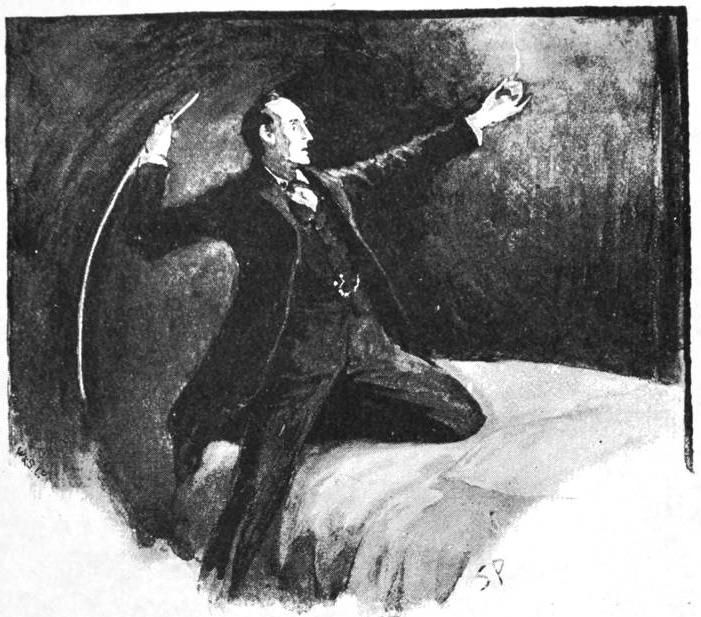
Indeed, the one hundred and four original illustrations by Sidney Paget were etched indelibly into that image of Sherlock Holmes and Dr. Watson that sits in the collective subconscious. The illustrator managed to interpret Doyle’s texts to perfection, and he is the creator of the famous hunter’s hat (deerstalker) and the Inverness coat with the small cloak. It seems Paget had a brother of refined bearing, whom he used as a model to draw the consulting detective.
With all the cautions required when writing about one of those literary characters who transcend the pages in which these fictional beings dwell, becoming an object of devotion for their most ardent readers, not merely a field of study as exact as a science —which it indeed is—, to deserve true reverence, without meaning to offend, in short we could speak of Sherlock Holmes and Dr. Watson as the consulting detective and his vicariant narrator. Yet what endures among those devoted to the thinker and his adherent is to regard 221B Baker Street as a cenacle of Logic, a symbol of human reason used to unravel hidden truths. For them, the detective’s home is little short of Plato’s Academy or Aristotle’s Lyceum. Indeed, it embodies the archetype of the rational investigator, of keen observation, the resolution of complex mysteries.
But Holmes, though a biological intellect, without his vicariant narrator would be despised as an almost-superhuman mind—cold, analytical, and methodical—like an artificial intelligence. If his stories were not narrated by his vicary! If it were him and not Watson who uncovered the enigmas for us in the first person, the mystery would lose all dramatic tension —we would know the solution from the outset—and it would strike us as as disagreeable or incomprehensible as any stoic Victorian. Watson humanizes Holmes and translates his intellect into an accessible and emotional language.
Sí señor, another October 14, now 134 years ago, with the publication of The Adventures of Sherlock Holmes, the consulting detective and the vicariant narrator, Dr. Watson, solidified his canon, still in force.