
Some time ago I happened upon, by chance, among a heap of clearance copies and discarded editions, a book that —like in a romantic novel— captivated me from the very first moment. It was titled France, End of the Century, and its author, Eugen Weber, traced a journey through Belle Époque France via the newspapers and magazines of the day. Weber offered the preliminaries of the tourist voyage, the arsenal of documentation a traveler of the era would need to traverse a time and a country, and somehow he managed to create the impression that the book was an intermediary agent before the real journey, a distributor of explanatory brochures, and in administrative language this is called a “facilitator.” But the explanations were so detailed and sophisticated, so rich and sumptuous in their detail, that when you closed the book you realized that the reader had, in the meantime, become the traveler. The destination had been crafted as the traveler/reader planned his own destination.
Sucede lo mismo con
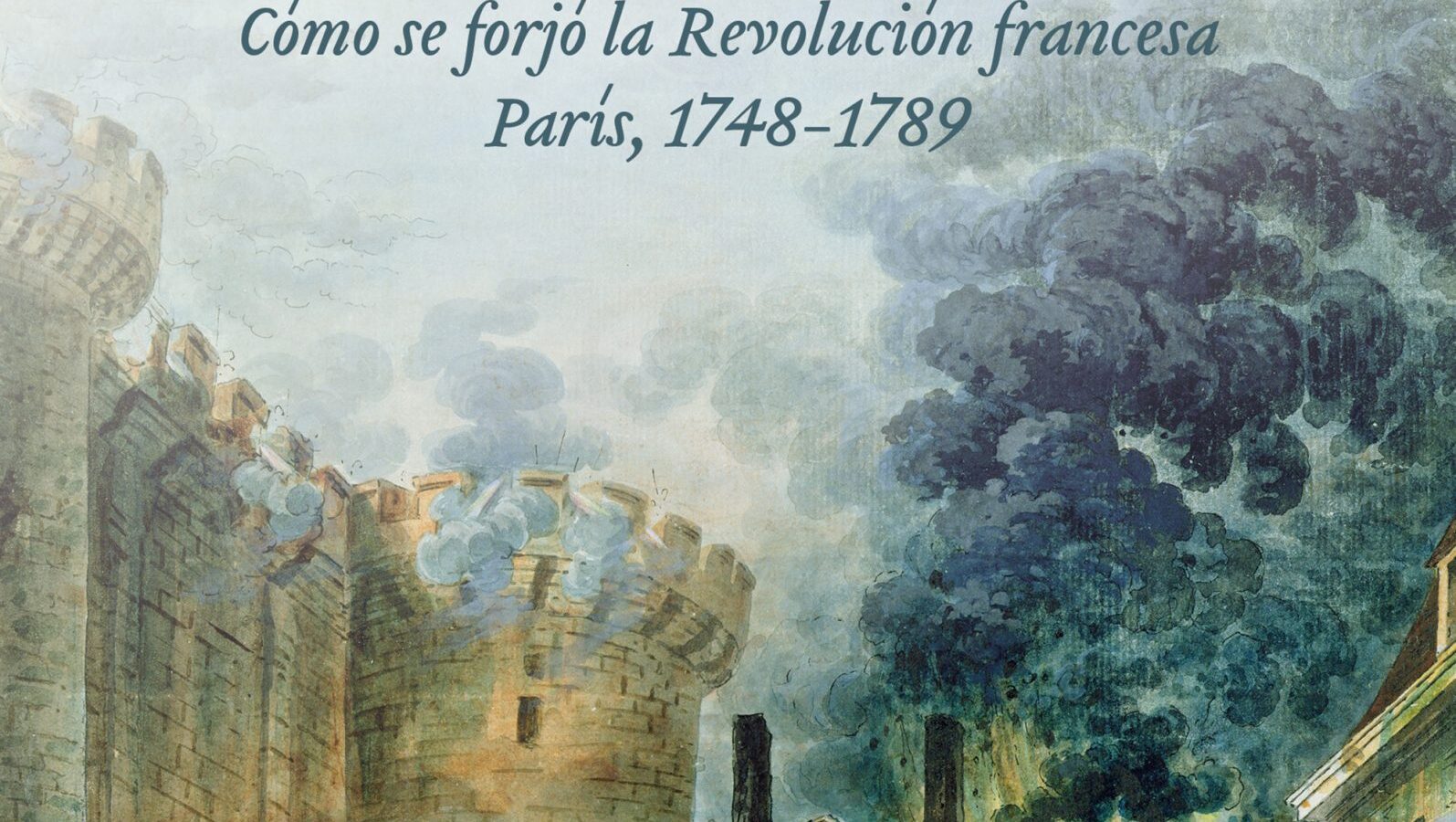
The Revolutionary Temperament, de
Robert Darnton. The approach is very similar to Weber’s. Unlike most books not only about the French Revolution, but about any historical subject that emerged in the era of free, censored, or underground press, Darnton does not assume that the answers lie necessarily in other similar books, but in those contemporary channels of information that are usually overlooked. Thus he proceeds to undertake the journey Weber proposed in France, End of the Century and, instead of tracking his contemporaries, decides to take the underground bibliographic train and gather all information available in magazines, handbills, pamphlets, transcribed or published speeches, the unique copies of broadsides printed at the whim of a clandestine linotype, and with all of this he constructs the day‑to‑day life of a city (Paris) as a hyper‑thénagogue example of an entire country that gradually fed its “revolutionary temperament.” With this, Darnton focuses on the ordinary individual who gradually radicalizes from pamphlets —with the help of an elite that barely sees forming on the city’s psychic horizon that wave that will soon carry everything ahead— and shows the most intimate face of every revolution: the house crushed by obligations and upon whose shoulders no longer can sustain new responsibilities.
The journey of news through the city counted on numerous conduits: the Kraków tree under which news and rumors spread — and which gave rise to a French expression now obsolete, avoir ses lettres de Cracovie, to refer to those who tell lies or false stories, due to the phonetic similarity between Cracovie and “craque,” or hoax — was the first social network of a city that increasingly needed a center of news from which to disseminate the latest information more rapidly than the printing press itself. But there were other methods less easy for the espionage services to intervene (which used the Kraków tree to contaminate real news with half‑truths, or outright falsehoods), and the pamphlet proved to be the most dangerous of them all. Soon, whether written in rhyme or not, it could become a popular song that the ruling class began to hear with fear and the police had orders to silence, employing whatever violence was necessary. This, on one hand, reveals that no revolution bears the expected fruit if, first, the police, charged with maintaining order, do not change the order of the factors and continue to serve and protect those threatened by the anger of those who ultimately suffer under their laws, decrees, and group paranoias: that is, the house crushed by obligations and unable to shoulder new responsibilities. The walks through the city by law‑enforcement officers not only armed but also trained to shoot at any possible insurgent — and any insurgent could be, for example, a woman who has missed the curfew or hidden a suspect in her rooms — the terrible odysseys recounted by that brave Scotswoman Grace Elliott in Ma vie sous la Revolution are a terrifying proof of this — did not respond to a desire to maintain the established order but to quell the disorder produced by contradictory policies circulating among the different hierarchies of power. Facing the organizational chaos in the higher floors of the social building, it was only a matter of time before chaos sought to produce a new form of order. But the fear that this order would drag down the authors of the misrule accelerated not only the disorder but also that “revolutionary temperament” that ran through streets, songs and stages: the variety‑show cafés were indeed heavily watched by spies in the service of those who sought to restore order not so much out of love for order but out of fear of seeing their heads roll. As ultimately happened.
That madness that took hold of Paris (let us recall some details: the mass imprisonments in the Bastille, the exorbitant price of bread ever more burdensome, the trials without legal protection and the continual market dislocations, the king’s ministers roaming freely amid scandals and malfeasances and the king himself losing his sovereignty by having a mistress, being out of favor with God and unable to literally lay his hands on a sick and afflicted people) is perfectly portrayed in the pages of this book, which is not only a grand tableau of a revolution still to be fully understood, but also a lesson for the present. That said, anyone seeking another study about the days of 1789 and their long, convulsive passage through darkness should not expect to find it here: Darnton offers no more than one chapter about the Revolution already unleashed in the streets of Paris, a minor chapter, in fact — and does not pretend to be anything other than that — in relation to the fascinating journey that has led us from the dawn of 1748; for that there are many other books — I always recommend those written by a competent author and almost an eyewitness of the events such as the poet Lamartine, even though as a historian he is considered not particularly rigorous — but what was missing was the volume that would let us see, like one of those who walked then on a bloodied cobblestone, how that wave that carried so much away was formed, including something very intimate inside us that we have not yet completely recovered.
Author: Robert Darnton. Title: The Revolutionary Temperament. Translation: Jordi Ainaud i Escudero. Publisher: Taurus. Available at: Todos tus libros.