
To commemorate the 90th anniversary of the Civil War, José Ángel Mañas recreates in Zenda, day by day in this section, what happened in 1936, perhaps the most momentous year in all of Spain’s recent history.
Wednesday, October 21, 1936: Koltsov’s Report
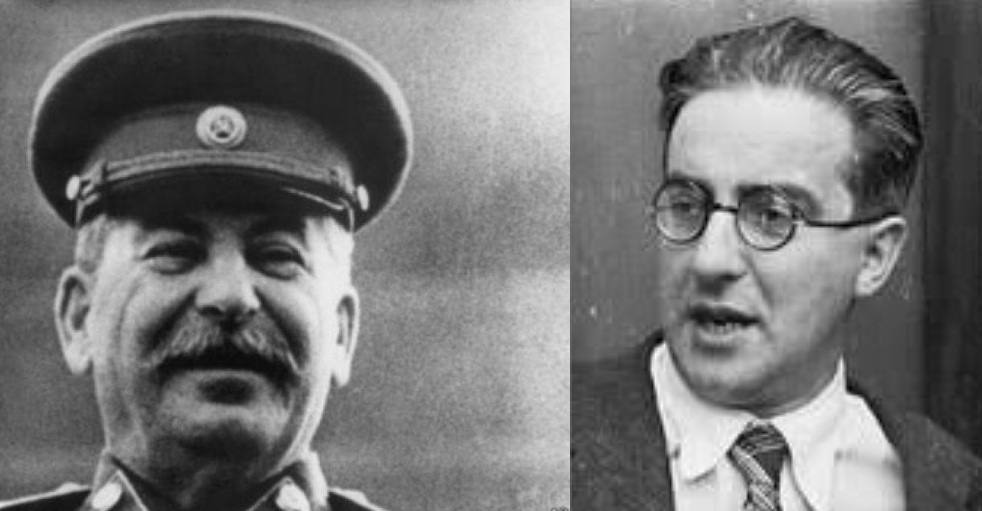
Comrade Iosif:
With every passing day I feel I understand Spanish politics better. You ask in your last letter who the men of the moment are.
My answer is that the republicans of Azaña do not amount to much. The Republic is today in the hands of Indalecio Prieto and Largo Caballero, two socialists who maintain that covert war for control of their party that does so much damage to the Republic.
I have investigated the reasons for the enmity, and I have been able to learn the following anecdote that comrade Pasionaria has told me.
Both of them forming part of the Government led by Azaña, a total crisis ensued. Alcalá-Zamora, then President of the Republic, tasked comrade Prieto with forming the Government on the condition of including Lerrouxist representatives.
According to comrade Pasionaria, comrade Prieto was willing. But Caballero opposed. He argued that it would not be possible to admit into the Government colleagues from Lerroux, head of the now vanished Radical Party. He deemed it a stain to have them in a Government led by a socialist. Lerroux was always attacked for his immorality, and he bore the stigma of defending the fascist banker Juan March.
The parliamentary minority followed Caballero, and comrade Prieto had to decline the powers. That struck him to the core. And thus an incident of little importance — a case of vanity — has served as a pretext to bring great harm to the Republic.
Since then, comrade Prieto has taken advantage of every opportunity to foster a rift that reached its climax last April, when Caballero blocked Prieto’s access to the Government.
The Prietoists do not stop spreading that Largo Caballero is the one responsible for not having formed the Government that could have prevented the war.
For his part, Caballero regards comrade Prieto as a boastful and envious man. I must say that he has not left a bad impression on me. I believe that his bourgeois bearing hides a usable intelligence, and that his attempt to strip a minority of Parliament of autonomy that showed its disagreements with him is understandable.
The Caballeristas have always fought for that independence, seeking to avoid being subordinated to the authority of the Executive Committee and the National Committee, where Prieto has loyal followers.
The war has put a pause on that internal struggle, given that Prieto accepts the presidency of Largo Caballero, and that this one grants him control of the Ministry of the Navy. But it is a precarious balance. The hostility persists, and at the slightest chance it will flare up again until they destroy each other. My opinion is that this internal struggle should be encouraged so that, once the enemies are discarded, the Spanish Communist Party can occupy power.
The current moments are favorable for the Communist Party, provided it plays its cards well, to take control of the Republic and extend Spain to our sphere of influence. This, at the moment of the anticipated confrontation with Germany, could be even decisive from a geopolitical standpoint…
(Letter intercepted by the Directorate General of Security)