
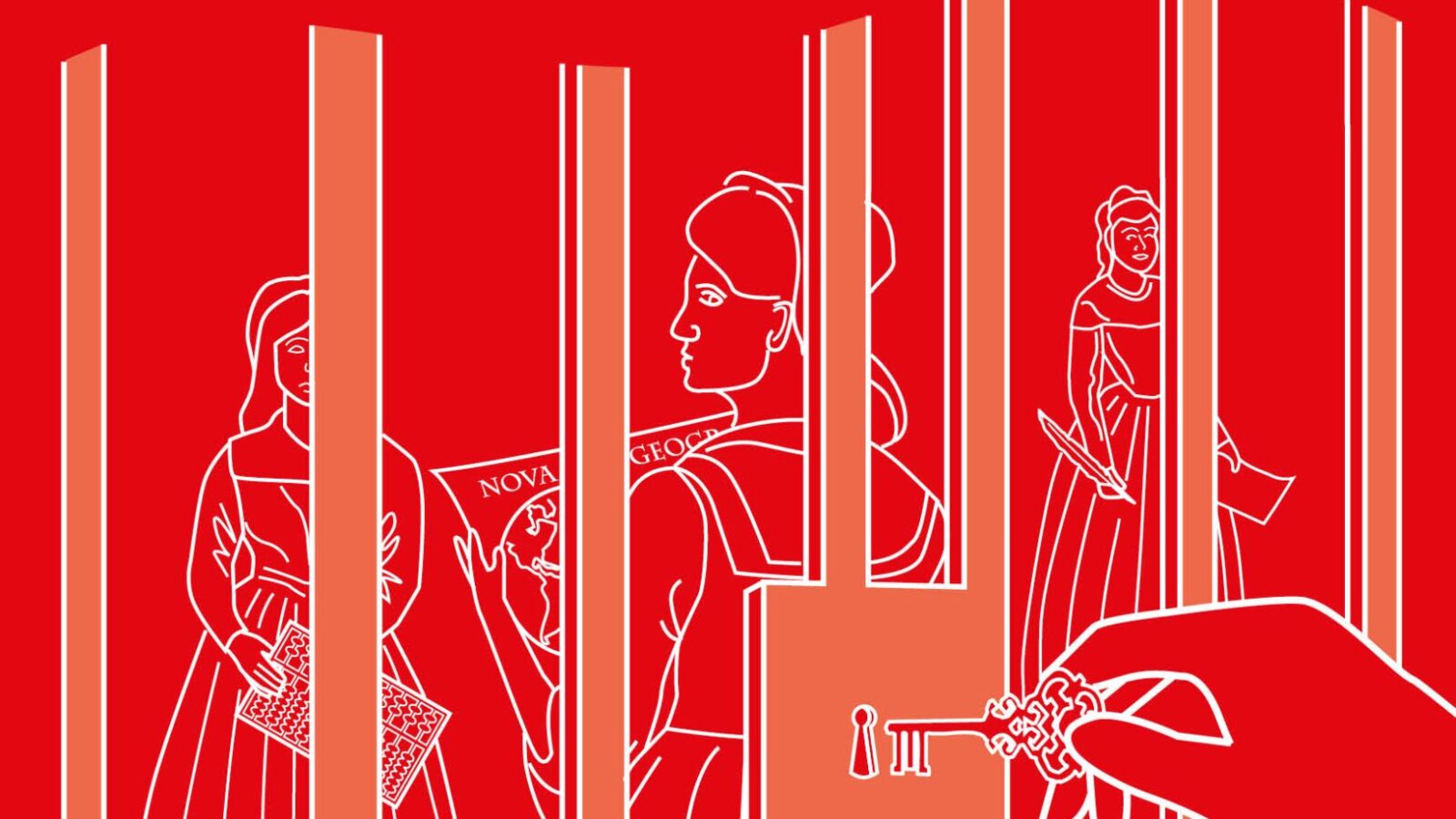
This book dismantles the narrative of a female history defined solely by submission. Through archival sources, it salvages the women who exercised their freedom in the Early Modern era. Their lives demonstrate that rights are never final and that social justice requires a constant struggle.
In this making of Laura Tinajero explains how she wrote Neither Domestic Workers Nor Domesticated (Akal).
***
Shortly after I began researching the historical archives of Seville, back in 2021, I realized that I did not merely want to focus on the topic of my Modern History doctoral thesis — the religious women before and after the Council of Trent — but I also started discovering other women, incredible cases that opened my eyes to historical reality. There was something off: I had studied something very different in school, high school, and later at university regarding what life was like for women in the Middle Ages and the Early Modern period.
I could have done as other researchers and focused only on the object of my thesis, that was what some colleagues and professors advised me. But how could I leave those girls and women there, in those dusty records, seen by many other historians who chose not to publish anything about them, who even stamped their signature “I am the gentleman who saw this,” but it stayed at seeing, not at recognizing or disseminating? I didn’t want to do that. So I spoke with my husband, who had helped me self-publish four novels and two short-story books, and we decided to do something with those women who would not fit into the thesis.
It was a long-term idea, perhaps when I finished the thesis, aiming for 2028, because I juggle three jobs, not counting books and other cultural activities, and life doesn’t give me time to finish a doctorate in three years. But in 2024 I received a call — which I initially thought was a joke — and it was Jesús Espino, editorial director of Ediciones Akal, asking me for a book about widows. I told him no, not only widows. “I have from girls to old women, from poor to rich.” And so began this wonderful journey and new excitement: for the first time, after so many years of writing, a publisher wanted to release one of my books. Self-publishing came to an end.
I rolled up my sleeves, transcribing all the documents I had, thousands, and compiling the bibliography. The first draft ran to about a thousand pages, but that was too much. In the second, seven hundred, still too long. Finally, when I was around four hundred pages in, I had to choose which stories to keep and which to sacrifice, trimming it to a little over 200 pages. The next step was to make the text fluent, accessible, entertaining, and understandable for all kinds of readers. Coming from the world of novels, that wasn’t a problem: I only had to find a way to transform all that data “in raw form” into an adventure, as I had done in my previous books. Why not a time travel?
The idea is not original, I know, but it is a mechanism that has allowed me to bring agility to the historical data and also involve the reader in the story, to make them part of it, to act as an anthropologist and examine what those girls, young women, and women of the past did, undid, and ceased to do with the tools they had. It has truly been a marvelous experience, especially regarding my relationship with Akal, with its excellent professionals and the exquisite way they have treated me over these two years, and the many more to come that I hope will be numerous. Now we could unlock the lock that had kept these women imprisoned in the archives. They will never be imprisoned again.
Now they will be free to be read by people outside archival historical research, perhaps with fewer biases, but at least giving them a chance rather than turning the page as if they never existed, something that was done to them. A second life on other shelves, but not in a dusty file, rather in the homes of many people. It has been a pleasure to act as an intermediary between what a notary noted about them, what they themselves wrote in some cases, and the people who will discover them in the strictest sense because for many years they were kept in oblivion, misogyny, and the biases of historians who failed to value what was before their eyes. They missed out. We will now enjoy it. For them, for the true history of women.
—————————————
Author: Laura Tinajero. Title: Neither Domestic Workers Nor Domesticated. Publisher: Akal. Sales: All Your Books.