

The lawyer and writer Marta Borraz, the latest Tusquets Prize winner for Las leopardas, has told us that it took her thirty years to be able to write the story of her aunt Paloma, the woman who inspires the novel’s main character and through whom she pays homage to the first women who, after the dictatorship, wanted to begin living freely.
Her aunt, who died of HIV, inspires the character of Clara in the book, a “luminous” woman who escaped the drama during a life that ended far too soon, just as she was beginning to live, she has recalled.
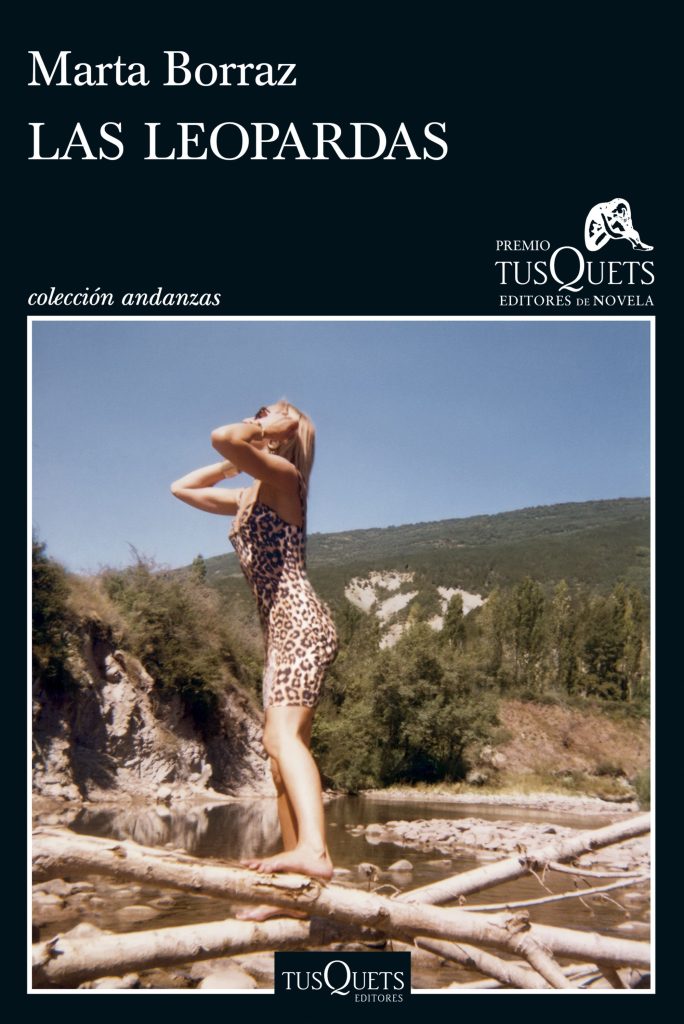
In fact, the cover features a real photograph of Paloma, playing by the river, barefoot and dressed in animal print. An image far from the illness that, as the author has explained, reflects her spirit.
“When I saw this photo I was clear that it had to be the cover. She’s by the river, in the Aragonese Pyrenees. And that’s how she looked. Free, beautiful and sensual. It was taken in 1990. She was already ill then, but you can’t tell. She’s enjoying a summer day,” she explained while looking at a copy of Las leopardas.
The protagonist also represents “those women who lived through the whole transition, who were caught in 75 at the moment they were leaving, going to university. Women who began to be able to explore outside the home and, certainly, who had more freedom than their mothers,” she said.

Efe / Marta Pérez
The novel also brings into focus heterosexual women who contracted the disease, a group hardly discussed in literature. “Normally it’s linked to gay men or to women who used heroin or had a partner who did. But she was a heterosexual woman who did not use drugs, who hardly went out, and who wasn’t particularly promiscuous.”
The writer, who like other nephews also did rounds at the hospital until she passed away, recalls that her illness was initially experienced with “naturalness” but that the stigma came later. “When she died we understood and began to grasp everything it had involved.” In that sense, she emphasizes that HIV is “a disease that places a lot of blame on the patient.” She had to cope with that blame when she felt she had not done anything wrong, that she had simply lived her freely chosen desires. She was very brave in facing her illness and in how she dealt with it within the family, which was a safe place where she could not be judged. It was more complicated outside the doors.
And other women who shared the same experience were also key. Those “leopardas” of the title. “The sisterhood among these women was very important. They called each other, listened to each other… They created a sisterhood and stood by one another in a very hard moment. They were the only ones who knew how the others felt,” she added.
Borraz also recalls that her aunt, before dying, did a great deal of education with her and her sisters about the importance of protecting oneself sexually “and thinking ahead. Her story conditioned me a lot when it came to living my personal relationships.” Despite the sadness of the tale, Borraz has wanted the book to be “a celebration” and to portray Clara as “vital and funny” because that is how she remembers her aunt. “It is the image we, the nieces and nephews, always recall. We don’t remember her as ill, but as someone who joked and organized Christmas performances at home for the whole family.”
Borraz, who ended up writing despite the fact that Zaragoza’s lack of a Faculty of Journalism led her to choose Law, notes that laws in a sense also “made” her a writer. A mediator as well as a lawyer, she notes that in her everyday life she encounters an “infinity of stories.” Her next novel is not yet decided, but she suggests that it will likely take place in her homeland, Aragón. Although, with a laugh, she makes clear that this time she will leave her family in peace.
————————
Source: Lara Malvesí (Efe)