
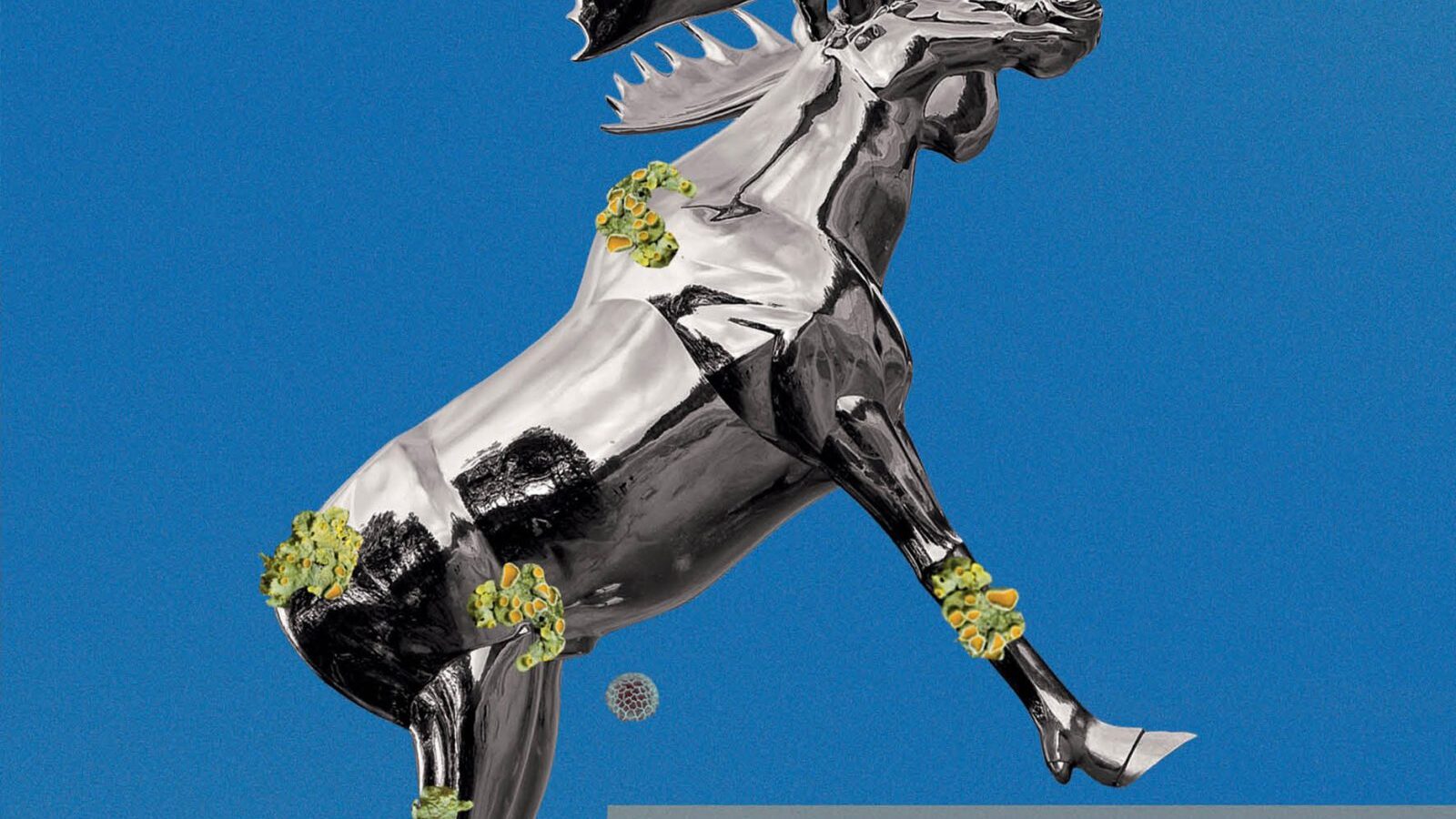
In these tales humans think themselves to be the protagonists, until the intrusion of animals dissolves the boundaries of species. Through this kind of humanimality, the author makes shine with strangeness and poetry the nuances of fear, tenderness, beauty, and misery. Because, ultimately, her writing confronts us with an uncomfortable truth: deep down we harbor a terrible fear of being animals.
In this making of Claudia Ulloa Donoso explains how she wrote The Terrible Fear of Being an Animal (Páginas de Espuma).
***
I remember not being clear about the beginning of the book, but the ending I did have clear. That is very similar to my process of writing a short story: when I have the ending, I feel that much of the process is already solved.
The ending of the book was a matter as pragmatic and as strictly meaningful as setting a manuscript submission date. So I started by telling myself the manuscript would have to be ready in December, so that I could present it to a contest.
For several months I reviewed many of the texts I had archived on my computer. Some of them I had written ten years ago or more. I also reviewed the more recent ones. I always prefer to use the word “text” rather than pigeonhole what I have written into a genre.
I came across many texts of all kinds: many beginnings, confusing endings, notes in disarray, writings that escaped narrative and went into poetry, and among all that, a couple of pieces clearly struck me as two unfinished stories: Yellow and Julio Leima and His Beastly Sound.
Rewriting and finishing those stories took me a few months. As much as possible, I try to write the entire story from start to finish, in one go; but when this task is very demanding, due to time constraints or also due to physical effort, I tend to leave notes of ideas so that the story won’t slip away and I can resume writing: the sooner, the better.
I knew I had started those two stories with a final in mind, but for some reason I had left them unfinished. The ending or the ideas that could lead me to write the ending had not been recorded anywhere.
I flipped through notebooks (I also write by hand) and found some sketches related to these stories, but especially linked to the beginning, yet no concrete ending. How was I going to reach those endings? Sometimes, in conversations with friends, I would throw out a question related to the stories: what would you do if you found a rat in your bathroom? Although I didn’t extract any idea to write from those conversations, I think talking about the themes of the stories helped me—unconsciously—to not abandon them, to keep them in mind as something to resolve.
Before sleep, I would reread in bed those incomplete tales and try to remember what had led me to write them, how those endings would be and where they would be. Some clues appeared, but were very hazy. I tried, at times, to have a lucid dream that would help me finish these stories. I didn’t manage it, but I did dream of the title of one of the stories: Yellow. That was progress because I find it hard to come up with titles and I usually save that for the end of everything. A title is a signal and a probing tool.
During those nights when I waited for the end of the stories to arrive in dreams or as an epiphany while brushing my teeth, I wrote, in one go, The Genesis of Ugla. From this tale, where there is a cat who is a deity, who inspires gospels and reads poetry, I arrived at the book’s title, which is a line from César Vallejo in his Human Poems: I have a terrible fear of being an animal / of white snow, which sustained father / and mother, with its sole venous circulation.
I already had the book’s title, two stories on track, and a newly finished tale in one go. That gave me the confidence to keep writing and finish the book.
Among all those texts I reviewed, I found loose notes written by hand; they had dates and were part of notes that mixed my diary with “story ideas.” Remembering the circumstances of those ideas led me back to autumn 2015, when a neighbor gave me moose meat that she herself had hunted. I found those notes in autumn 2025, moose-hunting season. Ten years later I started shaping those loose ideas, data, and impressions I had jotted down in a notebook. I read everything I could about moose, watched documentary series, and thus the tale Stop Moose arrived.
The story Iris/eye/fungus was already almost ready and Ice for Martians is a tale that was not part of the initial manuscript but was added during the editing process of the book.
The writing routine, reading, walking or taking the train, caffeine, and taking notes are parts of my writing process, but I also have a space for magical thinking. I seek it in dreams, in music, in loose words or objects that cross my path. It’s an illusion, but precisely because of that it works for me in writing fiction. I have to keep the faith. Believing that the ending of a story will come to me in a dream is already me writing it.
—————————————
Author: Claudia Ulloa Donoso. Title: The Terrible Fear of Being an Animal. Publisher: Páginas de Espuma. For sale: All Your Books.