
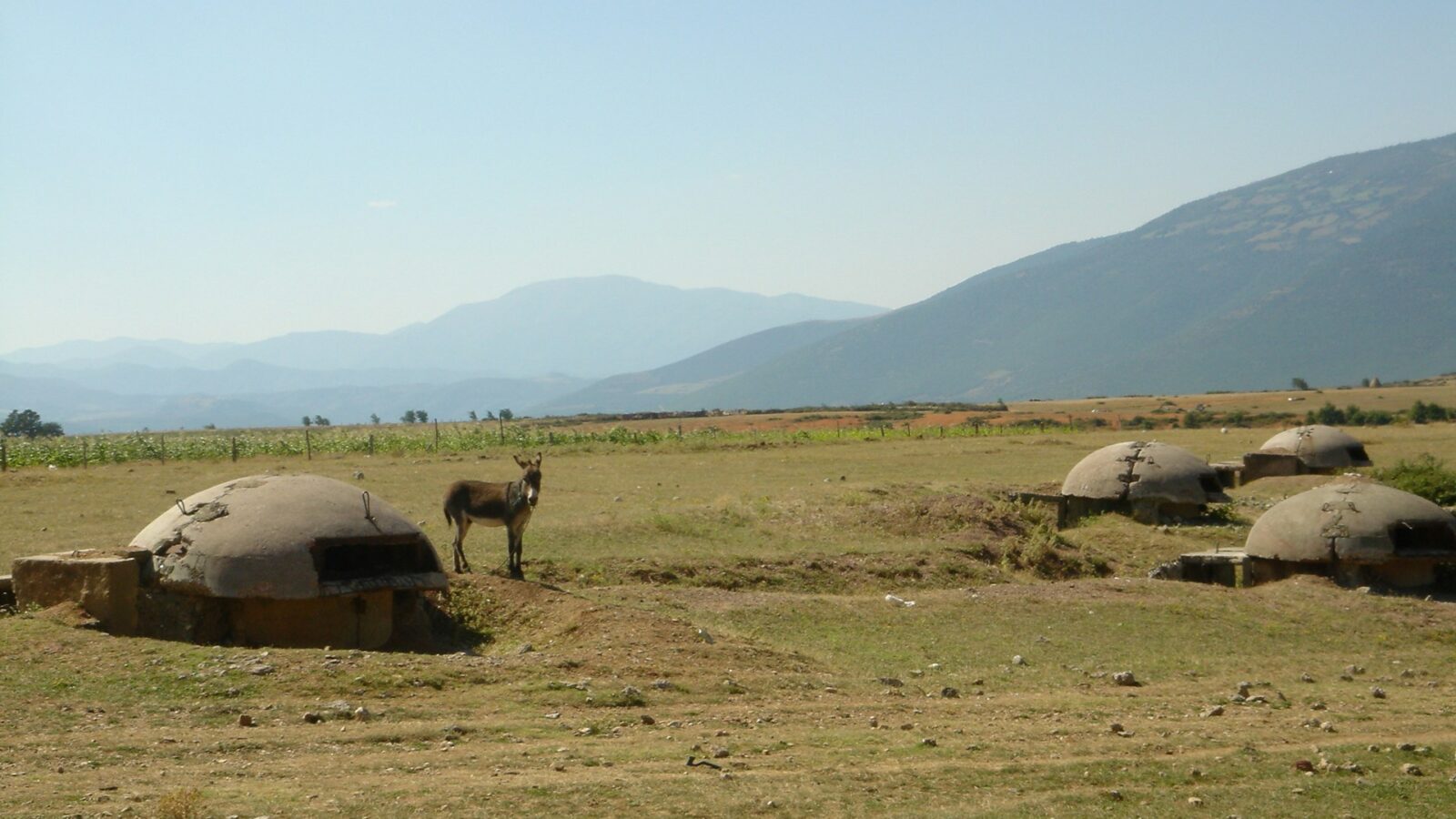
Enver Hoxha suspected that everyone envied the paradise he had built in Albania, that country of undernourished, repressed, spied-on people, condemned to years of imprisonment, torture, and forced labor for saying that Yugoslav bicycles were better than Albanian ones, that country that boasted of preserving communist ideals against capitalist imperialism and against Soviet and Chinese revisionism. To protect himself, Hoxha scattered Albania with thousands of mushroom-shaped bunkers, which can still be seen on beaches, in the mountains, and in cities. After three or four days, it is unlikely that a visitor would exclaim in surprise: “Oh, look, another bunker!”.
The concrete mushrooms sprout from a sinister underbelly. The neighbors of Gjirokastra, a charming Ottoman town, discovered in 1991 that beneath the castle and the winding lanes of the bazaar lay an eight-hundred-meter anti-nuclear shelter with rooms for two hundred members of the Party. From the Greek temples of Apollonia you can see the galleries that housed tanks in the mountains; in the Porto Palermo Bay lies the mouth of a tunnel where submarines sheltered; and in the very center of Tirana we visited the headquarters of the former secret police and another anti-nuclear shelter in which the tyrant’s crimes are now displayed, stark and documented. Upon stepping into the courtyard, a panel reminds that after the dictatorship there were never trials, and that is why they display photos of the top officials. To expose them, at least, to the light.