
A possible spy of the French crown. A court lady who disguised herself as a dancing bear to glimpse her beloved. A scholarly figure pivotal to French cultural life. A woman who dressed as a man to escape prison. A countess nearly erased from history who promoted culture with her own literary salon. The first author of Beauty and the Beast. A governess who saved herself from financial ruin and found her own happy ending.
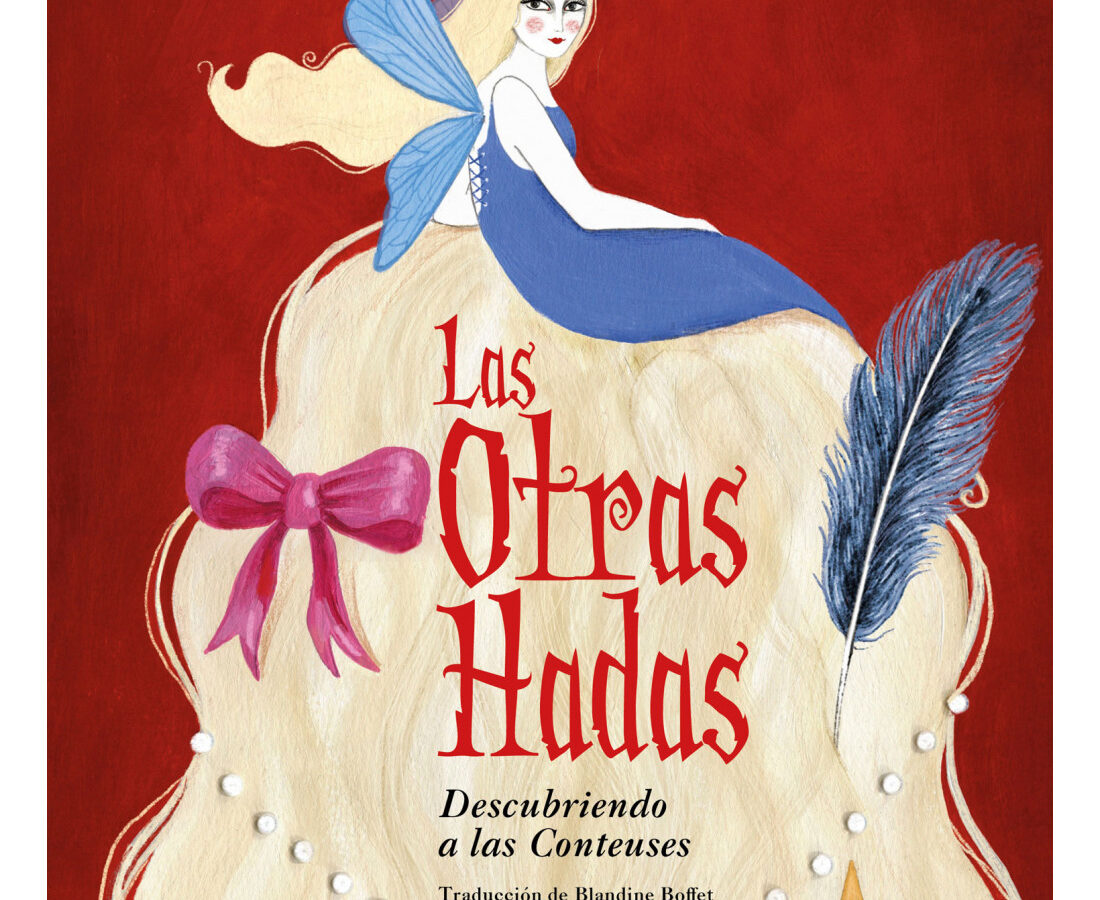
The Other Fairies,
a compilation put together by
Gemma Solsona
and illustrated by
Marta Ponce
, speaks of the
conteuses, women who, like the characters in their tales, were saviors, disruptors, true to themselves, wise and, surely, a little cruel in order to reclaim at least a portion of what the world owed them. Because, if one thing becomes clear upon reading their brief biographies, it is that society was not fair to them, neither in life nor after death.
Some were condemned to oblivion, to that famous “anonymous was a woman” of Virginia Woolf; others had their tales stolen, only to appear in collections of stories by writers such as Hans Christian Andersen. Now, the conteuses are gradually returning to the place history took from them, and their voices, across the centuries, converse with the concerns of the twenty-first century.
The lives of Madame d’Aulnoy, Mademoiselle de la Force, Marie-Jeanne l’Hertier de Villandon and the other conteuses gathered in this work can easily be turned into tales filled with monsters that, even if they lack scales or fangs, are just as threatening. Abusive husbands, imprisoning families, treacherous and deceitful men—that is the cast these women faced and, at times, defeated.
All the collected tales are testimonies of their concerns and their own experiences, only transported to a fantasy world where they entertain, astonish and, with a little luck, influence reality through fairy stories.
When hearing the term “fairy tales,” we might think of more stories in which these fairies never appear than stories where they do; but for the conteuses, they were almost indispensable figures. The fairies act “above good and evil in a male-dominated society,” almost like pagan goddesses, free to bless or curse according to their own desires. They are a powerful female figure, capable of changing the destiny of humans at will, hence the conteuses are also known as “the modern fairies.”
Of course these fairies do not always support their protagonists, but the important thing about their role is not that, but that they are able to compel the will of men. In this collection, a fairy condemns a princess to an unhappy future; or she saves her to reunite with her beloved. Other times she grants all the wishes to her protegée without knowing what destiny it will lead to; or she tests the love of some lovers only to discover that she has actually benefited an entire kingdom.
All these acts, these adventures and misadventures, reveal the concerns, and even the stories, of the conteuses. In The White Cat, parents are urged to protect their children and not hand them over easily; in Marmoisan or the Innocent Deceit gender roles are blurred; in Green and Blue the struggle is for a woman to freely choose her husband.
Everything stems from families that did not care for them as they should have, families that tore away their loved ones, husbands who nearly dragged them into poverty, and a long list of injustices that left wounds which these tales mended. Reading them means not only entertaining oneself or recalling a childhood dominated by fantasy, but also engaging in dialogue with intelligent, critical, and combative women. Their morals, or rather the messages they aim to convey through their narratives, are not about indoctrination: they are about revolutionizing thought.
“Your parents must take care of you.” “You must be able to choose freely.” “You deserve fidelity.”
The Other Fairies are stories that shout so that no other woman is forced to navigate obstacles that threaten her free will. The conteuses are storytellers who remind us that there is no stepping back, that one must always fight, whether with stories, or with dancing bear costumes, or as unruly fairies.
—————————————
Author: Gemma Solsona and Marta Ponce. Title: The Other Fairies. Translator: Blandine Boffet. Publisher: Apache. Sales: Todos tus libros.