
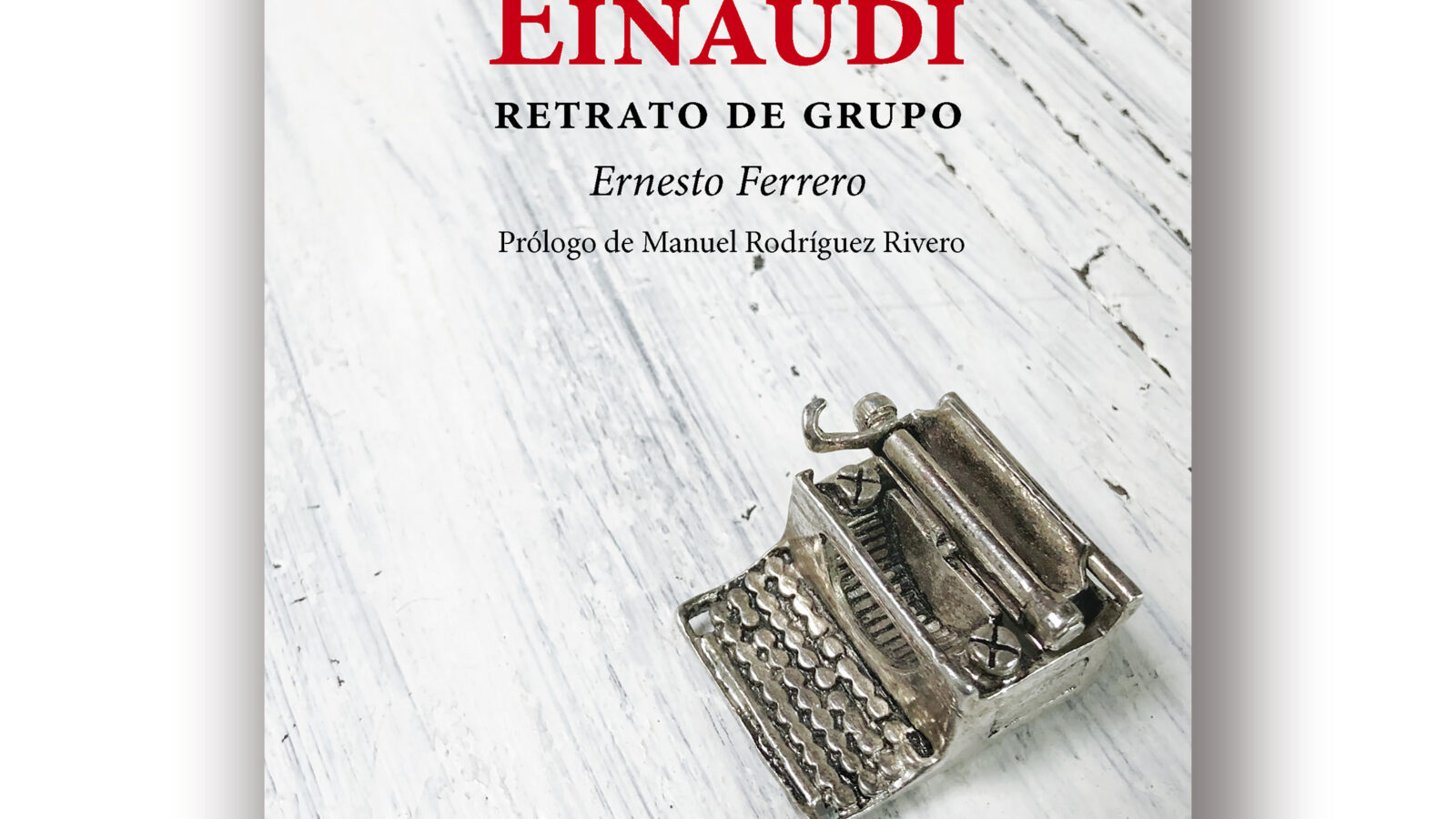
The true luck of a writer, the possibilities for their writing to unfold, does not lie in literary prizes, nor in the game of false notoriety played in the media, but in finding an editor who believes in their writing, in the value of their incipient work, even when others fail to perceive it. The paths of art are random, but the magic emanating from books does not arise solely at the writer’s desk, from their creative capacity, but their pages are revitalized and clarified during the editing process.
El mundo editorial, la industria del libro, ha cambiado mucho —y no solo en Italia— desde los años treinta del siglo pasado, cuando comenzó a extenderse desde Turín, Roma y Milán el sello del avestruz, la editorial
Einaudi
, dirigida por el intuitivo
Giulio Einaudi
, con algunas de las ediciones que marcarían el rumbo cultural de buena parte de Europa. Basta citar, a modo de ejemplo, algunos de los libros publicados en 1963:
El aprendizaje del dolor, de Gadda;
La jornada de un escrutador, de Calvino;
El consejo de Egipto, de Sciascia;
El chal andaluz, de Elsa Morante;
Léxico familiar, de Natalia Ginzburg;
Memorias de Adriano, de Marguerite Yourcenar; y
La historia de la República de Saló, de Deakin.
The publishing world, the book industry, has changed a lot — and not only in Italy — since the 1930s, when from Turin, Rome and Milan the ostrich imprint began to spread, the Einaudi publishing house, led by the intuitive Giulio Einaudi, with some of the editions that would set the cultural course for a large part of Europe. To cite, as an example, a few of the books published in 1963: The Learning of Pain, by Gadda; The Day of a Scrutineer, by Calvino; The Egyptian Counsel, by Sciascia; The Andalusian Shawl, by Elsa Morante; Family Lexicon, by Natalia Ginzburg; Memoirs of Hadrian, by Marguerite Yourcenar; and The History of the Salò Republic, by Deakin.
Hoy en día las empresas editoriales se pierden en sus organigramas y departamentos, muchas veces dirigidas por profesionales que tienen un contacto bastante epidérmico con el mundo cultural, y cuya función se centra sobre todo en rentabilizar cada producto —ya no libro— editorial. Es por ello que ahora los autores buscan el amparo de un agente literario para gestionar sus relaciones con las empresas editoriales y sortear sus cercos restrictivos de selección.
The publishing world, the book industry, has changed a lot — and not only in Italy — since the 1930s, when from Turin, Rome and Milan the ostrich imprint began to spread, the Einaudi publishing house, led by the intuitive Giulio Einaudi, with some of the editions that would set the cultural course for a large part of Europe. To cite, as an example, a few of the books published in 1963: The Learning of Pain, by Gadda; The Day of a Scrutineer, by Calvino; The Egyptian Counsel, by Sciascia; The Andalusian Shawl, by Elsa Morante; Family Lexicon, by Natalia Ginzburg; Memoirs of Hadrian, by Marguerite Yourcenar; and The History of the Salò Republic, by Deakin.
But the relationship between the editor and the writer remains the ideal, and the most idealized by any writer, always in need of stimulus and support. In fact, a curious relationship arises that perhaps persists in the smaller publishing houses, and it is that many writers end up earning their living working for a publisher, enriching with their knowledge the cultural dimension of their project: “the civil passion for changing the world” (25). This is the case with Einaudi. One only needs to look at the long list of those who would later become major names in Italian and European literature — Cesare Pavese, Italo Calvino, Primo Levi, etc. — who formed a human group that with the passing of time continues to astonish us and make us understand the hidden magic that certain books sometimes emanate.
That is why the portrait Ernesto Ferrero draws of Italo Calvino is so moving, who elevated to the category of literary genre, as only Jorge Luis Borges could do with forewords, the humble jackets and back covers of books. A genre in which Calvino always stood out, until becoming an unrivaled master, which surely led him to consolidate his narrative poetics, later gathered in his Six Memos for the Next Millennium.
There are many anecdotes about Calvino that season Ferrero’s text, as he is one of the most recurring figures in his evocation of The Einaudi Tribe; but perhaps one of the most significant, and best reflecting Calvino’s personality, is found in the explicit chapter titled “I Recognized Him by His Silence”, where he recounts his meeting in Seville with Borges:
“Jorge Luis Borges, blind for some time, is gathered in a city hotel with a few friends. Chiquita chats politely with her compatriot, Italo, who, as always, keeps to one side. So much so that she deems it apt to warn: Borges, Italo is here as well…”.
Leaning on his cane, Borges raises his chin and says without flinching: “I recognized him by his silence” (64).
Another one of the more emotional and personal approaches in Ferrero’s successive portraits —little sketches— that he dedicates to the historic members of the Einaudi tribe is the one he gives to Primo Levi, the Turin chemist whose manuscript of The Truce he read with the conviction that he was in front of the work of a great writer: “Even a shopkeeper’s apprentice could see that the book, still in loose pages, had the timbre and the substance of a ‘classic’.” If years earlier Pavese, or perhaps Natalia, had returned to him, with the courtesy typical of publishing houses, the manuscript of If This Is a Man.
Primo Levi never left the concentration camp of his depression, to which he returned with increasingly alarming relapses, worsened by his mother’s paralyzing illness: “He spent hours in front of the computer, not writing, or with his mother, who called him and wanted him permanently by her side. He waited for night, the release of sleep. To many he repeated: ‘It’s worse than Auschwitz.’”
La editorial Einaudi tuvo grandes aciertos, pero también notables errores de percepción. Por ejemplo, desechó El Gatopardo, Doctor Zhivago y El tambor de hojalata. Entre sus damnificados se encuentran también autores tan emblemáticos del sello del avestruz como el propio Italo Calvino, a quien rechazaron su primer libro de cuentos, Pazzo io o pazzi gli altri, o el citado Primo Levi, del que Ferrero señala que durante años «fueron pocos lo que entendieron que el prisionero que había salido desde Fossoli en uno de aquellos trenes [que conducían a Auschwitz] era, más que un químico, un escritor».
Einaudi had great successes, but also notable misperceptions. For example, it discarded The Leopard, Doctor Zhivago, and The Tin Drum. Among its casualties are also emblematic authors of the ostrich imprint such as Italo Calvino himself, whom they rejected for his first short-story book, Pazzo io o pazzi gli altri, or Primo Levi, whom Ferrero notes that for years “few understood that the prisoner who had left Fossoli on one of those trains [that led to Auschwitz] was, more than a chemist, a writer.”
Primo Levi nunca salió del campo de concentración de su depresión, a cuya celda regresaba con recaídas cada vez más alarmantes, agravadas por la paralizante enfermedad de su madre: «Pasaba horas delante del ordenador, sin escribir, o con la madre, que lo llamaba y lo quería permanentemente a su lado. Esperaba la noche, la liberación del sueño. A muchos les repetía: “Es peor que en Auschwitz”».
Primo Levi never left the concentration camp of his depression, to which he returned with increasingly alarming relapses, worsened by his mother’s paralyzing illness: “He spent hours in front of the computer, not writing, or with his mother, who called him and wanted him permanently by her side. He waited for night, the release of sleep. To many he would repeat: ‘It’s worse than Auschwitz.'”
Son muchas las semblanzas de escritores y colaboradores que Ferrero realiza con técnica de miniaturista. Algunas, a través de breves rasgos expresionistas, no dejan de sorprender. Entre ellas, las evocaciones de Cesare Pavese, cuya sombra no dejó de pesar sobre toda la editorial y, especialmente, sobre el despacho que daba a la oficina de Re Umberto, donde durante diez años trabajó Ferrero. No en vano, Pavese había sentado las bases de la editorial: «su mentalidad y ese estilo áspero, arisco y ávaro de palabras».
Many are the sketches of writers and collaborators that Ferrero composes with the miniature-painter’s touch. Some, through brief expressionist strokes, continue to surprise. Among them, the evocations of Cesare Pavese, whose shadow weighed on the entire publishing house and, especially, on the office that fed into the Re Umberto office, where Ferrero worked for ten years. No accident: Pavese had laid the foundations of the publishing house: “his mindset and that harsh, prickly, stingy style of words.”
O el retrato más pintoresco que hace de Guido Ceronetti, del que señala que, al pasar, «dejaba un olor ácido, como a sopa de verdura». O el más convencional de Elsa Morante, cuya verdadera familia, según Ferrero, eran sus lectores: «sobre todo los más jóvenes».
Or the most picturesque portrait he offers of Guido Ceronetti, whom he notes, passing by, “left an acidic odor, like vegetable soup.” Or the more conventional portrait of Elsa Morante, whose true family, Ferrero says, were her readers: “especially the younger ones.”
Many are the stories and the books, the meetings and the encounters that Ferrero interweaves into orderly chapters with which he tries to reorder his simultaneous memory.
Pero quizá el más rocambolesco, el más propio de un relato policiaco, sea el esbozo que hace de Malcolm Skey, quien arrastraba un halo de misterio, ya que dejaba entrever que trabajaba para los servicios de inteligencia ingleses. Políglota, tenía una gran facilidad para aprender idiomas: le bastaron quince días para familiarizarse con el húngaro y el polaco. Era capaz de viajar a París por una fruslería, maniático de la limpieza —«Nunca le parecía haberse duchado lo suficiente»—, estaba también aquejado de una dromomanía que le hacía conocer los horarios de todos los trenes y aviones del país, así como sus tarifas. El «agente especial Malcolm Skey» simulaba una vida de novela y así murió, como un personaje de novela negra.
Perhaps the most rocambolesque, the most reminiscent of a detective story, is the sketch Ferrero makes of Malcolm Skey, who carried an air of mystery, since it hinted he worked for the British intelligence services. A polyglot, he had a great facility for learning languages: it took him just fifteen days to become familiar with Hungarian and Polish. He could travel to Paris for a trifling matter, a stickler for cleanliness—“He never seemed to have showered enough”—, he was also afflicted with a travel-mania that made him know the schedules of all trains and planes in the country, as well as their fares. The ‘Special Agent Malcolm Skey’ staged a novel-like life and died as a noir figure.
En fin, son muchas las historias y los libros, las reuniones y los encuentros que Ferrero entrevera en ordenados capítulos con los que trata de reordenar su memoria simultánea. Curiosa para los españoles es la mención que se hace —y que Ferrero pone en labios de Italo Calvino— de Camilo José Cela: «Este Camilo José Cela quiere que lo traten como a un Dios Todopoderoso. Vaya aires se da. Es una de las personas más vacías e insoportables de la literatura internacional»; así como la más encomiable de Carlos Barral como editor europeo y de José María Castellet como crítico literario, tras el traslado del Prix International de Littérature de la isla de Formentera a la isla de Corfú, debido a que el régimen había negado la entrada a Giulio Einaudi por ser responsable «de una publicación antifranquista de cantos populares».
Again, many stories and books, meetings and encounters that Ferrero interweaves into organized chapters with which he tries to reorder his simultaneous memory. Curious for Spaniards is the mention he makes —and which Ferrero places in the mouth of Italo Calvino— of Camilo José Cela: “This Camilo José Cela wants to be treated as a God Almighty. What airs he gives himself. He is one of the emptiest and most unbearable persons in international literature”; as well as the most commendable of Carlos Barral as European editor and of José María Castellet as literary critic, after the relocation of the Prix International de Littérature from the island of Formentera to the island of Corfu, because the regime had denied Giulio Einaudi entry for being “responsible for an anti-Franco publication of folk chants.”
La descripción que Ferrero hace de los dos letraheridos españoles es paradigmática de su estilo:
«The Catalan José María Castellet, a mystical, elongated figure of the preaching saint, of the missionary, who seemed painted by El Greco; and the editor Carlos Barral, bearded, electric, with a voice roughened by smoke, elegant as a Parisian painter contemporary of Toulouse-Lautrec, a well-born anarchist and happy to call himself a revolutionary, to fight against Franco and to be on the right side. Years later, in Frankfurt, I would envy him a wonderful black cape lined with red satin that moved with the same muscular grace as a bullfighter handling his cape. He left when he was still young. I hope he died thus, with the hope that renewal was just around the corner, that good books would soon change Spain and the world, because only elegant actions can truly do it».
Pero, al margen de este rico imaginario cultural europeo, Ernesto Ferrero también señala algunas de las claves que caracterizaron la filosofía del sello del avestruz, cuya resistencia y oposición al fascismo marcan no solo su génesis editorial —«Pavese desterrado, Mila y Foa en la cárcel, Leone Ginzburg torturado hasta la muerte en la prisión de Regina Coeli, Giaime Pintor reventado por una mina»—, desde la ética del trabajo, sino también su proyecto humanista, transformador de la realidad. En la editorial, en la que cada uno parecía campar con absoluta libertad, había un binario sistema decantador: los libros del sí y los libros del no. Para Giulio Einaudi:
«The first are the ones that change you from within, that transform your perception of the world: they are the necessary books. The second are the ones that live only a few weeks, the ones that are dumped in large quantities to meet the worst tastes of the market».
For that reason it is important to be clear that “editorial work is done, above all, with the ‘no’s.” While Giulio Einaudi always possessed the intelligence, a strategy frequently followed by European publishing houses, to publish:
«each year a number, even if small, of books with which he knows he will lose money. Let us say five books out of a hundred. Books with a high cultural and scientific value that serve to cast a halo of prestige over the rest of the production, even over the darkest and most miserably commercial».
Ernesto Ferrero offers a fairly critical portrayal of Giulio Einaudi, describing him as a rather superficial and frivolous person, fascinated by perpetual novelty and even somewhat unread, who only seems to humanize himself when he loses his plenipotentiary powers as Einaudi falls under the editorial empire of the enemy Mondadori. The portrait, apart from a certain admiration for the Editor figure, has a bit of settling scores, especially when contrasted with the austere and substantial figure of the other Giulio: Bollati.
—————————————
Author: Ernesto Ferrero. Title: The Einaudi Tribe. Translation: Chiara Giordano and Javier Echalecu. Publisher: Trama. Sales: All Your Books.