
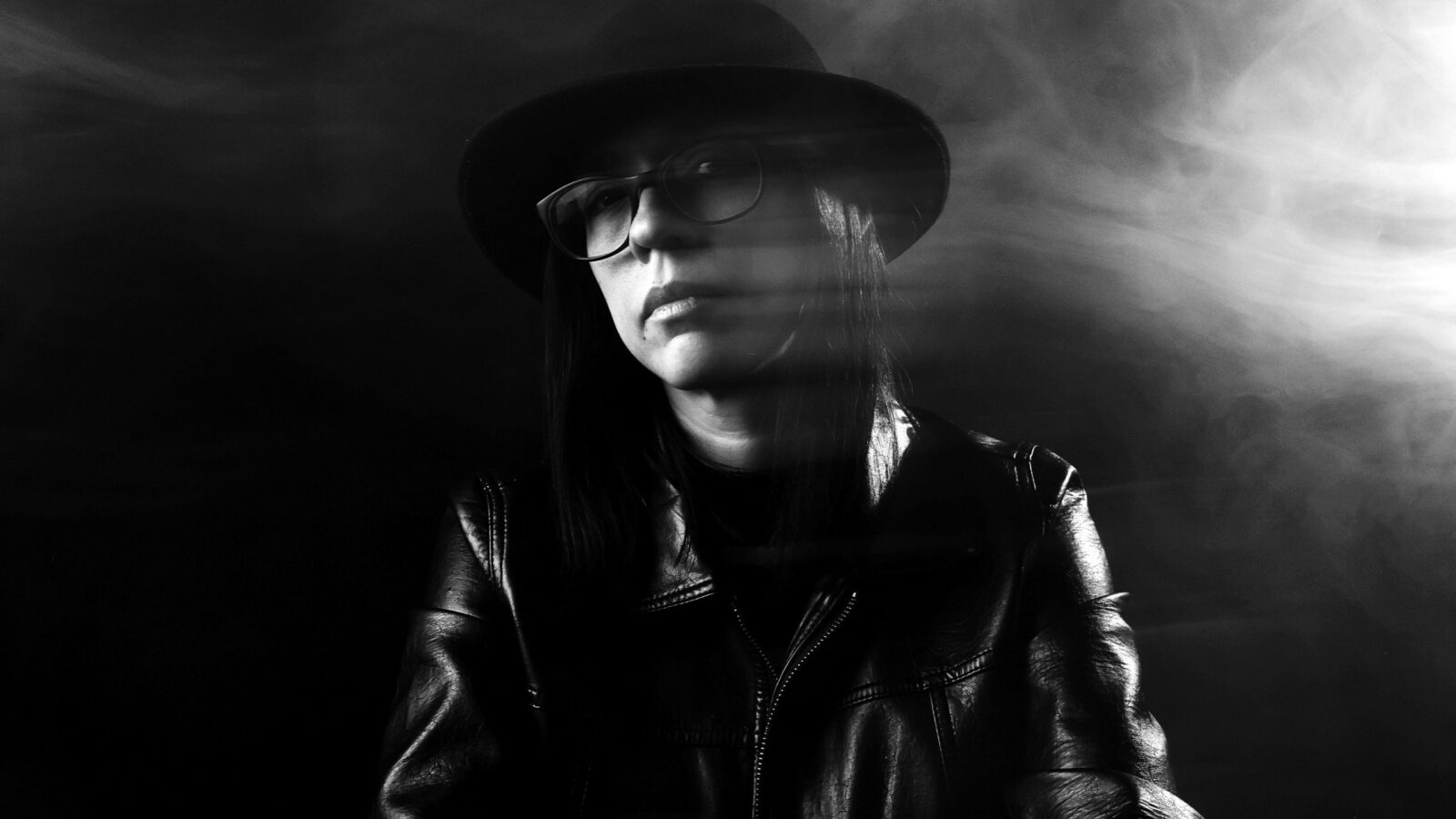
Cover: Gabriela Vargas Aguirre. Photo by Flo Luna.
This Friday, within the section Not All Who Are Here, we present the first list of five contemporary poets from the coast of Ecuador that complements the publication from a few weeks ago of five great poets from the same country. Come in and read. These are the ones who are here this week, and the ones who aren’t, will come later.
***
MARÍA AUXILIADORA BALLADARES
Guayaquil
If we leave El Coleccionista, hand in hand, we stroll along Loja, hand in hand, and cars pass by and the faces of men pass and the pigeons poop and the children bark,
if we keep walking, we ascend the elevated crossing, they shout at us with a doppler effect: “crazy women and lesbians,” we circle the cemetery and with the other hand, the one you don’t hold, I greet my grandmothers cheerfully
Vicenta and Clara,
if we keep walking, hand in hand, your body nears mine and you kiss my neck because we move quickly and I can’t slip my tongue between your lips,
if we keep walking, hand in hand, we see Solca, you lower your head, I lower mine as well, but I smile at you so that you smile and I swallow three white butterflies with a sigh,
if we keep walking, we reach the airport, I raise a fence with the brutal strength of butterflies, we step onto the runway and begin to dance because from the loudspeaker of a fire truck Bowie’s “Let’s Dance” plays, if we keep dancing and keep dancing and keep dancing, you in your red shoes and me in my striped blouse, one plane stops and then another and another and another,
suddenly, when the cops threaten us with their pistols and bullets, we become paper people lifted by the wind, my hand can no longer hold you, and I look with new eyes as you drift away, as the wind that saved us now carries you away and drops you into the river and you get soaked and disintegrate, if I keep flying, I insert myself into a cloud
and I make it cry and the city gets wet and falls apart,
what is the point of Guayaquil, if its river swallowed you, what is the point of Guayaquil
***
ROXANA LANDÍVAR
Sunday
You pick lemons while the afternoon falls warm and sterile
I mention the golden light
you answer yes, the golden light of the afternoon
I suddenly feel we become a couple of old people
sitting on the porch of their house in the suburbs
I don’t tell you
You bring a chair, you climb and strike the branches with a
stick; the lemons resist falling
you drive in a thorn
The drop of blood is a small tear
swallowed by the earth
at last you reach one, you fling it to me
I catch it; it looks rotten, yellow, deformed
I think they must be green
I won’t tell you
we notice the premature death of a
tree; it has not a single leaf left
I ask if it’s dead
you answer yes, it’s dead
the afternoon grows warm and the river runs fast
circling our small cabin in the middle of the
nothing
the wind blows hard; you offer me shelter
I accept it as I watch the last
rays of sun strike our dry lawn
I wonder if I’ll be the only one
who doesn’t take care of anything too much
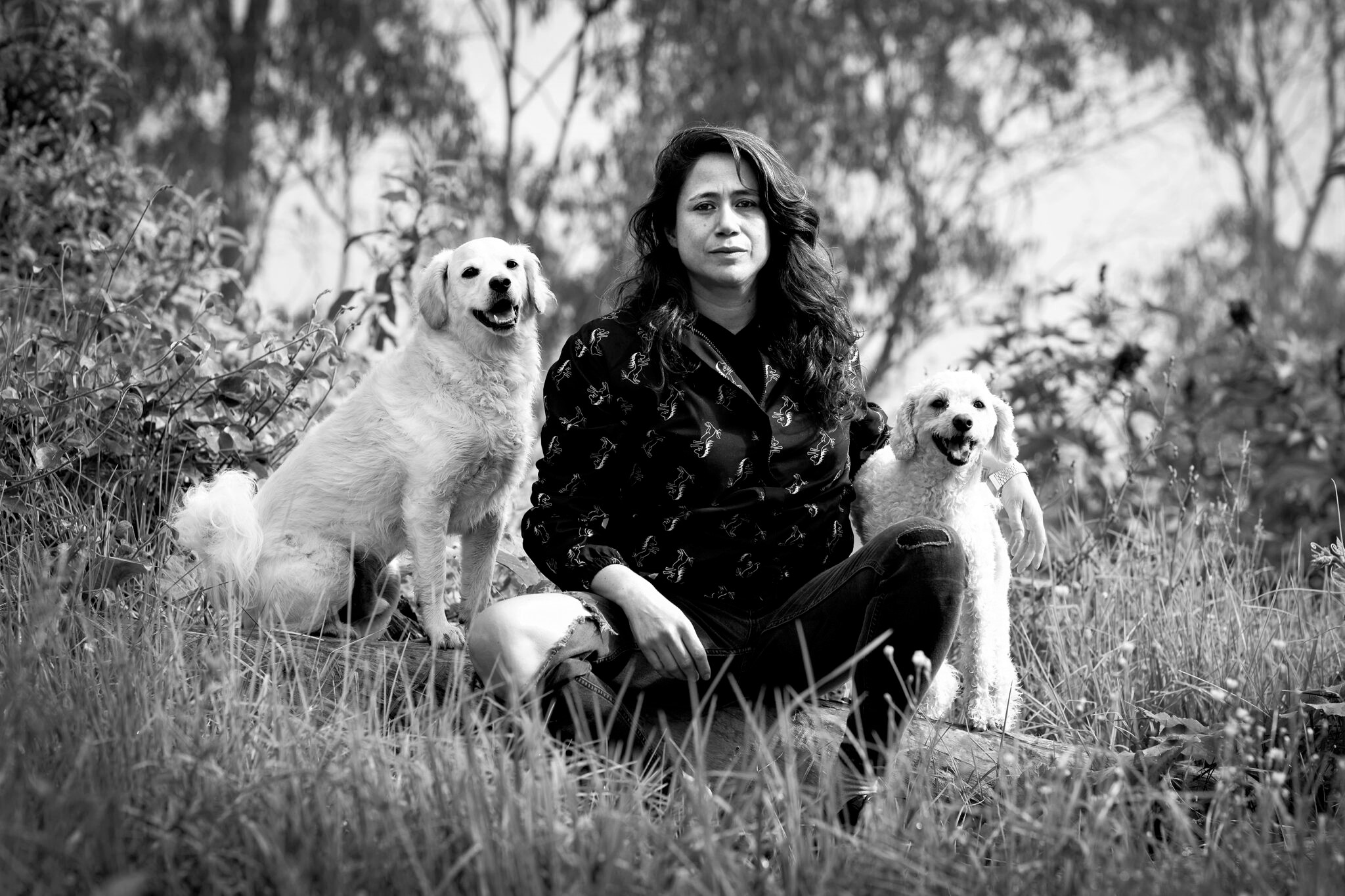
María Auxiliadora Balladares
FABIÁN DARÍO MOSQUERA
Fabián Darío Mosquera is a poet born in Urabá, Colombia in 1983 who grew up in Ecuador. He lives in Buenos Aires. He studied Comparative Literature, Art and Thought at Pompeu Fabra University in Barcelona, Critical Theory at the Instituto de Estudios Críticos in Mexico, and Latin American Letters and Studies in Pittsburgh, Pennsylvania, where he earned his doctorate. As a poetry critic he is the author of Fine Motor: The Poem as a Strange Home, a conversation with Eduardo Milán about the concept of criticism (Ruido Blanco, 2013, 2014, Libros de la Resistencia, 2017, La Cleta Cartonera, 2017), Paul Celan, Water Crypt, a Source that Murmurs: Philosophical Reception of his Poetry in the Hispanic World (Gilboa and Halpern Award for Jewish Studies, 2020). He is the author of the poetry books A sorbos la desmesura (Editorial Turbina, 2025, Sol Negro, 2026) which gathers two poetry volumes: Nuptial Park (2014) and The Abominable Snowman (2022).
Neonatology
My wife says to me: “let us have a child.” What shall we name him? And how shall we sustain the allegory in which a salmon, clean as fire, faces the world’s silent lewdness? Against the night, barely the coffee grounds, barely the herbal remnant of the folk healer. Does my blood reach you?; Does the clean hive, the Phoenician eye in its faint atrocity? I have searched for nerves in the hill; chants in the water that pounds the vast and terrible dome: writing. I have sought laws, codes in operating rooms of garish light: I have sought you. You, the ember of the distant reverberation. You, love. I recall the dream: islands with lizards licking a bud of stone, they infect it while they dignify it. Here the city could be a canyon; it could be fodder for ruffians, but it is simply
your name.
***
FRANCISCO SANTANA
Francisco Santana is a poet, storyteller and chronicler born in Guayaquil, Ecuador, in 1968. He studied Journalism, Design and Literature. He has worked as a bricklayer, designer, creative writer, journalist and bartender. He has written for the newspapers El Universo and El Telégrafo, and for the magazines SoHo and Mundo Diners of Ecuador. He is the author of the books Historia sucia de Guayaquil, Pequeñas historias cochinas and La piel es un veneno. Also Ecuador escondido: Crónicas. He was a professor of Creative Writing at Universidad Casa Grande in Guayaquil. He writes poetry and for several years ran the Poeticanto space, at the Barricaña bar gallery in Guayaquil.
About all in summer, love
I will be in the countryside or at the beach
it doesn’t matter much because there will be food on your table
and at night good liquor
About all in summer, love
when in the city it no longer rains
I will be in the countryside or at the beach
it doesn’t matter much because surely someone will dance with you in your green-walled house
About all in summer, love
when the days are colder in your port
That port where ships on the gray river cannot be seen
I will leave the countryside and the beach and travel south
to see the ancient lands that sang in the songs
About all in summer, love
I will be in the south and I will listen to the songs
there where the water descends from the mountain and reaches almost to the gate of your garden
it doesn’t matter much because in summer there is no cricket song in the city of the gray river
About all in summer, love
when our sun rises earlier, strong and clear
I will still be in some town in the south
because a storm won’t let me leave my room made of wood and chaos
it doesn’t matter much because the wine is cheap and easy to drink
Or perhaps it does matter because I will be thinking of you and also how to reach you
even though this southern town is farther than the mountains along which the river runs that almost reaches the gate of your garden
About all in summer, love
I will remain trapped inside the room of wood and chaos
and the wine will no longer be as friendly although I will still drink it
and I will think that I am a leaf flying within the storm
and I will feel that some things do not make sense because I am a fragile man
but it doesn’t matter much either
because storms always pass and end
after the storm, I will return to the countryside and the beach and I will have more doubts
it doesn’t matter much because a fragile man can also build a garden
when he survives a storm
About all in summer, love
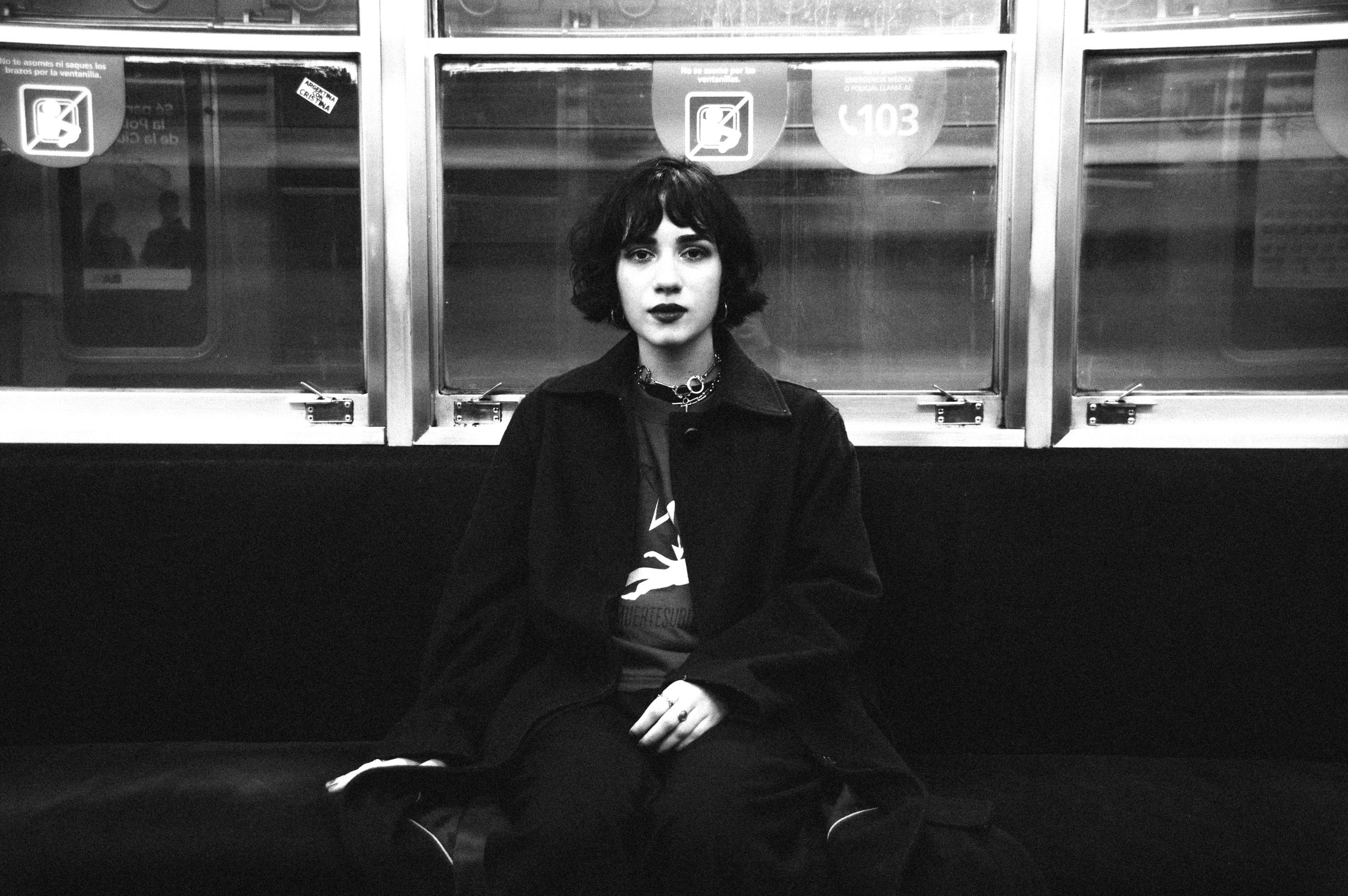
Roxana Landívar. Photo: Paula Jarrín.
GABRIELA VARGAS AGUIRRE
A beggar named David Foster Wallace
I hold, in my hands, a sun split in two:
eyes that are interrupted by the memory of a house.
My child collapses, crosses the tracks and finishes them,
as if wanting to become a road,
as if walking were his march
or a war or, simply,
losing his hands while seeking a key in his pockets
or the valve of a fog hideout.
The gaze at doors, at the bricks of the houses,
of hundreds of houses and of tables that do not expect him,
that do not support his legs in the chairs.
My child with hard bread, the same old shoes:
a child more wings than cotton or linen.
A cold child and cement: a dirt sidewalk.
Any tree is your home.
Any tree is your home, you repeat.
But home is a stumble, a room that hides.
Then the street, hunger again
and you in silence like a defeated bull,
a line of trains crawling toward a bridge that closes.
Do not look, you will no longer have air,
do not look, there is no harbor, nor war, nor home.
My child holds a blank sheet,
a mirror because now the sea is mute, white.
A child who flies, spins like a cold planet,
very cold, alone, very alone.
No longer bread nor hunger that fall
like the writing of something that was urgent and not said.
Then I hold in my hand
the sun split from an ordinary day,
in a stranger house, any one,
that saw him open his mouth,
let go of his fingers.
Hang himself.