
1. Spain has now experienced, for the second time in a short span, the tragedy of death on the road. I move like a sleepwalker as I recall it, as if heaven and earth, together, were willing to grant that it isn’t true, that it didn’t happen, that these people did not die who, in two consecutive trains, ceased to exist in the midst of life’s worst moment, which is the truth of death.
On this road, the one along which the trains travel. They are no longer like those old contraptions that, in another era, were displayed as toys in which the old and the young who wanted to live as in the tales of Agatha Christie rode. Now they are humans who get on a moving train to reach as quickly as possible either nothingness or life. And when they reach nothingness perhaps they do not know what journey they joined, what life looked at them in their last breath.
2. That kind of speed governed by a slow, iron-like rigidity woke up in this part of the twenty-first century, and it did so at its own whim. It turned velocity into the disagreeable gift of travel. We believed we would drive ourselves as armored travelers, and we were nothing but road-dreamers, hoping the next stop would be ours. Until we woke up, and the other world we had envisioned was not the one we found. The other world never appeared, or grabbed us while we slept before we could even say, perhaps, we’ve arrived. We don’t arrive; sometimes we don’t arrive, we are arriving, but sometimes we don’t arrive at all.
3. I travel frequently, even go on trips that take me to other hemispheres… To Argentina, for example, where I went the first time trying to know whether Borges really existed, or whether it was true that what first reached my home, which was a book, was in fact a tango sent to teach me how one knows what singing is. And the first time I went to Paris I believed that place was the other side of the world that one could touch with bare hands. But then that place, relative to Spain, was a landscape free of the universe, in contrast to my country, so timid, so shaped by Franco, so mean and, although so close to all of us, so old and so poor… It was the era of prisons; Spain lived the sorrow of not knowing from where that evil came that Franco turned into the worst thing he did: killing.
4. Paris, then, was the other world I wished to glimpse almost at the same time I went to Mexico. I must say that, back then, those foreign countries seemed designed for Spain, for instance, to resemble the future. The future came; we all saw it arrive; and now it is nearly everywhere at once. The future also breaks like Spain’s trains. Tonight, I write as if those trains that fell en route to Madrid had not yet left anywhere; but that is not true—they did depart, and now they are part of the country’s blue lament, of a nation awakened with broken air, an air that seems not to break.
4. Now the whole world is the same, or almost; countries and trains merge, and those trains that break in Spain, as now, break in the same way anywhere in the world, but now, battered by chance and sorrow, they collided coming from Andalusia…
It is a tremendous, terrible sadness that has filled this Spain, which is no longer a pilgrim, as in that war, but eager to be here and anywhere in the world at once. Now it is difficult for those who search here for culprits to suddenly appear who broke the journey. Those who will say so will come, but even that will not resurrect those who are no longer here to mourn them.
5. Now the land is more dangerous than the sky; worse than the worst dreams, as hard as evil, ruinous like what shatters before the stupor of mothers and children. I write as if I were sleepwalking, I listen to the heartbeat of the computer. Now I know I am writing about death.
Travel has become the substitute for a deceitful speed that tries to explain itself, while people sleep or eat, like sleepwalkers on the road. Beings who doze or dream of the joy that comes from the certainty that you will arrive, that you are arriving, that you have arrived.
Not long ago I had that dream. I was arriving, until I felt that it wasn’t a dream but the train itself saying that perhaps it would break at any moment, that I would see it, and that then I would not be there, nor would there be anyone in the streets or in the towns, but a kind of farewell to all this, as in novels.
That did not happen, but now it has happened; one train and another train have passed, they made the journey that would break, and now I am here recounting what, during this time, this very week, suddenly blood and pain forced their way into a universe that resembles, at this moment, the deaths that haunt us before we tell the train, not here.
6. Whenever speed is greater than the will of its rails, trains have grown ever more diluted, capable of breaking, leaving behind deaths and cries and sorrow. Now the train that carried people from Seville to Madrid misread the future. Those who saw it break returned afterward to where there is nothing but tears or dismay.
Trains travel ordered by those who drive them. These are human beings who sometimes prove unable to set those contraptions in their proper place, as we trust them as if they were more than scrap.
7. Now one can say: the cursed trains that, in a short time, have carried this trusting country toward pain and the deaths of hundreds of citizens will enter history, and someone, somewhere in Spain or the world, will say that that already happened, that what occurred was probably part of what could happen, and it will happen again and again, and the birds will keep singing while the other, the other train, returns sleepless to what, perhaps then, is music or joy. Meanwhile, I am crying.
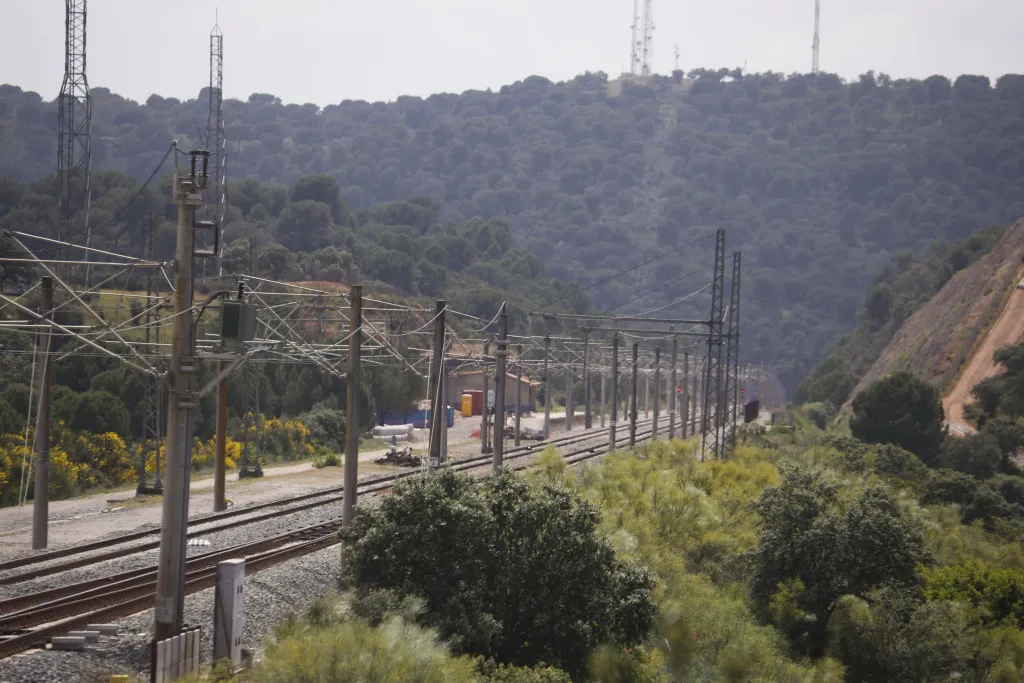
8. Andalusia again. I was there twice this week, and both times I found nothing that drew my attention: from Málaga to Madrid, from Madrid to Córdoba, those trips suddenly seemed like calm trains in which only the murmur of passersby could be heard amidst the sound of their laughter. Eight months ago it was in Adamuz, coming from Andalusia, and now, last Wednesday, it happened near about the same place.
Like a curse, death on the fast road that breaks as if it were air in the middle of a universe that can only be halted by chance.
9. I write hours after this event. It is a curse that suddenly draws what in the past of trains was a curse that from time to time attracted bad luck.
That there have been so many such events in a country that for years lived the joy of the new trains that were born in Seville and proliferated across much of Spain is a way of warning, here and everywhere, that the sky is always available to succumb to the last breath of trains.
2/5