
Columns
Feeling Better or Getting Better
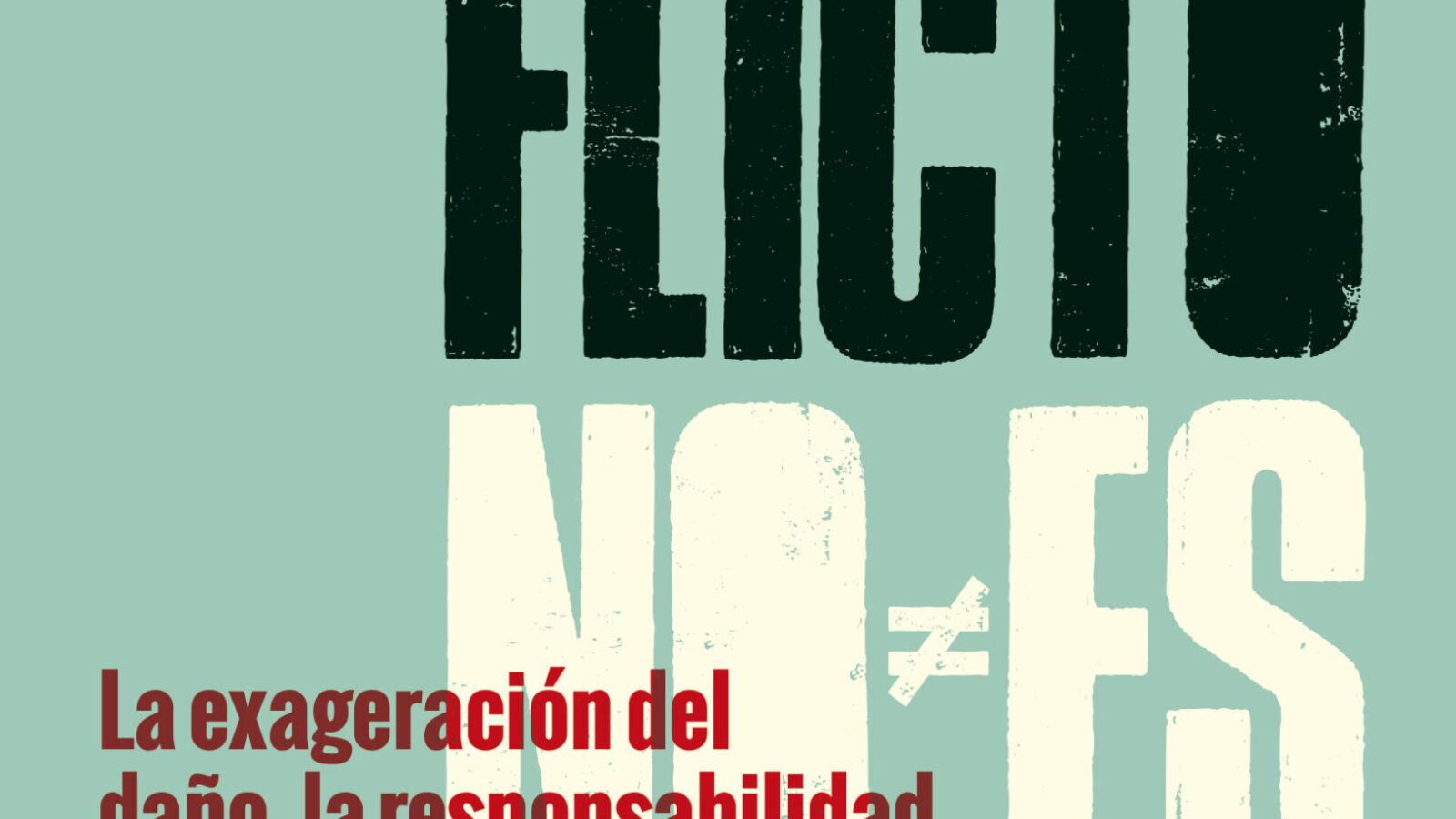
A few weeks ago, Capitán Swing sent me The Conflict Is Not Abuse, by Sarah Schulman, probably with the aim that —if I liked it— I would write a review for this LGBTQ+ books column, since it is a book written from a queer perspective, as its author confesses. But when I began reading it I could not help but feel touched by my 2025 personal history, by the censored attempt to publish The Hatred. What Schulman recounts I lived through myself, so my reading could not be neutral, and part of my enthusiasm may be connected to that mirror effect that books sometimes exert.
The thesis of the book can be captured in one line: we confuse discomfort with threat, we take our own anxiety about an external danger and, instead of resolving the conflict, we escalate it. Feeling annoyed, frustrated, or hurt does not mean one is being attacked. That someone suffers does not prove that another is guilty.
And distress, no matter how intense, does not entitle one to punish.
Schulman borrows from Matt Brim a formula that sums up the shift in perspective she proposes: to stop always thinking in terms of aggressors and victims and to think in terms of the parties in conflict, each with legitimate concerns and rights.
It is a brilliant, committed book. It was published in English in 2016, but its relevance and clarity have only grown since then. It speaks to divided, increasingly violent societies. To people who have been trained to hate. The most valuable thing about The Conflict Is Not Abuse is that it does not settle for a psychological diagnosis. It cites studies showing that those who confront a conflict from guilt negotiate, apologize, and repair, whereas those who confront it from shame direct their anger outward. But Schulman goes further: the overemphasis on harm is also a privilege. The complaints of whites and the bourgeois are heard. Those of the poor, the undocumented, transgender or racialized people are not. And there is a system that only grants compassion to those who declare themselves victims. Being “abused” is what makes you eligible, lovable, one of her interlocutors tells her. “But everyone deserves help when they ask for it.”
The queer perspective runs through the book from start to finish. Many of its examples involve lesbian couples or gay men. There is a harrowing—and eloquent—case in Connecticut: a marriage of two men addicted to methamphetamine accuse each other of abuse to avoid facing themselves and the drug. The story ends with both under mutual restraining orders and one of them later dead in prison.
But the most uncomfortable thing for the LGBTQ+ reader —which I do not fully share— is its critique of the family. The queer family, newly conquered, reproduces the vices of heterosexuality: false loyalty, the clan that closes ranks against outsiders. The family understood almost as famiglia. Those who were expelled from their traditional families now raise protective structures against strangers identical to those that expelled them. And Schulman debunks another fantasy: loving a woman does not guarantee treating her as someone who matters. Identity and gender are not virtues in themselves.
Like all lucid and contrarian theses, it has some problems when it pretends to become a master key, an omn interpretative idea. The same logic explains the couple, the family, the circle of friends, the Canadian state that criminalizes HIV-positive people, and the Israel-Palestine conflict, all of which are examples treated in the book.
The chapters seem to come from different sources and tones, the academic essay, the personal anecdote, the political chronicle. The book lacks a single, unified voice in this sense, but it does not suffer for it.
Schulman seems to trust that every conflict can be repaired by talking, by trying not to understand it systematically as an aggression or abuse. It is hard to share her optimism in these times, but it is true that thought must always be at the service of resistance and against inertia. The author herself explains at the outset what is happening to us: we no longer look into each other’s eyes, not even by phone, but we send an email, write a text, or post a tweet. And there the nuances and intentions become impossible. Technology works against us, and it will do so more and more. That is why optimism is difficult.
Schulman asks for something simple and almost always ignored: ask before punishing, listen to someone who has been made a scapegoat, understand. Understanding is not justification. And she calls for that responsibility especially from progressives, with whom she shares the worldview: the person who presents herself as such and does not oppose collective cruelty is a hypocrite. In a time when so many feel better, more just, more superior, merely pointing at someone, Schulman proposes something else: to improve. She states it in the closing sentence of the book, which we should repeat: “Nothing interrupts dehumanization faster than meeting someone, looking them in the eyes, listening to their voice, and paying attention.”
—————————————
Author: Sarah Schulman. Title: The Conflict Is Not Abuse. Translation: Nicolás Cuello and Diego del Valle Ríos. Publisher: Capitán Swing. Availability: Todos tus libros.