
To commemorate the 90th anniversary of the Civil War, José Ángel Mañas recreates in Zenda, day by day in this section, what happened in 1936, perhaps the most momentous year in all recent history of Spain.
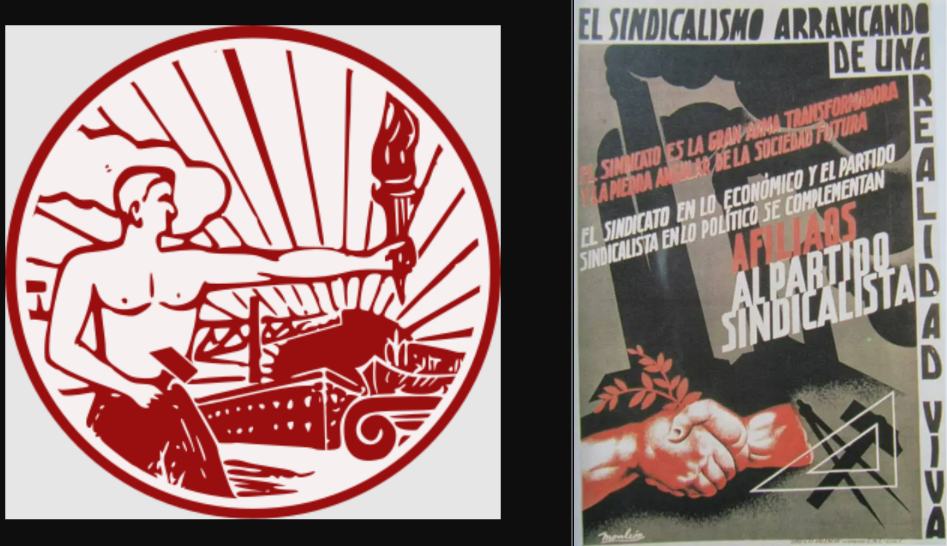
Wednesday, November 4, 1936: Meeting of the National Committee of the Syndicalist Party
Largo Caballero had it easy.
The Bilbao-born secretary of the National Committee of the CNT was the one in charge of conducting negotiations on behalf of a CNT that for months had been willing to strike a deal, and was only negotiating the price. The Confederation itself offered a ministerial portfolio to Pestaña, with the condition of dissolving the Syndicalist Party. But Pestaña, as he explained in his office to Ángel Navarrete before the meeting of the small national committee of his party, had just rejected the offer.
—How can we dissolve it, when events confirm the legitimacy of my party, which adopted the political route before anyone else? It is the fascists who abdicate their principles. They must come to me, not the other way around. In addition, they are making the mistake of committing themselves under very unfavorable conditions and at the wrong time, and drag behind them that gigantic CNT as a burden. It is what I sought to avoid by separating unions and political bodies. The FAI has bitten on the bait Largo Caballero laid out, which uses us as a counterweight to the communists, and in doing so kills two birds with one stone.
»This very morning the CNT has agreed, after weeks of negotiations, to participate in the responsibilities of government in exchange for four minor portfolios: Justice, Health, Industry, Commerce. The posts would be held by García Oliver and Federica Montseny of the FAI, and Juan Peiró and Juan López Sánchez, two men in their thirties, close to our positions. Namesake, I suppose you will stay tonight at the National Committee meeting.
—I don’t know if it’s prudent…
—There are many people changing parties in these times. Sooner or later you will have to commit…
Ángel Navarrete thought it over and decided to stay. Pestaña introduced him to those arriving. The greetings were generally neutral. No one was surprised by his presence. As soon as the meeting began, with night falling, Pestaña tackled the matter of Largo Caballero’s pact with the CNT, in a tone that was at once sorrowful and mocking.
—We know that the comrades could not have chosen a worse moment to embark on a ship that is taking on water. Largo Caballero until today believed himself a Trotsky, intervening in every military operation. He aimed to control to the last rifle. But he has lost support, and he is beginning to hinder the communists because he won’t let himself be steered. Sooner or later he will have to fight them, if he does not want his position undermined.
Ángel Navarrete, who for the first time attended a meeting of the Pestañistas, nodded from his corner. The room, with about ten chairs, was almost dark, the shutters closed. It was lit by a kerosene lamp. The unionists listened, soberly, to their leader.
—Largo Caballero intends that the CNT serve as a shield against the communists—in exchange for a handful of nominal portfolios. What could García Oliver do in Justice? And Montseny in a ministry that doesn’t even exist, like Health? What industry will Peiró run, if what exists is a war industry and is controlled by Largo Caballero? Juan López, even if he knew something about commerce, will not be able to do anything because purchases abroad, especially war matériel, are handled by the head of government. They come in as brawling pawns, giving their all with no compensation beyond vanity. Who will pay for the broken dishes? I tell you: CNT. They will ruin it. And now — he added with a twist of the mouth — they are ministers who accused me of being a schemer. García Oliver, the anarcho-bolshevist, brain of the FAI, and the vain Montseny, who calls me the gangrene of CNT, I expected anything from them. López Sánchez, the same. But I do not understand how a sensible man like Peiró agreed. Now that there is almost no government, only remains to see how the Madrid people react. We will see if they do so as in the times of May 2, or if he has lost his bravery.
—The people will resist —said Navarrete, convinced—. Moreover, the Durruti Column is on its way. It will arrive in a few days. They will aid in the defense of the city.
—That is what I hope —said Pestaña—. For soon we will have the Moors at the gates of Madrid… And they arrive after three months of victories.
All the day-by-day entries of 1936
Interview with José Ángel Mañas about 1936 Day by Day