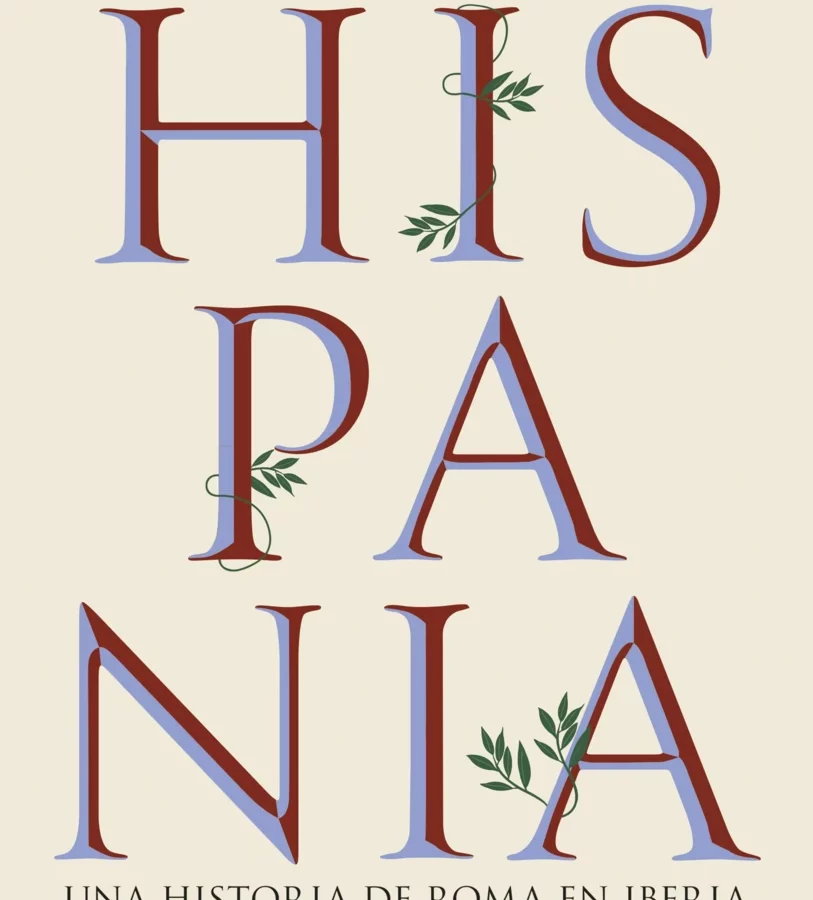
An ambitious military operation by Rome against the overwhelming power of Hannibal ended up being one of the most influential and captivating political and cultural epics of Antiquity: the birth of Hispania. Rubén Montoya offers his own journey as a historian by delving into the seven centuries of Roman presence in Iberia with an essay grounded on two essential pillars: to follow the evolution of Roman Hispania and to craft a rigorous and precise map of its vast historical legacy. And it provides very interesting clues about some of the twists and turns of today from the lessons of the past.
Recordemos que la llegada de las naves romanas a las costas de Iberia en el verano de 218. a. C. no fue una odisea que desembarcaba en mundos extraños y sin civilizar. Los romanos se encontraron frente a frente con un atlas repleto de pueblos, ciudades, lenguas y tradiciones que articulaban desde hacía siglos un engarce rico y próspero entre el extremo occidental del Mediterráneo y el resto del mundo antiguo. Fenicios, griegos, íberos, celtíberos y pueblos atlánticos convivían y competían con alianzas y rivalidades en continuo movimiento. Un tablero de juegos políticos, culturales y militares tan complejo como ilustrativo a la hora de rastrear las huellas que lo desvelan casi todo sobre los orígenes de “Hispania”.
An awareness that the arrival of Roman ships to the shores of Iberia in the summer of 218 BCE was not a voyage landing into strange and uncivilized worlds. The Romans faced a map filled with peoples, cities, languages, and traditions that had for centuries woven a rich and prosperous link between the western edge of the Mediterranean and the rest of the ancient world. Phoenicians, Greeks, Iberians, Celtiberians, and Atlantic peoples coexisted and competed with alliances and rivalries in constant motion. A political, cultural, and military board so complex as it is illustrative when tracing the traces that reveal almost everything about the origins of “Hispania.”
No fue, ni mucho menos, una simple provincia en la periferia del Imperio, sino que se puede estudiar como un gran banco de pruebas donde se daban cita escenarios bélicos, mestizajes cruzados y decisivas transformaciones culturales, sociales y económicas. Hispania vio crecer sus ciudades con una pujanza inaudita, sus élites llegaron al Senado y en sus territorios nacieron emperadores, intelectuales y obispos sin los cuales no podría entenderse la historia de Roma. Un casting histórico sin precedentes para una película épica en grado superlativo.
“What was achieved with it? To seize the collective imagination in a creative battle that can be studied through the images engraved on coins“
Montoya, author of that delight for archaeology lovers that is Pompeii, a Roman City in 100 Objects, reminds us that “province” did not mean for a Republican Roman a place, but a mandate. And from that mandate arises a fascinating construction of a narrative that turned domination into a consequence of imagination as a tool of popular seduction. And thus, anticipating the manipulated audiovisual experience we now live as propaganda and a tool of mass domination, Rome “fabricated” a grand spectacle of victorious marches with chained prisoners, dazzling spoils of war, maps laid out for the public, and personifications polished to the finest detail to represent the province. Propaganda in its purest form. And hard. Provinces, then, with human form: rulers above, subjects below. What was achieved with it? Seizing the collective imagination in a creative battle that can be studied through the images engraved on coins. The economy as an indispensable factor to consolidate and widen the conquest.
History shines in Hispania with episodes etched in the collective memory: Carthage, Itálica, Numantia… And characters who marked milestones (for better or for worse) in a History that Montoya presents with admirable synthesis (each page could fill an entire book) and a fruitful look at the past to partly explain our present because, in the author’s words, “Hispania did not die when the Roman presence disappeared (…). It transformed into a mold and, many times, into a weapon. It served Arab scholars, Asturian kings, and Castilian monarchs; also Renaissance humanists, nineteenth-century liberals, and twentieth-century dictators.”
And on the ruins of Rome they built (or do they still build?) the justification of their present. Let us remain vigilant.
—————————————
Author: Rubén Montoya. Title: Hispania: A History of Rome in Iberia. Publisher: Crítica. Availability: Todos tus libros.