
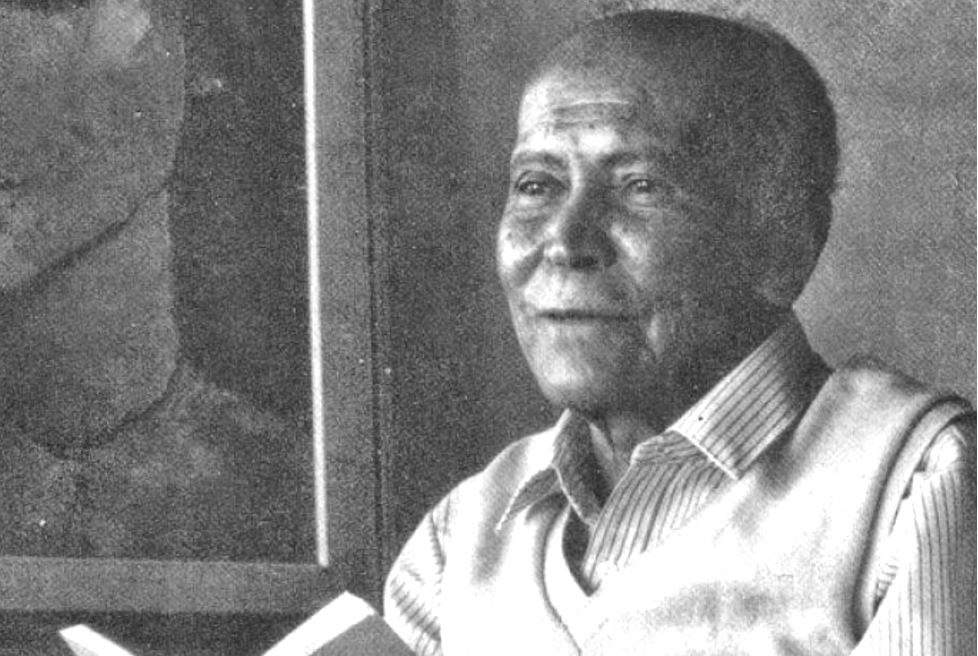
Cover: Nelson Estupiñán Bass.
This Friday, within the section No son todos los que están, we present the second list of three great poets from Ecuador’s coast whose work could easily be considered classic or influential for the current generations of poets in their country. Step in and read. These are the ones who are here this week, and those who are not, will come later.
***
LUZ ARGENTINA CHIRIBOGA
Luz Argentina Chiriboga Guerrero was a poet, writer of prose, essayist, ecologist, linguist, and a defender of the rights of Black women and Afro-American culture, born in Esmeraldas in 1940. She was married to Nelson Estupiñán Bass, another Ecuadorian author. The Benjamín Carrión National Cultural Center, Esmeraldas Branch, awarded her the Cultural Merit Mention in 2006. Her work has been translated into several languages: English, Italian, and French. She was invited by UNESCO to deliver lectures in Europe. She was also invited by numerous universities across the Americas, the Caribbean, and Africa to give talks on literature. Among her works are novels such as Bajo la piel de los tambores (1991), Jonatás y Manuela (1994), or La nariz del diablo (2010). She is also the author of poetry books such as La contraportada del deseo (1992), Manual de ecología para niños (1992), Palenque (décimas) (1999), Coplas afroesmeraldeñas (recopilación) (2001), or Multiplica las llamas (2013). She died on April 29, 2025.
The Snowfall
The snowfall ignores that with its fragile
whiteness
it is stealing the green from the forest.
It never knew
that it is a prison of ice,
a wave of snow
that cannot be contained,
subtle, suffocating.
Silent, filled with cold,
gazing at the mountain
it swells with the wind
and dances a furious dance.
It does not even know that as it passes
the shadow grows
in broad daylight,
the hours pass slowly,
one can hear in the silence
as its sharp points drive into its death-seeking journey.
Theodolinda looks at the garden
raised hand to hand,
surely she walked along
believing it was spring
with the first glint of sun,
with the first drops of dew.
Gently she nested
roses in her hands.
Bad luck,
bad hour,
bad note,
bad vibe,
on its own accord,
without consulting its gods
nor the Bristol calendar,
it plunged its black fingers
into the earth.
Her eyes do not lie
when they see her joy decapitated,
today she does not sing,
today she only cries.
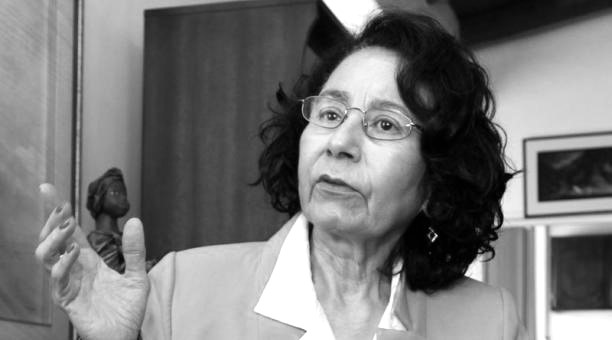
Luz Argentina Chiriboga.
NELSON ESTUPINÁN BASS
Nelson Estupiñán Bass was a narrator, poet, essayist, diplomat, and journalist born in Súa, Atacames Canton, in 1912. His work was characterized by portraying the life of the Afro-Ecuadorian population. He is, together with Adalberto Ortiz and Antonio Preciado, one of the reference figures of Afro-Ecuadorian literature, and his books are regarded as classics of the country’s literature. The most prominent book of his career is Cuando los guayacanes florecían, whose plot focuses on the rebellion of Carlos Concha Torres in Esmeraldas after Eloy Alfaro’s death. His work crossed borders and gained significant international recognition, which led to him being proposed as a Nobel Prize in Literature candidate in 1998. That decade, in 1993, he received the National Eugenio Espejo Prize in the field of literature. He died in Pennsylvania in 2002.
Soledad que te metes en mi alma
y engulles mi cuerpo en el supremo silencio:
¿cómo descansarán mis huesos
cuando tu aliento acentúe tu presencia?
¡Soledad madre mía! perfumas mis manos.
Soledad que anegas mis ojos,
soledad que engendras postigos,
soledad que cultivas rastrojos
y plantas mis espejismos en desbandadas clandestinas,
como incienso aromático.
¡Soledad madre mía! marcas mis escapismos por las ventanas:
en música, en disparates…
renueva el compromiso de pintar
el agua que se escapa,
el arte que respiro…
¡Soledad, madre mía! en la tumba me esperas
para contarte cuentos
como me los cuentas en esta vida.
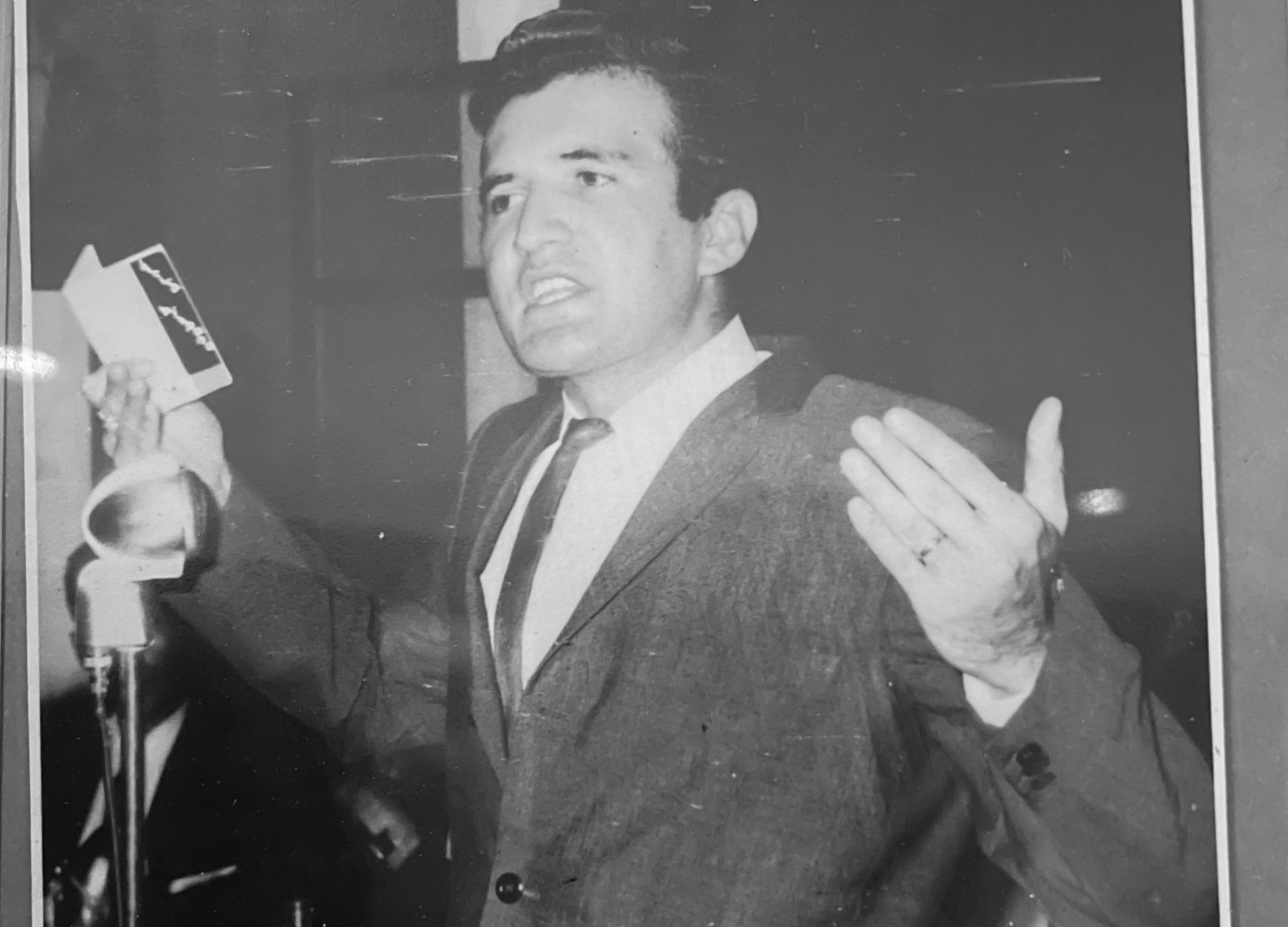
Jacinto Santos Verduga.
JACINTO SANTOS VERDUGA
End-of-Year Inventory
Twelve months of love.
The last three without work.
One child on the way.
Two distant sisters.
One big prize
and another smaller.
All my friends
present.
A new pair of shoes
new.
Many bad nights.
God and the devil
with me.
Two veins fewer.
Several broken cups.
One visit to the psychiatrist.
Another to the cemetery.
And this solitude in the soul
that feels like a Sunday
at three in the afternoon.
*
History of an Ordinary Man
The inaugural scream
came at dusk
of a huge bleeding,
in the neighborhood of the sea
that keeps silent
its dead fish.
Surely it unsettled me,
as it did other children
of that era,
the nocturnal flight
of strange birds.
And I began to know
blighted gardens
at the same hour
that milked
solidarity milk
and lulled me
with the crying
of all mothers.
Back then
the sky reflected
the shadow
of the cursed tree
that shed
lethal ashes
on the earth.
Who knows
in which crack
of solitude
I made the first
trench
of my childhood.
At what moment
the abyss of my brother
traumatized my soul.
How I learned the price
of love.
And the thorn of memory began to prick me.
Which winter
moistened forever
the itinerary of my blood.
I only remember
that I went to school
at the precise hour
that the wind
takes a siesta.
And a sorrow
dressed as a girl
made signs to me
from afar.
One afternoon
when I retrieved
the shell’s corpse
fatherless
I discovered my vocation
for crying.
Since then
I have made it a habit
to visit
the house of birds,
to comb the desolate grass
and to go out at night
to seek shelter
from the rain.
Meanwhile
life
has been showing me
its cards,
me ascending,
in vain,
the slope,
—which is high—,
paying
since birth;
driven mad
by insomnia
and questions
the size
of death.
Drinking
the last drop
of hope
and bleeding
the most bitter hour
of the planet.